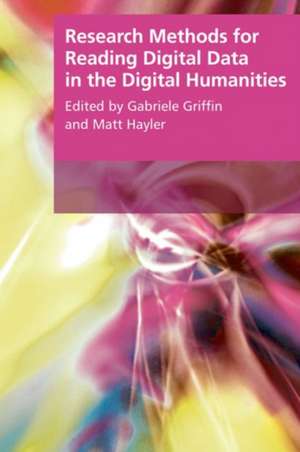
Research Methods for Reading Digital Data in the Digital Humanities
Autor Gabriele Griffin, Matt Hayleren Limba Engleză Paperback – 15 feb 2016
În peisajul academic actual, aflat la intersecția dintre dezvoltarea tehnologică și schimbările epistemologice, volumul Research Methods for Reading Digital Data in the Digital Humanities aduce o perspectivă aplicată asupra modului în care materialul digital poate fi utilizat în cercetare. Observăm că această lucrare depășește simpla definire a domeniului, concentrându-se pe instrumente analitice concrete pentru datele „născute digital”, cum este fenomenul fanfiction, sau pentru cele transpuse din surse tradiționale. Găsim în această carte un răspuns la întrebările fundamentale despre transformarea textului tipărit în materie digitală și modul în care această schimbare de suport modifică metodologiile de interpretare. Autorii Gabriele Griffin și Matt Hayler extind cadrul propus de Research Methods for the Digital Humanities de lewis levenberg prin integrarea unor date noi privind analiza arhivelor vizuale și a fluxurilor Twitter. Dacă lucrarea lui Levenberg se concentra pe prezentarea materialului cultural, volumul de față plonjează în mecanismele complexe de data mining și crowd-sourcing. Această abordare completează organic opera anterioară a lui Gabriele Griffin, în special Research Methods for Creating and Curating Data in the Digital Humanities, mutând accentul de pe stocare și organizare pe „citirea” și interpretarea analitică a volumelor mari de date (Big Data). Structura este riguroasă, ghidând cititorul prin concepte precum analiza rețelelor digitale pentru a înțelege interacțiunile online. Descoperim aici un instrument de lucru esențial pentru cadrele didactice și studenții care navighează prin „humanities computing”, oferind soluții practice pentru cercetarea bazată pe tehnologie fără a sacrifica rigoarea critică specifică științelor umaniste.
Preț: 211.36 lei
Preț vechi: 251.47 lei
-16%
Carte disponibilă
Livrare economică 30 octombrie-13 noiembrie
Specificații
ISBN-10: 147440961X
Pagini: 256
Dimensiuni: 157 x 233 x 17 mm
Greutate: 0.35 kg
Editura: EDINBURGH UNIVERSITY PRESS
V-ar putea interesa
-
 -30%Preț: 360.25 lei513.91 lei
 -
 World AuthorshipTobias Boes-33%Preț: 906.90 lei1347.32 lei
 -
 Enumerations: Data and Literary StudyAndrew PiperPreț: 207.11 lei
 -
 Preț: 242.59 lei
 -
 Digital_HumanitiesAnne BurdickPreț: 233.63 lei
 -
 Preț: 437.63 lei
 -
 -18%Preț: 1112.48 lei1356.68 lei
 -
 Digital HumanitiesDavid M. BerryPreț: 150.31 lei
 -
 Reading by NumbersKatherine Bode-19%Preț: 686.79 lei847.88 lei
 -
 The Digital HumanitiesEileen Gardiner-20%Preț: 197.37 lei246.71 lei
 -
 Literature in the Digital AgeAdam HammondPreț: 214.56 lei
 -
 World Literature and DissentLorna BurnsPreț: 397.39 lei
 -
 Cultural Heritage Infrastructures in Digital HumanitiesAgiatis Benardou-18%Preț: 1125.37 lei1372.40 lei
 -
 Digital Methods for Complex DatasetsJennifer Guiliano-18%Preț: 163.07 lei198.40 lei
 -
 Preț: 204.71 lei
 -
 Poetic Thinking TodayAmir EshelPreț: 194.99 lei
 -
 Digital Media Ethics 3eCharles Ess-20%Preț: 170.96 lei213.71 lei
 -
 Digital Humanities and the Study of Intermediality in Comparative Cultural StudiesSteven Totosy De ZepetnekPreț: 322.61 lei
 -
 Digital Humanities in Latin AmericaHector Fernandez L'Hoeste-15%Preț: 525.92 lei618.73 lei
 -
 Digital HumanitiesBryan Carter-11%Preț: 637.65 lei716.46 lei
 -
 Metamodernism: Historicity, Affect, and Depth after PostmodernismRobin van den Akker-18%Preț: 338.12 lei414.87 lei
 -
 Digital HumanitiesOlivier Le Deuff-20%Preț: 923.24 lei1154.06 lei
 -
 Research Methods for the Digital Humanitieslewis levenbergPreț: 341.34 lei
 -
 Meaning in TranslationBarbara Lewandowska-Tomaszczyk-23%Preț: 880.62 lei1143.67 lei
De ce să citești această carte
Această carte este indispensabilă cercetătorilor care doresc să treacă de la metodele tradiționale de lectură la analiza avansată a datelor digitale. Veți câștiga o înțelegere clară a modului în care pot fi analizate fluxurile de social media și bazele de date complexe. Este un ghid practic ce transformă provocările „Big Data” în oportunități metodologice pentru studiile literare și culturale moderne.
Despre autor
Gabriele Griffin este profesoară de studii de gen la Universitatea din York și o voce autoritară în domeniul metodologiilor de cercetare interdisciplinară. Cariera sa marchează o tranziție importantă de la cercetarea feministă și sociologică spre intersecția inovatoare dintre științele umaniste și tehnologie. A coordonat volume de referință precum Research Methods for English Studies, fiind recunoscută pentru capacitatea de a adapta rigoarea academică la noile realități digitale. Expertiza sa în Digital Humanities se concentrează pe modul în care instrumentele digitale reconfigurează producția de cunoaștere în mediul universitar contemporan.
Descriere
Digital Humanities has become one of the new domains of academe at the interface of technological development, epistemological change, and methodological concerns. This volume explores how digital material might be read or utilized in research, whether that material is digitally born as fanfiction, for example, mostly is, or transposed from other sources. The volume asks questions such as what happens when text is transformed from printed into digital matter, and how that impacts on the methods we bring to bear on exploring that technologized matter, for example in the case of digital editions. Issues such as how to analyse visual material in digital archives or Twitter feeds, how to engage in data mining, what it means to undertake crowd-sourcing, big data, and what digital network analyses can tell us about online interactions are dealt with. This will give Humanities researchers ideas for doing digitally based research and also suggest ways of engaging with new digital research methods.