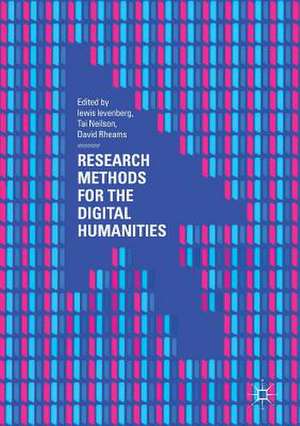
Research Methods for the Digital Humanities
Editat de lewis levenberg, Tai Neilson, David Rheamsen Limba Engleză Paperback – 13 noi 2018
Sub coordonarea editorilor lewis levenberg, Tai Neilson și David Rheams, acest volum reprezintă o resursă academică solidă ce fundamentează cercetarea interdisciplinară la intersecția dintre științele umaniste și tehnologie. Putem afirma că lucrarea se distinge prin autoritatea academică a contributorilor, care propun o viziune bidirecțională: pe de o parte, utilizarea puterii de calcul pentru a analiza cultura, iar pe de altă parte, aplicarea teoriilor critice din umanioare pentru a descifra mecanismele noilor tehnologii. Ne-a atras atenția rigoarea cu care sunt tratate subiecte de nișă, oferind instrumente metodologice pentru fenomene complexe precum arhivele Dark Web sau influența comunicării digitale în problemele de mediu.
Din punct de vedere al relevanței bibliografice, Research Methods for the Digital Humanities extinde cadrul propus de Digital Humanities in Practice de Claire Warwick prin includerea unor studii de caz contemporane, precum utilizarea smartphone-urilor în cercetarea socială sau prezervarea digitală a lăcașurilor de cult istorice. În timp ce alte lucrări se pot concentra pe aspecte pur tehnice, acest titlu menține un echilibru constant între procedurile practice și reflecția etică.
Structura volumului este organizată progresiv, începând cu bazele teoretice ale interdisciplinarității și avansând către aplicații specifice în istoria filozofiei (cu un studiu de caz pe Nietzsche), jurnalism digital și design de cod ca formă de artă. Fiecare capitol funcționează ca un ghid metodologic, facilitând tranziția studenților și cercetătorilor către un mediu academic digitalizat, unde colaborarea și discursul public sunt esențiale.
Preț: 341.34 lei
Carte tipărită la comandă
Livrare economică 08-22 decembrie
Specificații
ISBN-10: 3319967126
Pagini: 311
Ilustrații: XVII, 325 p. 52 illus., 44 illus. in color.
Dimensiuni: 148 x 210 x 20 mm
Greutate: 0.41 kg
Ediția:1st ed. 2018
Editura: Springer International Publishing
Colecția Palgrave Macmillan
Locul publicării:Cham, Switzerland
V-ar putea interesa
-
 -29%Preț: 362.93 lei514.65 lei
 -
 World AuthorshipTobias Boes-33%Preț: 906.90 lei1347.32 lei
 -
 Enumerations: Data and Literary StudyAndrew PiperPreț: 207.11 lei
 -
 Preț: 242.59 lei
 -
 Digital_HumanitiesAnne BurdickPreț: 233.63 lei
 -
 Preț: 437.63 lei
 -
 -18%Preț: 1112.48 lei1356.68 lei
 -
 Digital HumanitiesDavid M. BerryPreț: 150.31 lei
 -
 Reading by NumbersKatherine Bode-19%Preț: 686.79 lei847.88 lei
 -
 The Digital HumanitiesEileen Gardiner-20%Preț: 197.37 lei246.71 lei
 -
 Literature in the Digital AgeAdam HammondPreț: 214.56 lei
 -
 World Literature and DissentLorna BurnsPreț: 399.02 lei
 -
 Cultural Heritage Infrastructures in Digital HumanitiesAgiatis Benardou-18%Preț: 1150.52 lei1403.06 lei
 -
 Research Methods for Reading Digital Data in the Digital HumanitiesGabriele Griffin-15%Preț: 214.29 lei251.47 lei
 -
 Digital Methods for Complex DatasetsJennifer Guiliano-16%Preț: 168.75 lei201.93 lei
 -
 Preț: 204.71 lei
 -
 Poetic Thinking TodayAmir EshelPreț: 194.99 lei
 -
 Digital Media Ethics 3eCharles Ess-20%Preț: 170.96 lei213.71 lei
 -
 Digital Humanities and the Study of Intermediality in Comparative Cultural StudiesSteven Totosy De ZepetnekPreț: 322.61 lei
 -
 Digital Humanities in Latin AmericaHector Fernandez L'Hoeste-15%Preț: 525.92 lei618.73 lei
 -
 Digital HumanitiesBryan Carter-11%Preț: 637.65 lei716.46 lei
 -
 Metamodernism: Historicity, Affect, and Depth after PostmodernismRobin van den Akker-18%Preț: 338.32 lei414.87 lei
 -
 Digital HumanitiesOlivier Le Deuff-20%Preț: 954.79 lei1193.48 lei
 -
 Meaning in TranslationMarcel Thelen-23%Preț: 949.18 lei1232.70 lei
De ce să citești această carte
Această carte este esențială pentru studenții și cercetătorii din științe sociale și umaniste care doresc să implementeze proiecte digitale riguroase. Cititorul câștigă o înțelegere practică asupra software-ului de cercetare și a eticii digitale, primind ghidaje pas cu pas pentru colectarea și prezentarea datelor. Este un instrument indispensabil pentru navigarea într-un peisaj academic unde tehnologia și cultura devin inseparabile.
Despre autor
Editorii acestui volum sunt cercetători activi în domeniul studiilor media și al științelor umaniste digitale. lewis levenberg, Tai Neilson și David Rheams au colaborat pentru a reuni perspective diverse din mediul universitar internațional, axându-se pe intersecția dintre tehnologie, societate și cultură. Expertiza lor acoperă de la jurnalismul digital și metodele de cercetare calitativă până la infrastructurile informaționale, oferind prin această lucrare, publicată la Palgrave Macmillan, un cadru metodologic necesar pentru noua generație de umaniști.
Cuprins
Recenzii
Notă biografică
Caracteristici
Each chapter provides a step-by-step guide to cutting-edge methodologies so that students can make informed decisions about the methods they use, consider ethical practices, follow practical procedures, and present their work effectively
Takes a very practical approach to the subject, allowing students to get to grips with it quickly and develop their own approaches
Descriere
This volume introduces the reader to the wide range of methods that digital humanities employ, and offers a practical guide to the study, interpretation, and presentation of cultural material and practices. In this instance, the editors consider digital humanities to include both the use of computing to understand cultural material in new ways, and the application of theories and methods from the humanities to interpret new technologies. Each chapter provides a step-by-step guide to cutting-edge methodologies so that students can make informed decisions about the methods they use, consider ethical practices, follow practical procedures, and present their work effectively.
Readers will develop practical and reflexive understandings of the software and digital devices that they study and use for research, and the book will help new researchers collaborate and contribute to their scholarly communities, and to public discourse. As contemporary humanities work becomes increasingly interdisciplinary, and increasingly permeated by and with digital technologies, this volume helps new researchers navigate an evolving academic environment. Humanities and social sciences students will find this textbook an invaluable resource for assessing and creating digital projects.