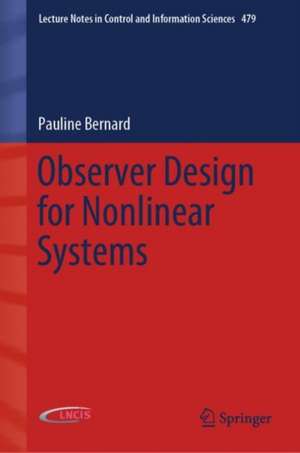
Observer Design for Nonlinear Systems: Lecture Notes in Control and Information Sciences, cartea 479
Autor Pauline Bernarden Limba Engleză Hardback – 5 feb 2019
În domeniul Automaticii și ingineriei sistemelor, estimarea stărilor interne rămâne una dintre cele mai complexe provocări, mai ales când operăm cu modele neliniare în timp continuu. Ne-a atras atenția Observer Design for Nonlinear Systems prin modul riguros în care Pauline Bernard reușește să unifice o literatură vastă și adesea difuză într-un cadru teoretic coerent. Volumul, parte din prestigioasa serie Lecture Notes in Control and Information Sciences, propune o metodologie clară: transformarea dinamicii sistemului în structuri specifice, numite forme normale, pentru care există deja observatori cunoscuți.
Abordarea diferă de New Directions in Nonlinear Observer Design prin faptul că este mai puțin o colecție de lucrări de conferință și mai mult un ghid aplicabil, structurat pedagogic. În timp ce alte lucrări se concentrează pe direcții de cercetare exploratorii, Pauline Bernard descompune procesul în pași tehnici expliciți: identificarea formelor normale (state-affine sau triunghiulare), condițiile de transformare și, esențial, recuperarea estimărilor în coordonatele inițiale. Apreciem în mod deosebit Partea a III-a, care abordează metode recente pentru a evita inversarea numerică a transformărilor — un obstacol major în implementările practice în timp real.
Structura progresivă a celor 11 capitole ghidează cititorul de la observabilitatea neliniară fundamentală către tehnici avansate precum designul Luenberger neliniar sau observatorii de tip high-gain. Față de Algorithms of Estimation for Nonlinear Systems, care pune accent pe algoritmi de aproximare, această lucrare oferă demonstrații matematice solide pentru convergența globală, fiind un instrument indispensabil pentru cei care proiectează sisteme de control robuste în ingineria electronică.
Din seria Lecture Notes in Control and Information Sciences
- 18%
 Preț: 922.72 lei
 - 15%
 Preț: 672.67 lei
 - 18%
 Preț: 941.12 lei
 - 18%
 Preț: 867.40 lei
 - 18%
 Preț: 1073.96 lei
 - 20%
 Preț: 343.21 lei
 - 11%
 Preț: 506.65 lei
 - 20%
 Preț: 647.32 lei
 -
 Preț: 373.03 lei
 -
 Preț: 393.04 lei
 -
 Preț: 367.68 lei
 -
 Preț: 389.72 lei
 -
 Preț: 385.58 lei
 - 15%
 Preț: 621.46 lei
 - 15%
 Preț: 638.23 lei
 -
 Preț: 369.60 lei
 -
 Preț: 373.68 lei
 - 15%
 Preț: 644.94 lei
 - 15%
 Preț: 676.36 lei
 - 20%
 Preț: 336.37 lei
 -
 Preț: 367.42 lei
 -
 Preț: 555.85 lei
 -
 Preț: 393.66 lei
 -
 Preț: 420.47 lei
 -
 Preț: 388.03 lei
 -
 Preț: 370.42 lei
 - 18%
 Preț: 725.74 lei
 -
 Preț: 380.77 lei
 - 15%
 Preț: 624.45 lei
 - 15%
 Preț: 627.39 lei
 -
 Preț: 371.48 lei
 -
 Preț: 386.21 lei
 -
 Preț: 403.03 lei
 -
 Preț: 402.44 lei
 -
 Preț: 373.12 lei
 -
 Preț: 390.25 lei
 -
 Preț: 372.67 lei
 -
 Preț: 389.72 lei
 -
 Preț: 379.38 lei
 -
 Preț: 371.77 lei
 -
 Preț: 391.66 lei
 -
 Preț: 368.43 lei
 -
 Preț: 399.61 lei
 -
 Preț: 387.70 lei
 -
 Preț: 372.58 lei
 -
 Preț: 369.60 lei
 -
 Preț: 374.51 lei
 -
 Preț: 397.91 lei
 -
 Preț: 391.66 lei
Preț: 752.14 lei
Preț vechi: 917.24 lei
-18%
Carte disponibilă
Livrare economică 05-19 octombrie
Specificații
ISBN-10: 3030111458
Pagini: 150
Ilustrații: XI, 187 p. 76 illus., 9 illus. in color.
Dimensiuni: 155 x 235 mm
Greutate: 0.45 kg
Ediția:1st ed. 2019
Editura: Springer International Publishing
Colecția Springer
Seria Lecture Notes in Control and Information Sciences
Locul publicării:Cham, Switzerland
V-ar putea interesa
-
 NonlinearJohn MaedaPreț: 144.51 lei
 -
 Control System DesignBernard Friedland-24%Preț: 171.04 lei224.00 lei
 -
 Linear System Theory: The State Space ApproachLofti A. ZadehPreț: 207.90 lei
 -
 Optimal Control and EstimationRobert F. Stengel-20%Preț: 207.26 lei260.45 lei
 -
 Notes on the Synthesis of FormChristopher AlexanderPreț: 227.75 lei
 -
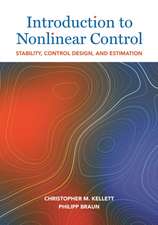 Introduction to Nonlinear ControlChristopher M Kellett-14%Preț: 546.44 lei635.40 lei
 -
 Optimal Estimation of Dynamic SystemsJohn L. Crassidis-8%Preț: 504.66 lei548.54 lei
 -
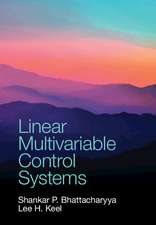 Linear Multivariable Control SystemsShankar P Bhattacharyya-11%Preț: 645.92 lei725.75 lei
 -
 Kalman Filtering: Theory and Practice with MATLABMohinder S. Grewal-5%Preț: 616.46 lei648.91 lei
 -
 Modeling of Physical SystemsJoseph J. Beaman-23%Preț: 606.39 lei787.52 lei
 -
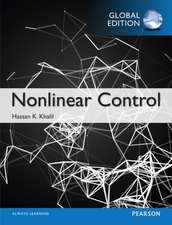 Nonlinear Control, Global EditionHassan Khalil-11%Preț: 651.40 lei731.91 lei
 -
 Introduction to Robotics, Global EditionJohn Craig-9%Preț: 586.34 lei644.32 lei
 -
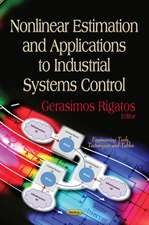 Nonlinear Estimation & Applications to Industrial Systems ControlGerasimos Rigatos-26%Preț: 1335.59 lei1809.42 lei
 -
 H-SystemsElena De Santis-20%Preț: 912.34 lei1140.43 lei
 -
 Robust and Adaptive ControlEugene LavretskyPreț: 532.67 lei
 -
 State Estimation for Nonlinear Continuous-Discrete Stochastic SystemsGennady Yu. Kulikov-18%Preț: 762.47 lei929.85 lei
 -
 Components Operationally: Reversibility and System EngineeringClaudio Antares Mezzina-20%Preț: 389.32 lei486.66 lei
 -
 Nonlinear Systems and ControlsJürgen Adamy-23%Preț: 762.48 lei990.23 lei
De ce să citești această carte
Recomandăm această carte cercetătorilor și studenților la master sau doctorat care au nevoie de un fundament teoretic solid în proiectarea observatorilor. Cititorul câștigă o înțelegere clară a formelor normale și a tehnicilor Luenberger, primind soluții concrete pentru probleme de implementare numerică. Este un instrument tehnic esențial pentru oricine dorește să treacă de la teoria liniară la complexitatea sistemelor neliniare reale.
Despre autor
Pauline Bernard este o cercetătoare specializată în teoria controlului și automatică, recunoscută pentru contribuțiile sale în designul observatorilor pentru sisteme neliniare. Lucrările sale se concentrează pe transformări de coordonate și forme normale, căutând soluții care să echilibreze rigoarea matematică cu fezabilitatea computațională. Prin volumul publicat la Springer, ea sintetizează rezultate de ultimă oră din domeniu, oferind o perspectivă modernă asupra tehnicilor de estimare a stării în sisteme dinamice complexe.