
Norman N. Holland: The Dean of American Psychoanalytic Literary Critics: Psychoanalytic Horizons
Autor Jeffrey Bermanen Limba Engleză Hardback – 11 mar 2021
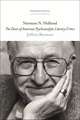
Jeffrey Berman analyzes all of Holland's books, and many of his 250 scholarly articles, highlighting continuities and discontinuities in the critic's thinking over time. A controversial if not polarizing figure, Holland is discussed in relation to his closest colleagues, including Murray Schwartz, Bernard Paris, and Leslie Fiedler, as well as his fiercest critics, among them Frederick Crews, David Bleich, and Jonathan Culler, creating a dynamic and personal portrait. Insofar as this text illuminates the evolving mind of a premier literary critic, it produces a parallel profile of the American reader, the primary object of Holland's extensive work.
Din seria Psychoanalytic Horizons
- 11%
 Preț: 159.88 lei
 - 16%
 Preț: 147.99 lei
 - 26%
 Preț: 130.87 lei
 - nou
 Preț: 161.13 lei
 - 17%
 Preț: 157.73 lei
 - 16%
 Preț: 170.67 lei
 - 75%
 Preț: 128.50 lei
 - 33%
 Preț: 107.03 lei
 - 25%
 Preț: 239.73 lei
 - 25%
 Preț: 207.73 lei
 - 15%
 Preț: 132.70 lei
 - 25%
 Preț: 239.04 lei
 - 20%
 Preț: 162.30 lei
 - 20%
 Preț: 164.50 lei
 - 15%
 Preț: 165.88 lei
 - 26%
 Preț: 210.56 lei
 - 11%
 Preț: 426.10 lei
 - 40%
 Preț: 211.06 lei
 - 25%
 Preț: 242.31 lei
 - 24%
 Preț: 234.30 lei
 - 7%
 Preț: 168.83 lei
 - 23%
 Preț: 236.74 lei
 - 26%
 Preț: 206.09 lei
 - 24%
 Preț: 250.57 lei
 - 33%
 Preț: 580.87 lei
 - 26%
 Preț: 210.58 lei
 - 26%
 Preț: 214.41 lei
 - 24%
 Preț: 234.41 lei
Preț: 298.29 lei
Puncte Express: 447
Carte disponibilă
Livrare economică 03-17 noiembrie
Livrare express 17-23 octombrie pentru 39.62 lei
Livrare prin curier în România Termenul estimat este afișat lângă disponibilitate.
Transport gratuit de la 400.00 lei Plată online sau ramburs, în funcție de opțiunile comenzii.
Retur gratuit în 14 zile Comandă securizată și suport în română.
Specificații
ISBN-13: 9781501372964
ISBN-10: 1501372963
Pagini: 296
Dimensiuni: 140 x 216 x 20 mm
Greutate: 0.49 kg
Editura: Bloomsbury Publishing
Colecția Bloomsbury Academic
Seria Psychoanalytic Horizons
Locul publicării:New York, United States
ISBN-10: 1501372963
Pagini: 296
Dimensiuni: 140 x 216 x 20 mm
Greutate: 0.49 kg
Editura: Bloomsbury Publishing
Colecția Bloomsbury Academic
Seria Psychoanalytic Horizons
Locul publicării:New York, United States
Cuprins
1. Writing Non-Psychoanalytically: The First Modern Comedies and The Shakespearean Imagination
2. Becoming a Freudian: Psychoanalysis and Shakespeare
3. Theorizing Psychoanalytic Literary Criticism: The Dynamics of Literary Response
4. Developing a New Model of Reader-Response Criticism: Poems in Persons and 5 Readers Reading
5. Extending Identity Theory in the 1980s: "Re-Covering 'The Purloined Letter," Laughing, The I and Being Human, and The Brain of Robert Frost
6. Speaking in a Lone Voice Among the New Cryptics: Holland's Guide and The Critical I
7. Penning Fiction: "A Cyberreader Defends" and Death in a Delphi Seminar
8. Exposing the Film Critic's Free Associations: Meeting Movies
9. Venturing into a New Field: Literature and the Brain
10. Contemplating Endings
Conclusion: Norman Holland's Legacy
Works Cited
2. Becoming a Freudian: Psychoanalysis and Shakespeare
3. Theorizing Psychoanalytic Literary Criticism: The Dynamics of Literary Response
4. Developing a New Model of Reader-Response Criticism: Poems in Persons and 5 Readers Reading
5. Extending Identity Theory in the 1980s: "Re-Covering 'The Purloined Letter," Laughing, The I and Being Human, and The Brain of Robert Frost
6. Speaking in a Lone Voice Among the New Cryptics: Holland's Guide and The Critical I
7. Penning Fiction: "A Cyberreader Defends" and Death in a Delphi Seminar
8. Exposing the Film Critic's Free Associations: Meeting Movies
9. Venturing into a New Field: Literature and the Brain
10. Contemplating Endings
Conclusion: Norman Holland's Legacy
Works Cited
Recenzii
Jeffrey Berman's brilliant critical biography of Norman Holland is a major contribution to the history of 20th-century criticism and should be on the desk of anyone interested in how the debates about the function and meaning of literature shifted during this tumultuous period. Comprehensive, well-written, and as engaging as Norman Holland was as a critic and a personality.
Jeffrey Berman has accomplished an immense task; he has written an appealing and very personal study of Norman Holland, engaging with his subject in a way that both elaborates convincingly the unusual trajectory of Holland's career as the leading psychoanalytic literary critic of the sixties and beyond, but also takes issue with some of Holland's positions. Meticulously engaging Holland extensive oeuvre, Berman moves through the various stages of Holland's criticism from new critical to psychoanalytic to his final commitment to reader response theory, celebrating Holland's achievement but also pointing out Holland's contradictions and weaknesses. Indeed, Berman analyzes Holland not only as a critic but as a person, reading for example, Holland's interpretations of Shakespeare as projections of Holland's own personality. Even more unusual, Berman establishes a personal relationship with Holland during the course of the book describing his own personal encounters with Holland as an undergraduate student and later as a fellow academic to whom he felt close. Finding his subject witty, engaging, insightful, playful, but also at times condescending and cutting, Berman presents an extraordinary personal and complex portrait of an extraordinary and complex critic as well as a comprehensive tour of his works.
Jeffrey Berman has accomplished an immense task; he has written an appealing and very personal study of Norman Holland, engaging with his subject in a way that both elaborates convincingly the unusual trajectory of Holland's career as the leading psychoanalytic literary critic of the sixties and beyond, but also takes issue with some of Holland's positions. Meticulously engaging Holland extensive oeuvre, Berman moves through the various stages of Holland's criticism from new critical to psychoanalytic to his final commitment to reader response theory, celebrating Holland's achievement but also pointing out Holland's contradictions and weaknesses. Indeed, Berman analyzes Holland not only as a critic but as a person, reading for example, Holland's interpretations of Shakespeare as projections of Holland's own personality. Even more unusual, Berman establishes a personal relationship with Holland during the course of the book describing his own personal encounters with Holland as an undergraduate student and later as a fellow academic to whom he felt close. Finding his subject witty, engaging, insightful, playful, but also at times condescending and cutting, Berman presents an extraordinary personal and complex portrait of an extraordinary and complex critic as well as a comprehensive tour of his works.