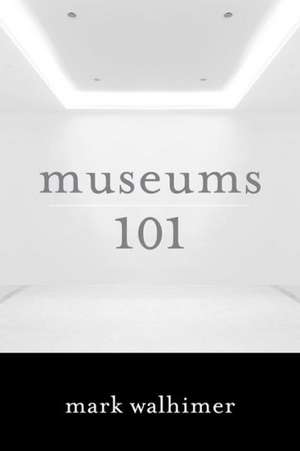
Museums 101: Rowman & Littlefield Publishers
Autor Mark Walhimeren Limba Engleză Paperback – 28 mai 2015
Din seria Rowman & Littlefield Publishers
-
 Preț: 113.82 lei
 - 13%
 Preț: 155.38 lei
 -
 Preț: 109.93 lei
 - 20%
 Preț: 370.93 lei
 - 19%
 Preț: 323.76 lei
 - 26%
 Preț: 223.03 lei
 - 19%
 Preț: 321.01 lei
 - 21%
 Preț: 307.35 lei
 - 21%
 Preț: 186.50 lei
 - 24%
 Preț: 255.02 lei
 - 16%
 Preț: 109.26 lei
 - 31%
 Preț: 351.69 lei
 - 15%
 Preț: 127.13 lei
 - 23%
 Preț: 320.61 lei
 - 19%
 Preț: 324.21 lei
 - 30%
 Preț: 355.24 lei
 - 23%
 Preț: 258.39 lei
 -
 Preț: 400.51 lei
 - 23%
 Preț: 275.97 lei
 - 24%
 Preț: 275.28 lei
 - 31%
 Preț: 351.50 lei
 - 22%
 Preț: 323.28 lei
 - 32%
 Preț: 373.39 lei
 - 34%
 Preț: 842.33 lei
 - 19%
 Preț: 314.30 lei
 - 23%
 Preț: 354.68 lei
 - 21%
 Preț: 128.84 lei
 - 30%
 Preț: 774.75 lei
 - 23%
 Preț: 278.65 lei
 - 23%
 Preț: 259.97 lei
 - 19%
 Preț: 344.02 lei
 - 32%
 Preț: 594.45 lei
 - 31%
 Preț: 566.85 lei
 - 22%
 Preț: 358.54 lei
 - 19%
 Preț: 322.03 lei
 - 16%
 Preț: 148.06 lei
 - 22%
 Preț: 360.79 lei
 - 19%
 Preț: 323.37 lei
 - 31%
 Preț: 414.61 lei
 - 25%
 Preț: 344.18 lei
 - 30%
 Preț: 703.64 lei
 - 14%
 Preț: 152.49 lei
 - 30%
 Preț: 827.47 lei
 - 19%
 Preț: 316.66 lei
 - 23%
 Preț: 276.77 lei
 - 29%
 Preț: 709.89 lei
 - 23%
 Preț: 262.16 lei
 - 19%
 Preț: 335.82 lei
Preț: 256.91 lei
Preț vechi: 335.04 lei
-23%
Carte tipărită la comandă
Livrare economică 20 noiembrie-04 decembrie
Specificații
ISBN-10: 1442230185
Pagini: 254
Dimensiuni: 146 x 226 x 16 mm
Greutate: 0.36 kg
Editura: Bloomsbury Publishing
Colecția Rowman & Littlefield
Seria Rowman & Littlefield Publishers
Locul publicării:New York, United States
V-ar putea interesa
-
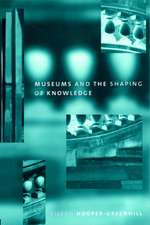 Museums and the Shaping of KnowledgeEileen Hooper GreenhillPreț: 432.53 lei
 -
 -15%Preț: 428.25 lei503.82 lei
 -
 Collections ManagementAnne Fahy-15%Preț: 477.57 lei561.85 lei
 -
 Interpreting Objects and CollectionsSusan Pearce-8%Preț: 437.71 lei475.77 lei
 -
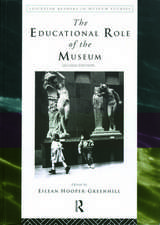 The Educational Role of the MuseumEilean Hooper-GreenhillPreț: 441.00 lei
 -
 Heritage, Museums and Galleries: An Introductory ReaderGerard CorsanePreț: 450.26 lei
 -
 Preț: 341.99 lei
 -
 Preventive Conservation in MuseumsChris Caple-8%Preț: 505.74 lei549.72 lei
 -
 Preț: 119.45 lei
 -
 Preț: 91.11 lei
 -
 South Pacific Museums: Experiments in CultureChris Healy-17%Preț: 194.43 lei233.59 lei
 -
 Museum StudiesBettina Messias CarbonellPreț: 389.45 lei
 -
 A Companion to Museum StudiesSharon MacDonaldPreț: 387.30 lei
Descriere
In one short volume, Mark Walhimer covers:
. Essential Background, such as what is a museum, a quick history of museums, and 10 steps to starting a museum
. Operational Basics, such as branding, marketing, strategic planning, governance, accessibility, and day-to-day operations
. What goes on behind the scenes in a museum, ranging from finances to fundraising to art handling, exhibit management, and research
. The Visitor Experience, planning a museum, designing exhibits for visitors, programming, and exhibit evaluation.
Features that even the most experienced museum professionals will find useful include a community outreach checklist, a fundraising checklist, a questionnaire for people considering starting a new museum, and an exhaustive, well-organized list of online resources for museum operations. The book's contents were overseen by a six-member international advisory board.
Valuable appendixes you'll use every day include a museum toolbox full of useful forms, checklists, and worksheets, and a glossary of essential museum-related terms. In addition to the printed book, Museums 101 also features a companion website exclusively for readers of the book. The website- museums101.com-features:
. links to essential online resources in the museum world,
. downloadable sample documents,
. a glossary,
. a bibliography of sources for further reading, and
. photographs of more than 75 museums of all types.
Museums 101 Advisory Board
. Jim DeMersman, Executive Director, Museum on Main, Pleasanton, California,
United States of America
. David L. Godfrey, C.P.A., Allison & Godfrey, Certified Public Accountants,
Norwalk, Connecticut, United States of America
. Van A. Romans, President, Fort Worth Museum of Science and History,
Fort Worth, Texas, and Board of Trustees, American Alliance of Museums,
United States of America
. Sergey Solovyev, Ph.D., Department of Greek & Roman Antiquities, The
State Hermitage Museum, Russia
. Alison Spence, Exhibitions and Loans Registrar, National Museum of Australia,
Canberra ACT, Australia
. Audrey Vermette, Director of Programs and Public Affairs, Canadian Museums
Association, Ontario, Canada
Cuprins
Preface
Foreword
PART I: ESSENTIAL MUSEUM BACKGROUND
Chapter 1: Defining a Museum
Chapter 2: A Quick History of Museums
PART II: CREATING AN INTEGRATED MUSEUM
Chapter 3: The Integrated Museum
Chapter 4: Starting a Museum
Chapter 5: Museum Governance
Chapter 6: Museum Feasibility Studies
Chapter 7: Museum Planning Strategies
PART III: EXHIBITIONS
Chapter 8: Collections
Chapter 9: The Museum Building
Chapter 10: Museum Exhibition Development/Curation
Chapter 11: Exhibition Design and Fabrication
Chapter 12: Museum Programming: Education
PART IV: BEHIND THE SCENES
Chapter 13: Museum Finances
Chapter 14: Museum Fundraising
Chapter 15: Museum Marketing
Chapter 16: Museum Project Management
Chapter 17: Museum Evaluation
Chapter 18: Museum Operations
Chapter 19: Museum Accessibility
Chapter 20: Museum Research
Chapter 21: Collections Care
Chapter 22: The Museum of the Future
Chapter 23: Putting Your Museum Online
Chapter 24: Working in Museums
PART V: THE MUSEUM TOOLBOX
American Alliance of Museums: Code of Ethics for Museums
Sample Bylaws
American Alliance of Museums: Developing a Mission Statement
Sample Museum Constitution
Sample Museum Feasibility Template
Sample Board Member Responsibilities
Sample Policy for Donations of Objects
Sample Donor Questionnaire
Sample Museum Exhibit Sponsorship Agreement
Timing and Tracking Study
Visitor Exit Interview
Museum Job Descriptions
Sample Museum Director Job Description
Object Cataloging Record
Museum Exhibition Design Process
Resources
Bibliography
Index
Recenzii
The great value of Museums 101 is that it outlines the basics of exhibition development, collections care, evaluation, and more, in a way that acknowledges that museum work requires specialized expertise. Don't try to re-invent the museum, it tells the collector deciding to build a museum from scratch, or the businessman suddenly appointed to the board. There are things you need to know. Museums have figured out a lot. Read this book to get up to speed.
As its title implies, this is an introduction to the world of museums, with 24 chapters divided into four sections: Museum Background, Creating an Integrated Museum, Exhibitions, and Behind the Scenes. Also included is a 'Museum Toolkit' which provides sample documents of use to museum personnel. The author outlines his hoped-for readership: 'museum founders, new museum staff and volunteers, those wishing to work in museums, new board members, students, and those wishing to contract services with a museum.' From finances and marketing, to creating an online presence and project management, this volume presents the key elements of museum operation. An additional feature of this volume is access to a companion website with additional resources on the subject. Libraries serving any of the readers listed by the author, or readers simply interested in how museums 'work,' will want to have this volume. Its clear language and excellent organization will make it accessible to all levels of their patrons.
Museums 101 is a straight forward 'how-to' book for people new to the field of museums and for those interested in entering professions in the museum field. A perfect book to hand to a new volunteer, new staff or board member and say 'here are the basics.
Museums 101 is very interesting and useful for those managing museums or interested in organizing one.
Museums 101 is an amazing and comprehensive resource, full of great insights of how museums work.
Notă biografică
Mark Walhimer is a managing partner of the museum consultancy Museum Planning, LLC, and an industrial design professor.
He is the founder of Museum Courses, an online platform for museum courses, and has taught at Georgia Institute of Technology in Atlanta, Georgia, and at Tecnológico de Monterrey and Universidad Iberoamericana, both in Mexico City.
Prior to starting his company, Walhimer held positions at Discovery Science Center in Santa Ana, California; the Children's Museum of Indianapolis; the Tech Museum in San Jose, California; and Liberty Science Center. He has also been Chief Operating Officer of a museum exhibition design and fabrication firm. He is the author of Museums 101 and Designing Museum Experiences.
Walhimer has been a three-time juror for the United States Department of Energy Solar Decathlon, an American Alliance of Museums Museum Assessment Program peer reviewer, and an Institute of Museum and Library Services peer reviewer. He is the recipient of a Fulbright Specialist grant.