
Mining Sequential Patterns from Large Data Sets: Advances in Database Systems, cartea 28
Autor Wei Wang, Jiong Yangen Limba Engleză Paperback – 6 dec 2010
Din seria Advances in Database Systems
- 20%
 Preț: 948.32 lei
 - 20%
 Preț: 1220.35 lei
 - 20%
 Preț: 942.77 lei
 - 20%
 Preț: 939.95 lei
 - 20%
 Preț: 956.44 lei
 - 18%
 Preț: 905.43 lei
 - 20%
 Preț: 946.13 lei
 - 20%
 Preț: 941.52 lei
 - 20%
 Preț: 1229.88 lei
 - 20%
 Preț: 958.50 lei
 - 20%
 Preț: 943.43 lei
 - 20%
 Preț: 614.03 lei
 - 20%
 Preț: 946.45 lei
 - 20%
 Preț: 942.95 lei
 - 20%
 Preț: 942.00 lei
 - 20%
 Preț: 1320.98 lei
 - 20%
 Preț: 955.45 lei
 - 20%
 Preț: 952.62 lei
 - 20%
 Preț: 1232.88 lei
 - 20%
 Preț: 624.02 lei
 - 20%
 Preț: 626.68 lei
 - 18%
 Preț: 906.64 lei
 - 20%
 Preț: 624.20 lei
 - 20%
 Preț: 1012.94 lei
 - 20%
 Preț: 624.02 lei
 - 20%
 Preț: 937.23 lei
 - 20%
 Preț: 1337.48 lei
 - 20%
 Preț: 641.07 lei
 - 20%
 Preț: 951.34 lei
 - 20%
 Preț: 618.64 lei
 - 20%
 Preț: 613.87 lei
Preț: 615.00 lei
Preț vechi: 768.74 lei
-20%
Puncte Express: 923
Carte tipărită la comandă
Livrare economică 16-30 iunie
Specificații
ISBN-13: 9781441937070
ISBN-10: 1441937072
Pagini: 180
Ilustrații: XV, 163 p.
Dimensiuni: 155 x 235 x 9 mm
Greutate: 0.26 kg
Ediția:Softcover reprint of hardcover 1st ed. 2005
Editura: Springer Us
Colecția Springer
Seria Advances in Database Systems
Locul publicării:New York, NY, United States
ISBN-10: 1441937072
Pagini: 180
Ilustrații: XV, 163 p.
Dimensiuni: 155 x 235 x 9 mm
Greutate: 0.26 kg
Ediția:Softcover reprint of hardcover 1st ed. 2005
Editura: Springer Us
Colecția Springer
Seria Advances in Database Systems
Locul publicării:New York, NY, United States
V-ar putea interesa
-
 Data Mining: Concepts and TechniquesJiawei Han-41%Preț: 406.15 lei687.94 lei
 -
 The Elements of Statistical LearningJerome Friedman-20%Preț: 513.14 lei641.42 lei
 -
 -40%Preț: 370.93 lei621.33 lei
 -
 The Data Model Resource Book, Volume 1Len Silverston-20%Preț: 460.18 lei575.22 lei
 -
 Understanding BioinformaticsMarketa Zvelebil-27%Preț: 716.80 lei981.92 lei
 -
 Practical Computing for BiologistsSteven H. D. Haddock-27%Preț: 730.79 lei1001.08 lei
 -
 Bioinformatics and Functional GenomicsJonathan Pevsner-11%Preț: 721.72 lei810.92 lei
 -
 Data Science and Big Data AnalyticsEmc Education Services-20%Preț: 377.44 lei471.81 lei
 -
 Data Analysis Using SQL and Excel, 2nd EditionGordon S LinoffPreț: 374.33 lei
 -
 -13%Preț: 558.43 lei641.87 lei
 -
 From Chaos to ClarityJames Eagle-20%Preț: 129.23 lei161.53 lei
 -
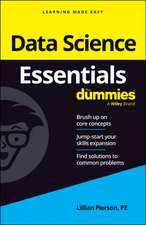 Data Science Essentials For DummiesLillian Pierson-20%Preț: 73.23 lei91.53 lei
 -
 The Data Hero PlaybookMalcolm HawkerPreț: 194.94 lei
 -
 Statistical Analysis with Python for DummiesJoseph SchmullerPreț: 221.35 lei
 -
 Data Clustering: Algorithms and ApplicationsCharu C. Aggarwal-9%Preț: 1030.35 lei1132.24 lei
 -
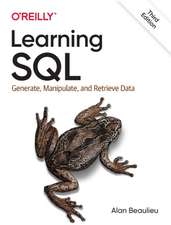 Learning SQL: Generate, Manipulate, and Retrieve DataAlan Beaulieu-20%Preț: 304.34 lei380.42 lei
 -
 -20%Preț: 1212.20 lei1515.25 lei
 -
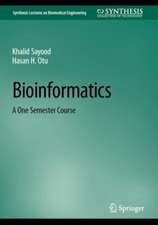 Bioinformatics: A One Semester CourseKhalid SayoodPreț: 298.96 lei
 -
 Statistics for ScientistsUmberto Michelucci-20%Preț: 286.96 lei358.70 lei
 -
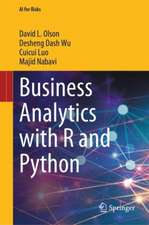 Business Analytics with R and PythonDavid L. Olson-20%Preț: 405.64 lei507.05 lei
Public țintă
Professional/practitionerCuprins
Related Work.- Periodic Patterns.- Statistically Significant Patterns.- Approximate Patterns.- Conclusion Remark.
Textul de pe ultima copertă
The focus of Mining Sequential Patterns from Large Data Sets is on sequential pattern mining. In many applications, such as bioinformatics, web access traces, system utilization logs, etc., the data is naturally in the form of sequences. This information has been of great interest for analyzing the sequential data to find its inherent characteristics. Examples of sequential patterns include but are not limited to protein sequence motifs and web page navigation traces.
To meet the different needs of various applications, several models of sequential patterns have been proposed. This volume not only studies the mathematical definitions and application domains of these models, but also the algorithms on how to effectively and efficiently find these patterns.
Mining Sequential Patterns from Large Data Sets provides a set of tools for analyzing and understanding the nature of various sequences by identifying the specific model(s) of sequential patterns that are most suitable. This book provides an efficient algorithm for mining these patterns.
Mining Sequential Patterns from Large Data Sets is designed for a professional audience of researchers and practitioners in industry and also suitable for graduate-level students in computer science.
To meet the different needs of various applications, several models of sequential patterns have been proposed. This volume not only studies the mathematical definitions and application domains of these models, but also the algorithms on how to effectively and efficiently find these patterns.
Mining Sequential Patterns from Large Data Sets provides a set of tools for analyzing and understanding the nature of various sequences by identifying the specific model(s) of sequential patterns that are most suitable. This book provides an efficient algorithm for mining these patterns.
Mining Sequential Patterns from Large Data Sets is designed for a professional audience of researchers and practitioners in industry and also suitable for graduate-level students in computer science.
Caracteristici
Contains unique multiple models for various sequential patterns and detailed algorithms on how to mine these patterns. Bio-informaticians not yet familiar with data mining models and algorithms will appreciate the various descriptions of models and algorithms Includes supplementary material: sn.pub/extras