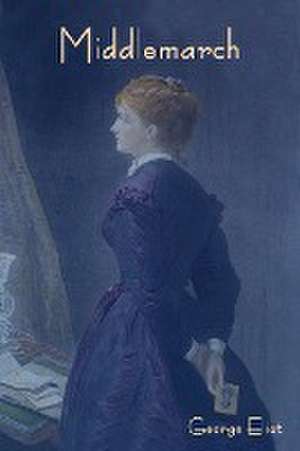
Middlemarch
Autor George Elioten Limba Engleză Paperback – 6 ian 2023
Ca și The Mill on the Floss, această lucrare explorează tensiunea dintre aspirațiile individuale și rigorile unei comunități provinciale, dar dintr-o perspectivă mult mai matură și panoramică, abandonând nostalgia în favoarea unei analize sociale chirurgicale. Observăm în Middlemarch nu doar un roman, ci un efort enciclopedic de a cartografia „istoria omului” prin prisma unor vieți aparent mărunte. Premisa este așezată sub semnul Sfintei Tereza: ce se întâmplă cu sufletele arzătoare care nu găsesc un canal epic pentru idealismul lor? Dorothea Brooke devine astfel simbolul unei grandori spirituale neadaptate la „micimea oportunităților” dintr-un oraș de provincie englezesc. În contextul operei sale, dacă Silas Marner sau Adam Bede păstrează un ton mai degrabă pastoral, Middlemarch reprezintă apogeul realismului psihologic al lui George Eliot. Structura cărții, subintitulată „A Study of Provincial Life”, este una de o complexitate remarcabilă, împletind destinele Dorotheei și ale medicului Lydgate cu o precizie care justifică faimoasa apreciere a Virginiei Woolf: este un roman pentru oameni maturi. Ritmul lecturii este dictat de o proză densă, meditativă, unde acțiunea exterioară este subordonată mișcărilor interioare ale conștiinței. Ediția de față, publicată de OUP OXFORD, îmbogățește experiența prin includerea unor anexe valoroase: eseuri ale autoarei despre moralitate și literatură, precum și recenzii de epocă, oferind cititorului coordonatele intelectuale necesare pentru a înțelege profunzimea acestui „monument” al literaturii victoriene.
Preț: 229.39 lei
Cartea nu mai face parte din oferta noastră
Specificații
ISBN-10: 1644399199
Pagini: 586
Dimensiuni: 152 x 229 x 35 mm
Greutate: 0.94 kg
Editura: Indoeuropeanpublishing.com
V-ar putea interesa
-
 Wuthering HeightsEmily BrontëPreț: 28.01 lei
 -
 Tess of the D'UrbervillesThomas HardyPreț: 28.01 lei
 -
 Song of SolomonToni Morrison-25%Preț: 59.67 lei79.09 lei
 -
 PossessionA. S. Byatt-16%Preț: 67.71 lei80.75 lei
 -
 Wide Sargasso SeaJean RhysPreț: 69.71 lei
 -
 UlyssesJames Joyce-39%Preț: 67.82 lei111.42 lei
 -
 Vanity FairWilliam Makepeace Thackeray-20%Preț: 66.43 lei83.11 lei
 -
 Sense and SensibilityJane Austen-25%Preț: 48.45 lei64.99 lei
 -
 AntigoneSophocles-39%Preț: 17.03 lei27.96 lei
 -
 The Worm at the CoreSheldon Solomon-31%Preț: 62.76 lei91.43 lei
 -
 Tyger, TygerWilliam Blake-39%Preț: 17.03 lei27.99 lei
 -
 You Are HomeCatana Chetwynd-18%Preț: 69.96 lei85.66 lei
 -
 Sea Prayer: The Sunday Times and New York Times BestsellerKhaled Hosseini-36%Preț: 59.36 lei92.77 lei
 -
 -25%Preț: 215.93 lei287.90 lei
 -
 Invisible Women: Exposing Data Bias in a World Designed for MenCaroline Criado Perez-19%Preț: 75.16 lei92.53 lei
 -
 Tools of TitansTimothy Ferriss-23%Preț: 149.18 lei192.55 lei
 -
 The Denial of DeathErnest Becker-19%Preț: 68.61 lei84.95 lei
 -
 The Woman in WhiteWilkie CollinsPreț: 32.47 lei
 -
 -18%Preț: 118.19 lei143.88 lei
 -
 Man's Search For MeaningViktor E. Frankl-20%Preț: 72.37 lei90.84 lei
 -
 Vanity FairWilliam Makepeace ThackerayPreț: 39.96 lei
 -
 Bleak HouseCharles DickensPreț: 39.70 lei
 -
 Mayor of CasterbridgeThomas HardyPreț: 28.01 lei
 -
 Our Castle by the SeaLucy StrangePreț: 57.69 lei
 -
 Le Petit Prince: Antoine de Saint-ExupéryAntoine de Saint-ExupèryPreț: 35.63 lei
De ce să citești această carte
Recomandăm Middlemarch cititorului care caută o experiență de lectură profundă, capabilă să oglindească complexitatea relațiilor umane și a compromisurilor sociale. Câștigați acces la o analiză psihologică fără egal în literatura secolului al XIX-lea și la un context critic de excepție oferit de Oxford World's Classics. Este o lectură esențială pentru a înțelege evoluția romanului modern și luptele interioare ale individului împotriva convențiilor.
Despre autor
George Eliot, pseudonimul literar al lui Mary Anne Evans (1819–1880), a fost una dintre cele mai influente voci ale epocii victoriene. Într-o perioadă în care literatura feminină era adesea redusă la romane de moravuri ușoare, ea a adoptat un nume masculin pentru a se asigura că scrierile sale sunt tratate cu seriozitate intelectuală. Erudiția sa vastă, influențată de cultura germană și de studiile filozofice, se reflectă în realismul psihologic dens și în compasiunea față de eșecurile umane. Prin operele sale, George Eliot a transformat romanul într-un instrument de analiză socială și etică, rămânând până astăzi un reper al literaturii universale.
Descriere scurtă
Notă biografică
Textul de pe ultima copertă
In a panoramic sweep of the years leading up to the First Reform Bill of 1832, George Eliot explores nearly every subject of concern to modern life: art, religion, science, politics, self, society, human relationships. Among her characters are some of the most remarkable portraits in English literature: Dorothea Brooke, the heroine, idealistic but naive; Rosamund Vincy, beautiful and egoistic; Edward Casaubon, the dry-as-dust scholar; Tertius Lydgate, the brilliant but morally flawed physician; the passionate artist, Will Ladislaw; and Fred Vincy and Mary Garth, childhood sweethearts whose charming courtship is one of the many humorous elements in the novel's comic vein.
Descriere
'the growing good of the world is partly dependent on unhistoric acts' The greatest 'state of the nation' novel in English, Middlemarch addresses ordinary life at a moment of great social change, in the years leading to the Reform Act of 1832. Through her portrait of a Midlands town, George Eliot addresses gender relations and class, self-knowledge and self-delusion, community and individualism. Eliot follows the fortunes of the town's central characters as they find, lose, and rediscover ideals and vocations in the world. Through its psychologically rich portraits, the novel contains some of the great characters of literature, including the idealistic but naïve Dorothea Brooke, beautiful and egotistical Rosamund Vincy, the dry scholar Edward Casaubon, the wise and grounded Mary Garth, and the brilliant but proud Dr Lydgate. In its whole view of a society, the novel offers enduring insight into the pains and pleasures of life with others, and explores nearly every subject of concern to modern life:. art, religion, science, politics, self, society, and, above all, human relationships. This edition uses the definitive Clarendon text.
Recenzii
This Broadview edition includes a critical introduction and a rich selection of contextual materials, including contemporary reviews of the novel, other writings by George Eliot (essays, reviews, and criticism), and historical documents pertaining to medical reform, religious freedom, and the advent of the railroads.
“Broadview Press and editor Gregory Maertz have produced a text whose rich but judicious contextual annotation, notably highlighting Eliot’s deep immersion in German culture, makes this a crucial edition of what is arguably the greatest Victorian novel of them all.” — Michael McKeon, Rutgers University
“Gregory Maertz’s fine new edition of Middlemarch allows readers to consider the novel in relation to a range of documents—reviews and other writings by George Eliot, contemporary reviews of the novel, and contextual material. This additional material both enriches our reading of the novel and its concerns and expands our knowledge of the period.” — Mark Turner, King’s College London
Cuprins
Introduction
George Eliot: A Brief Chronology
A Note on the Text
Middlemarch: A Study of Provincial Life
Appendix A: George Eliot’s Essays, Reviews, and Criticism
- “Woman in France: Madame de Sablé,” Westminster Review (October 1854)
- “The Morality of Wilhelm Meister,” The Leader (21 July 1855)
- From “Margaret Fuller and Mary Wollstonecraft,” The Leader (13 October 1855)
- From Review of John Ruskin’s Modern Painters (1856), Westminster Review (April 1856)
- From “The Natural History of German Life,” Westminster Review (July 1856)
- “Silly Novels by Lady Novelists,” Westminster Review (October 1856)
- From Edward Dowden, “George Eliot,” Contemporary Review (August 1872)
- From Richard Holt Hutton, review of Middlemarch, Spectator (7 December 1872)
- From Edith Simcox, “Middlemarch,” Academy (1 January 1873)
- From [Henry James], unsigned review, Galaxy (March 1873)
- [William Hurrell Mallock], unsigned review of Impressions of Theophrastus Such (1879), Edinburgh Review (October 1879)
- Margaret Oliphant, Chapter XI, “Of the Younger Novelists,” The Victorian Age of English Literature (1882)
- From Sir John Emerich Edward Dalberg, first Baron Acton, “George Eliot’s Life,” Nineteenth Century (March 1885)
- Virginia Woolf, “George Eliot,” Times Literary Supplement (20 November 1919)
- From “The Apothecaries Act” (1815)
- From “The Roman Catholic Relief Act” (1829)
- From “An Act to amend the representation of the people in England and Wales” (1832)
- From “An Act for regulating Schools of Anatomy” (1832)
- Liverpool and Manchester Railroad Company Prospectus (1824)
- From [Commentary on the projected Liverpool and Manchester Railway], Quarterly Review (March 1825)
- From “An Act to consolidate and amend the Acts relating to the Property of Married Women” (1882)