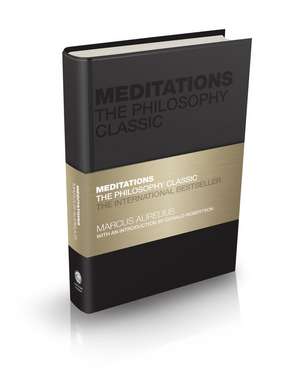
Meditations: Capstone Classics
Autor Marcus Aurelius Editat de Tom Butler-Bowdonen Limba Engleză Paperback – 10 feb 2020
Considerăm că forța rezilienței umane nu este nicăieri mai bine documentată decât în Meditations, opera lui Marcus Aurelius. Autorul nu scrie din postura unui teoretician care dorește să impună o doctrină, ci din cea a unui lider aflat la cârma Imperiului Roman între anii 161 și 180 d.Hr., care își folosește jurnalul personal ca pe un instrument de supraviețuire morală. Subliniem faptul că această lucrare nu a fost concepută pentru publicare, ceea ce îi conferă o onestitate brutală, transformând rigoarea stoică a lui Zeno sau Chrysippus într-o reflecție intimă despre datorie și toleranță. Structura volumului, împărțită în douăsprezece „Cărți”, urmărește progresia gândirii împăratului de la recunoștința față de mentori, în prima parte, până la acceptarea senină a finitudinii existenței în ultimele capitole. Ediția de față, publicată de Dover Publications, păstrează claritatea necesară unui text care extinde cadrul propus de Meditations - The Original Classic Edition prin concentrarea pe esența filosofică, fără a încărca aparatul critic. Reținem că, spre deosebire de alte lucrări incluse în Major Works of the Stoics 3-Book Boxed Set, acest volum se distinge prin caracterul său fragmentar și aforistic, fiind mai degrabă un exercițiu de igienă mentală decât un tratat sistematic. În analiza noastră, observăm o paralelă fascinantă între auto-analiza severă a lui Marcus Aurelius și idealul de autocontrol din literatura creștină timpurie. Totuși, acolo unde creștinismul propune smerenia în fața divinității, împăratul roman pledează pentru o încredere în sine modestă, bazată pe rațiune și pe „cetatea interioară”. Este o lectură esențială pentru înțelegerea modului în care disciplina intelectuală poate atenua povara responsabilităților publice și a zbuciumului cotidian.
Din seria Capstone Classics
-
 Preț: 81.54 lei
 -
 Preț: 81.22 lei
 -
 Preț: 78.85 lei
 -
 Preț: 73.57 lei
 -
 Preț: 72.89 lei
 -
 Preț: 75.66 lei
 -
 Preț: 79.50 lei
 -
 Preț: 72.19 lei
 -
 Preț: 77.83 lei
 -
 Preț: 73.16 lei
 -
 Preț: 72.29 lei
 -
 Preț: 67.30 lei
 -
 Preț: 78.51 lei
 -
 Preț: 93.84 lei
 -
 Preț: 82.99 lei
 -
 Preț: 89.97 lei
 -
 Preț: 61.57 lei
 -
 Preț: 63.27 lei
 -
 Preț: 71.79 lei
 -
 Preț: 72.31 lei
 -
 Preț: 94.52 lei
 -
 Preț: 91.72 lei
 -
 Preț: 75.50 lei
 -
 Preț: 73.44 lei
 -
 Preț: 93.08 lei
 -
 Preț: 92.32 lei
 -
 Preț: 89.81 lei
 -
 Preț: 108.17 lei
 -
 Preț: 107.39 lei
 - nou
 Preț: 99.73 lei
 - nou
 Preț: 94.13 lei
 - nou
 Preț: 91.95 lei
 - nou
 Preț: 110.15 lei
Preț: 72.59 lei
Carte disponibilă
Livrare economică 06-20 noiembrie
Livrare express 22-28 octombrie pentru 23.80 lei
Specificații
ISBN-10: 0857088467
Pagini: 192
Dimensiuni: 127 x 201 x 20 mm
Greutate: 0.29 kg
Editura: Wiley
Colecția Capstone
Seria Capstone Classics
Locul publicării:Chichester, United Kingdom
V-ar putea interesa
-
 The PrinceNiccolo MachiavelliPreț: 28.01 lei
 -
 The Art of WarSun TzuPreț: 28.01 lei
 -
 The SilmarillionJ. R. R. TolkienPreț: 72.78 lei
 -
 CLASSICS HENRY VWilliam ShakespearePreț: 28.01 lei
 -
 The TempestWilliam ShakespearePreț: 29.03 lei
 -
 The Art of RhetoricAristotlePreț: 28.01 lei
 -
 CLASSICS JULIUS CAESARWilliam ShakespearePreț: 28.01 lei
 -
 Our StoryMiranda DickinsonPreț: 92.46 lei
 -
 Letters from a StoicLucius SenecaPreț: 29.76 lei
 -
 Letters from a StoicSeneca-18%Preț: 59.56 lei72.56 lei
 -
 RebelAlbert Camus-26%Preț: 58.75 lei79.02 lei
 -
 Letters to a Young PoetRainer Maria Rilke-39%Preț: 17.48 lei28.48 lei
 -
 The PlagueAlbert Camus-25%Preț: 59.13 lei79.25 lei
 -
 Dune. 25th Anniversary EditionFrank HerbertPreț: 85.60 lei
 -
 Tigers in the MudOtto CariusPreț: 145.13 lei
 -
 The Silk Roads: A New History of the WorldProfessor Peter Frankopan-24%Preț: 96.24 lei125.85 lei
 -
 -26%Preț: 89.18 lei120.70 lei
 -
 The Age of Surveillance Capitalism: AN OBSERVER BEST BOOK OF THE CENTURYProfessor Shoshana ZuboffPreț: 91.15 lei
 -
 -26%Preț: 69.11 lei93.57 lei
 -
 -25%Preț: 71.05 lei94.73 lei
 -
 The Scarlet LetterNathaniel HawthornePreț: 46.05 lei
Recenzii de la cititorii Books Express
Anonim a dat nota:
Foarte usoara, cu o perspectiva complexa asupra caracterului uman, oferind detalii majore asupra vietii ascetice si sfaturi foarte utile pentru imbunatatirea vietii.
De ce să citești această carte
Recomandăm această ediție pentru oricine caută un ghid practic de echilibru emoțional. Veți câștiga o perspectivă unică asupra modului în care gândirea rațională poate transforma adversitatea în oportunitate. Este o lectură fundamentală pentru studenții la filosofie și pentru cei care doresc să exploreze stoicismul direct de la sursă, într-un format compact și ușor de parcurs, care demonstrează că problemele umane fundamentale au rămas neschimbate de două milenii.
Despre autor
Marcus Aureliu a fost împărat al Imperiului Roman din dinastia Antoninilor (161–180 d.Hr.) și unul dintre cei mai importanți reprezentanți ai stoicismului târziu. Născut într-o familie nobilă și adoptat ulterior de Antoninus Pius, el a condus imperiul într-o perioadă marcată de războaie și pandemii, experiențe care i-au șlefuit viziunea asupra lumii. Opera sa, scrisă în limba greacă, a supraviețuit ca o mărturie a datoriei și a integrității. Lucrările sale sunt adesea grupate alături de cele ale lui Seneca și Epictet, formând nucleul gândirii stoice care continuă să influențeze etica modernă.
Descriere scurtă
Descriere
Meditations is a series of personal writings by Marcus Aurelius, Roman Emperor from 161 to 180 AD, recording his reflections on wisdom and virtue. At the time of writing, Aurelius was arguably the most powerful and influential figure in the world, yet his writings are his private reflections to himself on the importance of stoic philosophy, while at the same time fulfilling his obligations as leader of the Roman empire.
Notă biografică
Recenzii
Marcus is well served by this new translation. Hammond has a pithy turn of phrase to match the emperor's own . . . His notes abound in helpful explanation and illuminating cross-reference. Diskin Clay contributes a sparkling and sympathetic introduction. The combination of introduction, translation and notes is as good as they get
Cuprins
Book Two
Book Three
Book Four
Book Five
Book Six
Book Seven
Book Eight
Book Nine
Book Ten
Book Eleven
Book Twelve
Extras
2. Manliness without ostentation I learnt from what I have heard and remember of my father.
3. My mother set me an example of piety and generosity, avoidance of all uncharitableness - not in actions only, but in thought as well - and a simplicity of life quite unlike the usual habits of the rich.
4. To my great-grandfather I owed the advice to dispense with the education of the schools and have good masters at home instead - and to realize that no expense should be grudged for this purpose.
5. It was my tutor who dissuaded me from patronizing Green or Blue* at the races, or Light or Heavy† in the ring; and encouraged me not to be afraid of work, to be sparing in my wants, attend to my own needs, mind my own business, and never listen to gossip.
* The colours of the rival charioteers in the Circus. Roman enthusiasm for these races was unbounded; successful drivers earned large fortunes and became popular idols.
† In one form of gladiatorial combat (the ‘Thracian’) the opponents were armed with light round bucklers; in another (the ‘Samnite’) they carried heavy oblong shields.