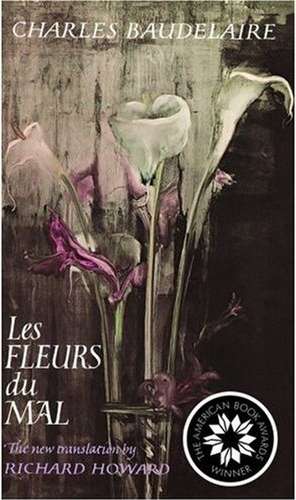
Les Fleurs Du Mal
Autor Charles Baudelaire Traducere de Richard Howarden Limba Engleză Paperback – 15 mar 2008
Aplicabilitatea practică a acestei ediții bilingve rezidă în capacitatea sa de a servi drept instrument de studiu comparativ, oferind textul original francez alături de traducerea premiată a lui Richard Howard. Observăm că această versiune revizuită a Les Fleurs du Mal nu este doar o simplă antologie, ci o reconstrucție fidelă a arhitecturii poetice gândite de Charles Baudelaire în 1857. Structura este riguroasă, urmărind ciclul erotic și angoasa din „Spleen et idéal”, critica urbanismului opresiv în „Tableaux Parisiens” și căutarea uitării în „Le Vin”. Credem că integrarea monotipurilor lui Michael Mazur oferă o dimensiune vizuală necesară pentru a înțelege estetica urâtului și a decadenței specifice simbolismului. Această ediție reprezintă o alternativă la The Flowers of Evil / Les Fleurs du Mal (English and French Edition) pentru cursurile de literatură comparată, cu avantajul unei traduceri care a fost recunoscută oficial prin National Book Award pentru fidelitatea sa față de tonul baudelairian. Dacă Paris Spleen, and La Fanfarlo explorează modernitatea prin poemul în proză și narațiune, Les Fleurs du Mal rămâne nucleul dur al operei sale, unde revolta și senzualitatea sunt filtrate prin forme poetice clasice. Merită menționat că, spre deosebire de edițiile care includ doar selecții, acest volum de la DAVID R GODINE menține integritatea viziunii autorului, oferind un context complet asupra temelor recurente în întreaga sa carieră, de la obsesia pentru pisici din Cat Poems la eseurile critice despre artă.
Preț: 121.07 lei
Carte disponibilă
Livrare economică 29 octombrie-12 noiembrie
Specificații
ISBN-10: 0879234628
Pagini: 400
Dimensiuni: 136 x 231 x 25 mm
Greutate: 0.57 kg
Ediția:Revised
Editura: David R. Godine Publisher
V-ar putea interesa
-
 The Biplane HousesLes MurrayPreț: 79.86 lei
 -
 Spirit Around the SoundShirley ShadboltPreț: 162.65 lei
 -
 St. John of the Cross: Selected PoemsSt John Of The CrossPreț: 125.40 lei
 -
 Preț: 143.98 lei
 -
 Men in ArmorElizabeth LudlamPreț: 94.45 lei
 -
 Selected Poems of Mark StrandMark StrandPreț: 125.57 lei
 -
 The Master LettersLucie Brock-BroidoPreț: 99.61 lei
 -
 Love Is Hard WorkMiguel AlgarinPreț: 88.41 lei
 -
 The Poetess Counts to 100 and Bows OutAna Enriqueta TeránPreț: 240.27 lei
 -
 The Collected Lyric Poems of Luís de CamõesLuís De CamõesPreț: 124.49 lei
 -
 Sir Gawain and the Green KnightW. BarronPreț: 113.43 lei
 -
 Imperfect PenanceMitchell Parry-12%Preț: 92.32 lei104.97 lei
 -
 BurnKathleen JohnsonPreț: 62.67 lei
 -
 Charles Baudelaire, (French Edition) Collection de RomansCharles P. BaudelairePreț: 84.76 lei
 -
 Le Spleen de ParisCharles P. BaudelairePreț: 64.84 lei
 -
 A Una TranseunteCharles P. BaudelairePreț: 57.64 lei
 -
 Les Paradis ArtificielsCharles P. BaudelairePreț: 69.87 lei
 -
 Los DespojosCharles P. BaudelairePreț: 41.25 lei
 -
 Las Flores del MalCharles P. BaudelairePreț: 59.19 lei
 -
 El Spleen de Paris (1862)Charles P. BaudelairePreț: 63.79 lei
 -
 It's Hard Being QueenJeanette LynesPreț: 89.26 lei
 -
 Les épaves (Éd.1866)Charles BaudelairePreț: 116.93 lei
 -
 Théophile Gautier (Éd.1859)Charles BaudelairePreț: 93.97 lei
 -
 The origin of Freemasonry and Knights templarJohn R. BennettPreț: 134.34 lei
 -
 Poemas IgnoradosAna Romero HerraizPreț: 96.61 lei
De ce să citești această carte
Recomandăm această ediție studenților și cercetătorilor care au nevoie de o referință critică solidă. Cititorul câștigă acces la o traducere premiată care păstrează muzicalitatea originală, fiind asistat vizual de ilustrațiile lui Michael Mazur. Este o resursă esențială pentru înțelegerea tranziției către modernism, oferind un aparat critic ce depășește edițiile standard prin acuratețe și prezentare grafică deosebită.
Despre autor
Charles Baudelaire (1821–1867) a fost un poet, critic și traducător francez, a cărui operă a marcat momentul de ruptură dintre romantism și modernism. Cunoscut pentru stilul său provocator și explorarea temelor tabu, Baudelaire a influențat radical poezia europeană. Lucrarea sa fundamentală, Les Fleurs du Mal, a fost inițial condamnată pentru ultragiu la adresa bunelor moravuri. Pe lângă poezie, contribuțiile sale în proză, precum Paris Spleen, and La Fanfarlo, și eseurile sale despre estetică au definit conceptul de „flâneur” și au analizat impactul alienant al vieții urbane.
Descriere scurtă
Charles Baudelaire's 1857 masterwork was scandalous in its day for its portrayals of sex, same-sex love, death, the corrupting and oppressive power of the modern city and lost innocence, Les Fleurs Du Mal (The Flowers of Evil) remains powerful and relevant for our time.
In "Spleen et idéal," Baudelaire dramatizes the erotic cycle of ecstacy and anguish-of sexual and romantic love. "Tableaux Parisiens" condemns the crushing effects of urban planning on a city's soul and praises the city's anti-heroes including the deranged and derelict. "Le Vin" centers on the search for oblivion in drink and drugs. The many kinds of love that lie outside traditional morality is the focus of "Fleurs du Mal" while rebellion is at the heart of "Révolte."
The voice of Baudelaire lives in this award-winning edition that includes monotypes by artist, Michael Mazur. "Howard's achievement is such that we can be confident that this Fleurs du Mal will long stand as definitive, a superb guide to France's greatest poet."-The Nation