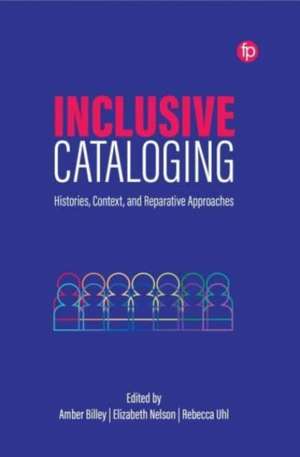
Inclusive Cataloging: Histories, Context, and Reparative Approaches
Editat de Amber Billey, Elizabeth Nelson, Rebecca Uhlen Limba Engleză Paperback – 12 sep 2024
- gain an understanding of the theoretical underpinning for the actions that create our history and be challenged to reconsider their perspectives;
- learn about the important role of the library catalog in real-world EDISJ initiatives through examples ranging from accessibility metadata and gendered information to inclusive comics cataloging and revising LC call numbers for Black people and Indigenous people;
- discover more than a dozen case studies drawn from a variety of contexts including archives, academic and public libraries, and research institutions; and
- see ways to incorporate these ideas into their own work, with a variety of sample policies, "how to" documents, and other helpful tools provided in the text.
Preț: 453.75 lei
Preț vechi: 560.18 lei
-19%
Puncte Express: 681
Carte disponibilă
Livrare economică 16-30 noiembrie
Livrare express 30 octombrie-05 noiembrie pentru 28.74 lei
Livrare prin curier în România Termenul estimat este afișat lângă disponibilitate.
Transport gratuit pentru acest produs Plată online sau ramburs, în funcție de opțiunile comenzii.
Retur gratuit în 14 zile Comandă securizată și suport în română.
Specificații
ISBN-13: 9781783307265
ISBN-10: 1783307269
Pagini: 304
Dimensiuni: 152 x 229 x 16 mm
Greutate: 0.41 kg
Ediția:1
Editura: Facet Publishing
Colecția Facet Publishing
ISBN-10: 1783307269
Pagini: 304
Dimensiuni: 152 x 229 x 16 mm
Greutate: 0.41 kg
Ediția:1
Editura: Facet Publishing
Colecția Facet Publishing
V-ar putea interesa
-
 Cripping the Archive: Disability, History, and PowerJenifer L. BarclayPreț: 194.88 lei
 -
 Transforming Young Adult ServicesAnthony BernierPreț: 484.74 lei
 -
 IncludeJulie Stivers-19%Preț: 440.17 lei543.42 lei
 -
 -30%Preț: 109.78 lei155.98 lei
 -
 The Organization of InformationDaniel N. Joudrey-24%Preț: 435.12 lei575.20 lei
 -
 Curating Community CollectionsMary Schreiber-19%Preț: 353.11 lei434.13 lei
 -
 A Library Worker's Guide to Saying No to White Supremacy Work CultureChristina Fuller-Gregory-17%Preț: 145.92 lei174.97 lei
 -
 -17%Preț: 144.82 lei173.98 lei
 -
 Library Technical Services: Future ForwardMary Beth Weber-16%Preț: 169.43 lei202.23 lei
 -
 How to Organize Inclusive Events and ConferencesAlex D. Ketchum-20%Preț: 90.29 lei113.12 lei
 -
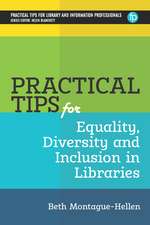 Practical Tips for Equality, Diversity and Inclusion in LibrariesBeth Montague-HellenPreț: 509.05 lei
 -
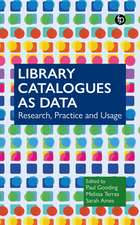 -19%Preț: 503.36 lei621.43 lei
 -
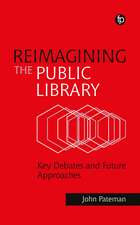 -19%Preț: 501.74 lei619.44 lei
 -
 Radical School Librarianship: A Global ResponseJudi MoreillonPreț: 416.58 lei
 -
 Preț: 518.01 lei
 -
 -19%Preț: 606.02 lei748.17 lei
 -
 Some of My Best FriendsTajja IsenPreț: 94.65 lei
 -
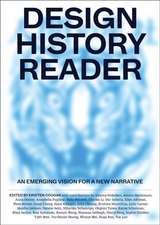 Design History ReaderKristen Coogan-22%Preț: 177.96 lei228.25 lei
 -
 Inclusive Digital Citizenship: Ideas and ImplementationKIRSTEN WILSON-15%Preț: 250.09 lei292.61 lei
Public țintă
Professional ReferenceCuprins
Introduction Part I. History & Theory 1. Ways of Knowing: The Worlds Words Create 2. This Is the Work: A Short History of the Long Tradition of Inclusive Cataloging Critiquing and Action 3. Describing Themselves: Diverse Library Cataloging, 1930-1970 4. A (Very) Select History of Inclusive Cataloging 5. Did Libraries "Change the Subject"? What Happened, What Didn't and What's Ahead 6. Accessibility Metadata and Library Catalogs: Current Outlook and Initiatives 7. Gendered Information and the Program for Cooperative Cataloging 8. From "Afrofuturist comics" to "Zombies in comics": Inclusive Comics Cataloging from A to Z 9. Critical Cataloging Beyond the Core Part II. Case Studies 10. Words Matter: Creating a Harmful Content Statement for Your Public Library 11. Coming to Terms: Enacting Reparative Change in and Urban Public Library OPAC 12. Enhancing Subject Access to LGBTQ+ Materials: It's Not Just About the (Rainbow) Crosswalk 13. Access, Identity, and Context: Inclusive Cataloging in the Hayes Research Library at Perkins School for the Blind 14. Reparative Description for Collection-Level Archival Records: A Case Study 15. Reparative Cataloging as a Solo Librarian: a Special Library Case Study 16. Representing Gender-Diverse Creators in Indiana University Cook Music Library's Online Catalogs 17. Promoting Inclusivity and Cultural Humility Through Cataloging: A Digitization Project 18. A Place to Think About Inclusive Cataloging 19. Retrospective Cataloging Project for Respectful and Inclusive Metadata: Revising LC Call Numbers for Black People 20. The Trans* Collections Project: Conducting a Diversity Audit to Assess, Grow, and Make a Collection More Discoverable 21. "It Isn't Part of Our Language": Engaging Indigenous Peoples to Facilitate Self-Naming in Subject Headings 22. Out of Many, One: A Unified Approach to Inclusive Description at Clemson University 23. Subject Heading Enhancement: A Reparative and Inclusive Practice at the University of Virginia Library 24. Canceling "Primitive": A Subject Heading Revision Fifty Years in the Making 25. One Step at a Time: Using Targeted Pilot Projects to Achieve Meaningful and Scalable Metadata Reparation 26. Automating Inclusivity: A Case Study Detailing how to Automate Inclusive Cataloging in Alma 27. Inclusive Cataloging in an Academic Library Consortium 28. Reparative Cataloging at The Washington Research Library Consortium: Moving Ideas into Action in the Shared Environment About the Editors
Notă biografică
Amber Billey is the Associate Director for Bibliographic Services at Bard College. Billey served as the Chair of the Leadership Team for the Core Metadata & Collection Section and Co-Chair of the Core Diversity and Inclusion Committee. She is a member of the PCC Advisory Committee on Diversity, Equity, and Inclusion, and was Chair of the PCC Ad Hoc Task Group on Gender in Name Authority Records. She serves on the Advisory Board for the Digital Transgender Archive, and the editorial board for the Homosaurus – a linked data thesaurus for the LGBTQ+ community.
Elizabeth Nelson is the Cataloging and Collection Development Librarian and Library Department Chair at McHenry County College, where she has worked since 2008. Prior to working in academic libraries, she started her career in public libraries and then spent seven years in special libraries. She is also the current editor of Library Leadership & Management.
Rebecca Uhl has over 30 years' experience as a catalog and authority control librarian at Arizona State University. Currently serving as the Principal on the Acquisitions and Metadata Services team, she has experience as a manager, supervisor and department head, in addition to copy and original cataloging in all formats.
Elizabeth Nelson is the Cataloging and Collection Development Librarian and Library Department Chair at McHenry County College, where she has worked since 2008. Prior to working in academic libraries, she started her career in public libraries and then spent seven years in special libraries. She is also the current editor of Library Leadership & Management.
Rebecca Uhl has over 30 years' experience as a catalog and authority control librarian at Arizona State University. Currently serving as the Principal on the Acquisitions and Metadata Services team, she has experience as a manager, supervisor and department head, in addition to copy and original cataloging in all formats.
Descriere
This collection from Core details the efforts of some of the many librarians who are working to improve our systems and collections, in the process inspiring those who have yet to enact change by demonstrating that this work is scalable, possible, and necessary.
Recenzii
"I can highly recommend this book, for providing context and history to inclusive cataloging and for illustrating the many ways that work has so far been achieved. This really should be read by everyone who works with metadata. There are many inspirational projects and studies, and overall you are left with the feeling that it is possible to do something, whether that be individually or collectively, and now is the perfect time to do so."
— Catalogue & Index
"Having a book that captures the latest professional discourse on the topic fits into a growing niche of librarianship, making this work a welcome addition ... This volume is ideal for librarians or archivists who specialize in cataloging and metadata with an interest in inclusive cataloging efforts. The reviewer anticipates other catalogers and metadata specialists will learn from the multitude of case studies and find inspiration for projects to implement in their own libraries. Inclusive Cataloging can also be more broadly recommended to LIS professionals who are interested in the topic from a scholarly perspective. This book is recommended for any type of staff professional development collection and for research libraries that support LIS degree programs."
— Technical Services Quarterly
"Fills a significant gap in the overview of library literature dedicated to the themes of inclusivity ... There is a great need for volumes like this, able to show the potential of a different approach to cataloging and the possibility, even in reality not necessarily large, to act to improve the usability of catalogs and really respond to the needs of users and not just in words and principles."
— AIB Studi
— Catalogue & Index
"Having a book that captures the latest professional discourse on the topic fits into a growing niche of librarianship, making this work a welcome addition ... This volume is ideal for librarians or archivists who specialize in cataloging and metadata with an interest in inclusive cataloging efforts. The reviewer anticipates other catalogers and metadata specialists will learn from the multitude of case studies and find inspiration for projects to implement in their own libraries. Inclusive Cataloging can also be more broadly recommended to LIS professionals who are interested in the topic from a scholarly perspective. This book is recommended for any type of staff professional development collection and for research libraries that support LIS degree programs."
— Technical Services Quarterly
"Fills a significant gap in the overview of library literature dedicated to the themes of inclusivity ... There is a great need for volumes like this, able to show the potential of a different approach to cataloging and the possibility, even in reality not necessarily large, to act to improve the usability of catalogs and really respond to the needs of users and not just in words and principles."
— AIB Studi