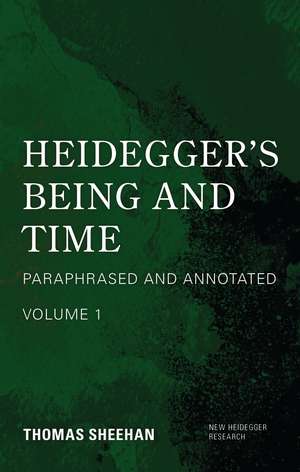
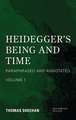
Heidegger's Being and Time: Paraphrased and Annotated, Volume 1: New Heidegger Research
Autor Thomas Sheehanen Limba Engleză Hardback – 15 iul 2025
Leading Heidegger scholar Thomas Sheehan renders the text in reader-friendly language that avoids the worst of the Heideggerese that persists in the wider scholarship. He helpfully outlines each of the six chapters and, in turn, each of the eighty-three individual sections of the book, providing a critical and insightful commentary that draws on Heidegger's comments on Being and Time throughout his career. The book also includes commentary and guidance on the terminology, scope, arguments, achievements, and limitations of Being and Time. This reader's guide is an essential resource for students, scholars and anyone engaging with Heidegger's complex work.
| Toate formatele și edițiile | Preț | Express |
|---|---|---|
| Paperback (1) | 318.28 lei 6-8 săpt. | |
| Bloomsbury Publishing – 15 iul 2025 | 318.28 lei 6-8 săpt. | |
| Hardback (1) | 806.24 lei 6-8 săpt. | |
| Bloomsbury Publishing – 15 iul 2025 | 806.24 lei 6-8 săpt. |
Din seria New Heidegger Research
- nou
 Preț: 584.79 lei
 - 26%
 Preț: 271.15 lei
 - 22%
 Preț: 276.06 lei
 - 22%
 Preț: 247.24 lei
 - 30%
 Preț: 757.11 lei
 - 22%
 Preț: 331.90 lei
 - 46%
 Preț: 480.00 lei
 - 26%
 Preț: 271.24 lei
 - 22%
 Preț: 314.14 lei
 - 24%
 Preț: 213.45 lei
 - 18%
 Preț: 316.25 lei
 - 18%
 Preț: 316.16 lei
 - 22%
 Preț: 329.86 lei
 - 23%
 Preț: 256.20 lei
 - 18%
 Preț: 317.34 lei
 - 17%
 Preț: 318.28 lei
 - 26%
 Preț: 273.50 lei
 - 25%
 Preț: 247.83 lei
 - 25%
 Preț: 209.60 lei
 - 25%
 Preț: 210.05 lei
 - 25%
 Preț: 270.24 lei
 - 21%
 Preț: 305.78 lei
 - 19%
 Preț: 311.99 lei
 - 27%
 Preț: 240.64 lei
 - 26%
 Preț: 269.26 lei
 - 33%
 Preț: 902.82 lei
 - 34%
 Preț: 526.54 lei
 - 22%
 Preț: 302.26 lei
 - 33%
 Preț: 570.20 lei
Preț: 806.24 lei
Preț vechi: 1003.81 lei
-20%
Puncte Express: 1209
Preț estimativ în valută:
142.69€ • 166.76$ • 123.88£
142.69€ • 166.76$ • 123.88£
Carte tipărită la comandă
Livrare economică 19 februarie-05 martie
Preluare comenzi: 021 569.72.76
Specificații
ISBN-13: 9781786613400
ISBN-10: 1786613409
Pagini: 628
Ilustrații: 70 BW Illustrations, 7 BW Photos, 2 Tables, 51 Textboxes
Dimensiuni: 160 x 234 x 40 mm
Greutate: 1.04 kg
Editura: Bloomsbury Publishing
Colecția Rowman & Littlefield Publishers
Seria New Heidegger Research
Locul publicării:New York, United States
ISBN-10: 1786613409
Pagini: 628
Ilustrații: 70 BW Illustrations, 7 BW Photos, 2 Tables, 51 Textboxes
Dimensiuni: 160 x 234 x 40 mm
Greutate: 1.04 kg
Editura: Bloomsbury Publishing
Colecția Rowman & Littlefield Publishers
Seria New Heidegger Research
Locul publicării:New York, United States
Cuprins
Foreword
Preface
Acknowledgments
Abbreviations
I.
THE PARAPHRASE
Heidegger's Preface to the Seventh Edition (1953)
The Untitled Exergue (1927)
General Introduction
to the Whole of Being and Time
THE QUESTION OF HOW BEING IS UNDERSTOOD
Chapter 1: The necessity, structure, and priority of this question
§1 Necessity: the need to reopen this question
§2 Structure: formulating the question
§3 The ontological priority of ex-sistence
§4 The ontic priority of ex-sistence
Chapter 2: The two-fold task, the method, and the outline of Being and Time
§5 SZ I: Fundamental ontology
§6 SZ II: Dismantling the history of ontology
§7 Method: Phenomenology
§8 Outline of the book
SZ, PART ONE
FUNDAMENTAL ONTOLOGY
DIVISION ONE: THE PREPARATORY ANALYSIS OF EX-SISTENCE
Preface to SZ I.1
Chapter 1: The task of a preparatory analysis of ex-sistence
§9 Introduction to the analysis of ex-sistence
§10 Ex-sistential analysis vs. other approaches
§11 So-called "primitive ex-sistence" and the need for "a natural conception of meaning"
Chapter 2: Involved in meaning
§12 Our involvement in meaning: a preliminary sketch
§13 Subject-object thinking
Chapter 3: The meaning-giving world
§14 Introduction
Subdivision A:The practical world of meaning
§15 How we encounter useful things
§16 How a world of praxis shows up
§17 Signs: A special kind of useful thing
§18 The structure of a world of praxis
Subdivision B:Descartes' interpretation of "world"
Preface
§19 Descartes: The being of material things is extension in space
§20 Descartes: The "world" is comprised of extended substances
§21 Descartes' ontology of "world": a hermeneutical discussion
Subdivision C: The spatiality of worlds of praxis and of ex-sistence
Preface
§22 The spatiality of useful things
§23 The spatiality of ex-sistence
§24 The spatiality of the world and of ex-sistence. The ontology of space
Chapter 4Who I am in everyday living
Preface
§25 The question of who I usually am
§26 Sociality: my own and that of other people
§27 My crowd-self
Chapter 5: Involvement as such
§28 Involvement itself (In-Sein): An overview
Subdivision A: The field of intelligibility: its ex-sistential structure
§29 Affect holds open intelligibility
§30 Fear is a mode of affect
§31 Aheadness holds open intelligibility
§32 Working out the projectedmeaning
§33 Declarative sentences
§34 Ex-sistence as logos
Subdivision B: The field of intelligibility: its absorbed modes
Preface
§35 Casual talk
§36 Curiosity
§37 Ambiguity
§38 Absorption and movement
Chapter 6: Ex-sistence as engaged
§39 Introduction to ex-sistence as a unified whole
§40 Experiencing ex-sistence through dread
§41 Engaged in making sense
§42 A fable about cura
§43 Realness
§44 Ex-sistence and "truth"
II.
THE ANNOTATIONS
Heidegger's Preface to the Seventh Edition (1953)
The Untitled Exergue (1927)
General introduction to the whole of Being And Time: The question of how being it understood
Chapter 1: The necessity, structure, and priority of this quesrtion
§1 Necessity: the need to reopen this question
§2 Structure: formulating the question
§3 The ontological priority of ex-sistence
§4 The ontic priority of ex-sistence
Chapter 2: The two-fold task, the method, and the outline of Being and Time
§5 SZ I: Fundamental ontology
§6 SZ II: Dismantling the history of ontology
§7 Method: henomenology
§8 Outline of the book
SZ, PART ONE: FUNDAMENTAL ONTOLOGY
Division One: The Preparatory Analysis of Ex-Sistence
Preface to SZ I
Chapter 1: The task of a preparatory analysis of ex-sistence
§9 Introduction to the analysis of ex-sistence
§10 Ex-sistential analysis vs. other approaches
§11 So-called "primitive ex-sistence" and the need for "a natural conception of meaning"
Chapter 2: Ex-sistence is involved in meaning
§12 Our involvement in meaning: a preliminary sketch
§13 Subject-object thinking
Chapter 3: The meaning-giving world
§14 Introduction
Subdivision A: Practical worlds of meanings
§15 Useful things
§16 How a world of praxis shows up
§17 Signs: A special kind of useful thing
§18 The structure of a world of praxis
Subdivision B: Descartes' interpretation of "world"
Preface
§19 Descartes: The being of material things is extension in space
§20 Descartes: The "world" is comprised of extended substances
§21 Descartes' ontology of "world": A hermeneutical discussion
Subdivision C: The spatiality of worlds of praxis and of ex-sistence
Preface
§22 The spatiality of useful things
§23 The spatiality of ex-sistence itself
§24 The spatiality of the world and of ex-sistence. The ontology of space
Chapter 4Who I am in everyday living
Preface
§25 The question of who I usually am
§26 Sociality: my own and that of other people
§27 My crowd-self
Chapter 5: Involvement as such
§28 Involvement itself (In-Sein): An overview
Subdivision A: The field of intelligibility: its ex-sistential structure
§29 Affect holds open intelligibility
§30 Fear is a mode of affect
§31 Aheadness holds open intelligibility
§32 Working out the projected meaning
§33 Declarative sentences
§34 Ex-sistence as logos
Subdivision B: The field of intelligibility: its absorbed modes
Preface
§35 Casual talk
§36 Curiosity
§37 Ambiguity
§38 Absorption and movement
Chapter 6: Ex-sistence as engaged
§39 Introduction to ex-sistence as a unified whole
§40 Experiencing ex-sistence through dread
§41 Engaged in making sense
§42 A fable about cura
§43 Realness
§44 Ex-sistence and "truth"
APPENDICES
Bibliographies
1. Heidegger's German Texts and Their English Translations 307
1.1 Texts within the Gesamtausgabe
1.2 Texts outside the Gesamtausgabe
2. Other Texts Cited
Terminology
German to English
English to German
Index
Preface
Acknowledgments
Abbreviations
I.
THE PARAPHRASE
Heidegger's Preface to the Seventh Edition (1953)
The Untitled Exergue (1927)
General Introduction
to the Whole of Being and Time
THE QUESTION OF HOW BEING IS UNDERSTOOD
Chapter 1: The necessity, structure, and priority of this question
§1 Necessity: the need to reopen this question
§2 Structure: formulating the question
§3 The ontological priority of ex-sistence
§4 The ontic priority of ex-sistence
Chapter 2: The two-fold task, the method, and the outline of Being and Time
§5 SZ I: Fundamental ontology
§6 SZ II: Dismantling the history of ontology
§7 Method: Phenomenology
§8 Outline of the book
SZ, PART ONE
FUNDAMENTAL ONTOLOGY
DIVISION ONE: THE PREPARATORY ANALYSIS OF EX-SISTENCE
Preface to SZ I.1
Chapter 1: The task of a preparatory analysis of ex-sistence
§9 Introduction to the analysis of ex-sistence
§10 Ex-sistential analysis vs. other approaches
§11 So-called "primitive ex-sistence" and the need for "a natural conception of meaning"
Chapter 2: Involved in meaning
§12 Our involvement in meaning: a preliminary sketch
§13 Subject-object thinking
Chapter 3: The meaning-giving world
§14 Introduction
Subdivision A:The practical world of meaning
§15 How we encounter useful things
§16 How a world of praxis shows up
§17 Signs: A special kind of useful thing
§18 The structure of a world of praxis
Subdivision B:Descartes' interpretation of "world"
Preface
§19 Descartes: The being of material things is extension in space
§20 Descartes: The "world" is comprised of extended substances
§21 Descartes' ontology of "world": a hermeneutical discussion
Subdivision C: The spatiality of worlds of praxis and of ex-sistence
Preface
§22 The spatiality of useful things
§23 The spatiality of ex-sistence
§24 The spatiality of the world and of ex-sistence. The ontology of space
Chapter 4Who I am in everyday living
Preface
§25 The question of who I usually am
§26 Sociality: my own and that of other people
§27 My crowd-self
Chapter 5: Involvement as such
§28 Involvement itself (In-Sein): An overview
Subdivision A: The field of intelligibility: its ex-sistential structure
§29 Affect holds open intelligibility
§30 Fear is a mode of affect
§31 Aheadness holds open intelligibility
§32 Working out the projectedmeaning
§33 Declarative sentences
§34 Ex-sistence as logos
Subdivision B: The field of intelligibility: its absorbed modes
Preface
§35 Casual talk
§36 Curiosity
§37 Ambiguity
§38 Absorption and movement
Chapter 6: Ex-sistence as engaged
§39 Introduction to ex-sistence as a unified whole
§40 Experiencing ex-sistence through dread
§41 Engaged in making sense
§42 A fable about cura
§43 Realness
§44 Ex-sistence and "truth"
II.
THE ANNOTATIONS
Heidegger's Preface to the Seventh Edition (1953)
The Untitled Exergue (1927)
General introduction to the whole of Being And Time: The question of how being it understood
Chapter 1: The necessity, structure, and priority of this quesrtion
§1 Necessity: the need to reopen this question
§2 Structure: formulating the question
§3 The ontological priority of ex-sistence
§4 The ontic priority of ex-sistence
Chapter 2: The two-fold task, the method, and the outline of Being and Time
§5 SZ I: Fundamental ontology
§6 SZ II: Dismantling the history of ontology
§7 Method: henomenology
§8 Outline of the book
SZ, PART ONE: FUNDAMENTAL ONTOLOGY
Division One: The Preparatory Analysis of Ex-Sistence
Preface to SZ I
Chapter 1: The task of a preparatory analysis of ex-sistence
§9 Introduction to the analysis of ex-sistence
§10 Ex-sistential analysis vs. other approaches
§11 So-called "primitive ex-sistence" and the need for "a natural conception of meaning"
Chapter 2: Ex-sistence is involved in meaning
§12 Our involvement in meaning: a preliminary sketch
§13 Subject-object thinking
Chapter 3: The meaning-giving world
§14 Introduction
Subdivision A: Practical worlds of meanings
§15 Useful things
§16 How a world of praxis shows up
§17 Signs: A special kind of useful thing
§18 The structure of a world of praxis
Subdivision B: Descartes' interpretation of "world"
Preface
§19 Descartes: The being of material things is extension in space
§20 Descartes: The "world" is comprised of extended substances
§21 Descartes' ontology of "world": A hermeneutical discussion
Subdivision C: The spatiality of worlds of praxis and of ex-sistence
Preface
§22 The spatiality of useful things
§23 The spatiality of ex-sistence itself
§24 The spatiality of the world and of ex-sistence. The ontology of space
Chapter 4Who I am in everyday living
Preface
§25 The question of who I usually am
§26 Sociality: my own and that of other people
§27 My crowd-self
Chapter 5: Involvement as such
§28 Involvement itself (In-Sein): An overview
Subdivision A: The field of intelligibility: its ex-sistential structure
§29 Affect holds open intelligibility
§30 Fear is a mode of affect
§31 Aheadness holds open intelligibility
§32 Working out the projected meaning
§33 Declarative sentences
§34 Ex-sistence as logos
Subdivision B: The field of intelligibility: its absorbed modes
Preface
§35 Casual talk
§36 Curiosity
§37 Ambiguity
§38 Absorption and movement
Chapter 6: Ex-sistence as engaged
§39 Introduction to ex-sistence as a unified whole
§40 Experiencing ex-sistence through dread
§41 Engaged in making sense
§42 A fable about cura
§43 Realness
§44 Ex-sistence and "truth"
APPENDICES
Bibliographies
1. Heidegger's German Texts and Their English Translations 307
1.1 Texts within the Gesamtausgabe
1.2 Texts outside the Gesamtausgabe
2. Other Texts Cited
Terminology
German to English
English to German
Index
Recenzii
Sheehan's invaluable 'paraphrase' pays rigorous attention to the text, its time, and Heidegger's commitment to phenomenology. Even more important is Sheehan's interpretation of Heidegger's question of being as the question of intelligibility, the way things mean or matter to us. I know no more helpful guide to Heidegger's masterpiece.
Thomas Sheehan's monumental study of Being and Time includes a paraphrase that eschews Heideggerian jargon; a copiously annotated commentary; and an argument about sense-making. Beginners will relish the illuminating paraphrase; scholars will benefit from the erudite annotations; and anyone will benefit from engaging with the argument. Comprehensive, congenial, controversial: unavoidable.
Thoughtful and judicious as only the product of more than a half-century of nonpareil, often contrarian interpretations of Germany's most controversial philosopher can be, Sheehan's work is a genuine 'guide for the perplexed,' immediately becoming the go-to resource for anyone trying to come to grips with Heidegger's timeless masterpiece.
Thomas Sheehan's book is a tour de force, an ingenious reading of Heidegger's Being and Time that in effect translates Heidegger's difficult German into a section-by-section paraphrase. Drawing on decades of teaching and research, Sheehan's text gives you the sense of attending an incisive seminar given by a master teacher.
Thomas Sheehan's monumental study of Being and Time includes a paraphrase that eschews Heideggerian jargon; a copiously annotated commentary; and an argument about sense-making. Beginners will relish the illuminating paraphrase; scholars will benefit from the erudite annotations; and anyone will benefit from engaging with the argument. Comprehensive, congenial, controversial: unavoidable.
Thoughtful and judicious as only the product of more than a half-century of nonpareil, often contrarian interpretations of Germany's most controversial philosopher can be, Sheehan's work is a genuine 'guide for the perplexed,' immediately becoming the go-to resource for anyone trying to come to grips with Heidegger's timeless masterpiece.
Thomas Sheehan's book is a tour de force, an ingenious reading of Heidegger's Being and Time that in effect translates Heidegger's difficult German into a section-by-section paraphrase. Drawing on decades of teaching and research, Sheehan's text gives you the sense of attending an incisive seminar given by a master teacher.