
Enterprise Information Systems: Lecture Notes in Business Information Processing, cartea 417
Editat de Joaquim Filipe, Micha¿ ¿Mia¿Ek, Alexander Brodsky, Slimane Hammoudien Limba Engleză Paperback – mai 2021
Din seria Lecture Notes in Business Information Processing
- 20%
 Preț: 329.08 lei
 - 20%
 Preț: 316.28 lei
 - 20%
 Preț: 417.25 lei
 -
 Preț: 379.45 lei
 - 20%
 Preț: 673.93 lei
 - 18%
 Preț: 689.54 lei
 - 20%
 Preț: 288.21 lei
 -
 Preț: 376.75 lei
 - 20%
 Preț: 667.83 lei
 - 20%
 Preț: 311.36 lei
 -
 Preț: 370.30 lei
 - 20%
 Preț: 311.50 lei
 - 20%
 Preț: 334.04 lei
 - 20%
 Preț: 328.16 lei
 -
 Preț: 377.68 lei
 -
 Preț: 385.28 lei
 - 20%
 Preț: 320.24 lei
 -
 Preț: 367.49 lei
 -
 Preț: 369.36 lei
 -
 Preț: 371.00 lei
 - 20%
 Preț: 315.62 lei
 -
 Preț: 372.67 lei
 -
 Preț: 370.26 lei
 -
 Preț: 363.61 lei
 -
 Preț: 370.26 lei
 -
 Preț: 373.03 lei
 -
 Preț: 364.71 lei
 -
 Preț: 370.26 lei
 -
 Preț: 467.85 lei
 - 20%
 Preț: 395.90 lei
 -
 Preț: 376.75 lei
 -
 Preț: 377.48 lei
 -
 Preț: 465.07 lei
 -
 Preț: 399.70 lei
 - 20%
 Preț: 332.28 lei
 -
 Preț: 400.68 lei
 -
 Preț: 378.57 lei
 - 20%
 Preț: 332.70 lei
 -
 Preț: 369.55 lei
 - 20%
 Preț: 401.17 lei
 -
 Preț: 465.80 lei
 -
 Preț: 383.07 lei
 -
 Preț: 460.61 lei
 -
 Preț: 481.16 lei
 - 20%
 Preț: 330.36 lei
 - 20%
 Preț: 354.42 lei
 -
 Preț: 401.66 lei
 -
 Preț: 392.73 lei
 - 20%
 Preț: 420.41 lei
Preț: 925.12 lei
Preț vechi: 1156.40 lei
-20%
Puncte Express: 1388
Carte tipărită la comandă
Livrare economică 09-23 decembrie
Livrare prin curier în România Termenul estimat este afișat lângă disponibilitate.
Transport gratuit pentru acest produs Plată online sau ramburs, în funcție de opțiunile comenzii.
Retur gratuit în 14 zile Comandă securizată și suport în română.
Specificații
ISBN-13: 9783030754174
ISBN-10: 3030754170
Pagini: 956
Ilustrații: XIX, 932 p. 91 illus., 1 illus. in color.
Dimensiuni: 155 x 235 x 51 mm
Greutate: 1.42 kg
Ediția:1st edition 2021
Editura: Palgrave MacMillan
Colecția Lecture Notes in Business Information Processing
Seria Lecture Notes in Business Information Processing
Locul publicării:Cham, Switzerland
ISBN-10: 3030754170
Pagini: 956
Ilustrații: XIX, 932 p. 91 illus., 1 illus. in color.
Dimensiuni: 155 x 235 x 51 mm
Greutate: 1.42 kg
Ediția:1st edition 2021
Editura: Palgrave MacMillan
Colecția Lecture Notes in Business Information Processing
Seria Lecture Notes in Business Information Processing
Locul publicării:Cham, Switzerland
V-ar putea interesa
-
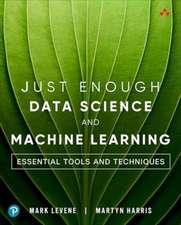 Just Enough Data Science and Machine LearningMark LevenePreț: 352.28 lei
 -
 Business Information SystemsAndrew Greasley-9%Preț: 571.14 lei627.63 lei
 -
 -9%Preț: 581.31 lei638.79 lei
 -
 -13%Preț: 574.62 lei660.48 lei
 -
 Microsoft Power Platform For DummiesJack A. Hyman-20%Preț: 202.34 lei252.92 lei
 -
 -20%Preț: 136.16 lei170.21 lei
 -
 Microsoft 365 Access for DummiesLaurie A Ulrich-20%Preț: 141.67 lei177.09 lei
 -
 Data Science Essentials for DummiesLillian Pierson-20%Preț: 76.56 lei95.69 lei
 -
 Microsoft 365 Excel For DummiesDavid H. Ringstrom-20%Preț: 143.21 lei179.02 lei
 -
 SAS for DummiesChris Hemedinger-20%Preț: 200.49 lei250.60 lei
 -
 Excel Quick and EasyDick Kusleika-20%Preț: 81.87 lei102.34 lei
 -
 Machine Learning For DummiesLuca Massaron-20%Preț: 149.88 lei187.36 lei
 -
 Principles of Business Information SystemsGeorge Reynolds-25%Preț: 451.53 lei599.68 lei
 -
 Think Distributed SystemsDominik Tornow-20%Preț: 332.09 lei415.11 lei
 -
 -20%Preț: 1267.15 lei1583.94 lei
 -
 -20%Preț: 1404.88 lei1756.10 lei
 -
 Intelligent Information SystemsShareeful Islam-20%Preț: 667.83 lei834.79 lei
 -
 Digital Business and Intelligent SystemsAudron¿ Lupeikien¿-20%Preț: 753.16 lei941.45 lei
 -
 Engineering Information Systems with Large Language ModelsFrancesca de Luzi-24%Preț: 1016.50 lei1337.51 lei
 -
 Networked SystemsSalem Lahlou-20%Preț: 996.76 lei1245.95 lei
 -
 -20%Preț: 878.12 lei1097.66 lei
 -
 -20%Preț: 631.00 lei788.75 lei
 -
 -20%Preț: 631.31 lei789.14 lei
 -
 Web Information Systems and TechnologiesJoaquim Filipe-20%Preț: 417.25 lei521.56 lei
 -
 Building Model-based Enterprise ArchitectureMudar Bahri-20%Preț: 241.80 lei302.25 lei
 -
 -20%Preț: 1496.27 lei1870.34 lei
 -
 Cyber Security and Intelligent SystemsVikrant Bhateja-20%Preț: 1516.54 lei1895.67 lei
 -
 Information System Design: AI and ML ApplicationsVikrant Bhateja-20%Preț: 1390.94 lei1738.67 lei
 -
 -20%Preț: 1471.64 lei1839.55 lei
 -
 Information Systems for Intelligent SystemsChakchai So In-20%Preț: 1886.20 lei2357.75 lei
Cuprins
Databases and Information Systems Integration.- Anonimisation, Impacts and Challenges into Big Data: A Case Studies.- Streaming Set Similarity Joins.- Flexible OPC UA Data Load Optimizations on the Edge of Production.- Using Image Mining Techniques from a Business Process Perspective.- Artificial Intelligence and Decision Support Systems.- A Machine Learning based Framework for Enterprise Document Classification.- Improving Corporate Support by Predicting Customer e-Mail Response Time: Experimental Evaluation and a Practical Use Case.- A Mixed Approach for Pallet Building Problem with Practical Constraints.- A Reference Process and Domain Model for Machine Learning based Production Fault Analysis.- An Investigation of Problem Instance Difficulty for Case-based Reasoning and Heuristic Search.- Opti-Soft: Decision Guidance on Software Release Scheduling to Minimize the Cost of Business Processes.- Fast and Efficient Parallel Execution of SARIMA Prediction Model.- An Approach to Intelligent Control Public Transportation System using a Multi-Agent System.- Comparative Evaluation of the Supervised Machine Learning Classification Methods and the Concept Drift Detection Methods in the Financial Business Problems.- Sammon Mapping-based Gradient Boosted Trees for Tax Crime Prediction in the City of Sao Paulo.- Extraction of Speech Features and Alignment to Detect Early Dyslexia Evidences.- Information Systems Analysis and Specification.- An Extended Secondary Study to Characterize the Influence of Developers Sentiments on Practices and Artifacts in Open Source Software Projects.- Improving Quality of Use-case Models by Correlating Defects, Difficulties, and Modeling Strategies.- iVOLUNTEER: A Platform for Digitization and Exploitation of Lifelong Volunteer Engagement.- An Investigation of Currently used Aspects in Model Transformation Development.- Software Evolution and Maintenance using an Agile and MDD Hybrid Processes.- DSL based Approach for Building Model-driven Questionnaires.- Modeling of Robot Interaction in Coalition through Smart Space and Blockchain: Precision Agriculture Scenario.- A Capability based Method for Development of Resilient Digital Services.- Adopting Agile Software Development Combined with User-Centered Design and Lean Startup: A Systematic Literature Review on Maturity Models.- Evaluating a LSTM Neural Network and a Word2vec Model in the Classification of Self-admitted Technical Debts and Their Types in Code Comments.- Software Agents and Internet Computing.- From Simple to Structural Clones: Tapping the Bene ts of Non-redundancy.- SACIP: An Agent-based Constructionist Adaptive System for Programming Beginners.- An Adaptive and Proactive Interface Agent for Interactivity and Decision-making Improvement in a Collaborative Virtual Learning Environment.- Human-Computer Interaction.- Classification and Synthesis of Emotion in Sign Languages usingNeutral Expression Deviation Factor and 4D Trajectories.- How Communication Breakdowns Affect Emotional Responses of End-Users on Progressive Web Apps.- Visualizing Deliberation and Design Rationale: A Case Study in the OpenDesign Platform.- Tabletop Interface Design: Developing and using Usability Heuristics.- User Stories and the Socially-aware Design towards the OpenDesign Platform.- Electronic Coupon Management System for Regional Vitalization.- A Modern Approach to Personalize Exergames for the Physical Rehabilitation of Children Suffering from Lumbar Spine.- Enterprise Architecture.- Digital Innovation and Transformation to Business Ecosystems.- Reference Architecture for Project, Program and Portfolio Governance.- Pre-modelled Flexibility for the Control- ow of Business Processes: Requirements and Interaction with Users.- On Enterprise Architecture Patterns: A Tool for Sustainable Transformation.- Security Architecture Framework for Enterprises.- GDPR Compliance Tools: Best Practice from RegTech.
Textul de pe ultima copertă
This book constitutes extended, revised and selected papers from the 22nd International Conference on Enterprise Information Systems, ICEIS 2020, held online during May 5-7, 2020. The 41 papers presented in this volume were carefully reviewed and selected for inclusion in this book from a total of 255 submissions. They were organized in topical sections as follows: database and information systems integration; artificial intelligence and decision support systems; information systems analysis and specification; software agents and internet computing; human-computer interaction; and enterprise architecture.