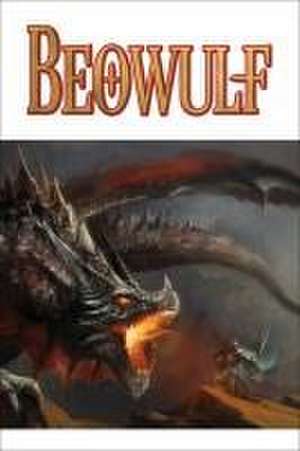
Beowulf
Autor Anonymousen Limba Engleză Paperback – 26 dec 2023
Preț: 81.49 lei
Puncte Express: 122
Carte disponibilă
Livrare economică 07-21 noiembrie
Livrare prin curier în România Termenul estimat este afișat lângă disponibilitate.
Transport gratuit de la 400.00 lei Plată online sau ramburs, în funcție de opțiunile comenzii.
Retur gratuit în 14 zile Comandă securizată și suport în română.
Specificații
ISBN-13: 9781722503956
ISBN-10: 1722503955
Pagini: 164
Dimensiuni: 127 x 203 x 9 mm
Greutate: 0.17 kg
Ediția:Completă
Editura: G&D MEDIA
ISBN-10: 1722503955
Pagini: 164
Dimensiuni: 127 x 203 x 9 mm
Greutate: 0.17 kg
Ediția:Completă
Editura: G&D MEDIA
V-ar putea interesa
-
 Preț: 28.01 lei
 -
 Romeo and JulietWilliam ShakespearePreț: 29.50 lei
 -
 Preț: 28.01 lei
 -
 FlorenceChristopher Hibbert-20%Preț: 161.29 lei201.39 lei
 -
 Preț: 94.77 lei
 -
 The Saga of the VolsungsJesse L Byock-27%Preț: 56.97 lei77.93 lei
 -
 Njal's SagaAnonymous-30%Preț: 64.98 lei92.97 lei
 -
 The Sagas of IcelandersVarious-16%Preț: 138.57 lei164.16 lei
 -
 BeowulfKevin Crossley-HollandPreț: 68.24 lei
 -
 The Anglo-Saxon World: An AnthologyKevin Crossley-Holland-17%Preț: 48.27 lei58.40 lei
 -
 Beowulf: The Fight at FinnsburhKevin Crossley-Holland-19%Preț: 40.87 lei50.29 lei
 -
 BeowulfSeamus HeaneyPreț: 72.86 lei
 -
 The Complete Poetry Of Edgar Allan PoeEdgar Allan PoePreț: 42.32 lei
 -
 Three Tall WomenEdward AlbeePreț: 142.56 lei
 -
 GrendelJohn GardnerPreț: 77.42 lei
 -
 BeowulfHowell D. Chickering-23%Preț: 83.23 lei108.44 lei
 -
 Moby DickDavid RodriguezPreț: 51.87 lei
 -
 The Great BetrayalErnle BradfordPreț: 87.63 lei
 -
 That Summer in ParisMorley CallaghanPreț: 134.94 lei
 -
 Sailor Moon Eternal Edition 2Naoko TakeuchiPreț: 184.76 lei
 -
 Sailor Moon Eternal Edition 3Naoko TakeuchiPreț: 182.65 lei
 -
 Beowulf: Poem, Poet and HeroHeather O'Donoghue-34%Preț: 106.45 lei162.10 lei
 -
 -32%Preț: 34.31 lei50.09 lei
 -
 Beowulf: Dual Language and New Verse TranslationJ. G. Nichols-16%Preț: 60.79 lei71.99 lei
 -
 An Ottoman TravellerEvliya Çelebi-23%Preț: 147.26 lei191.56 lei
 -
 Valley of FearIan Edginton-12%Preț: 61.92 lei70.67 lei
Notă biografică
The author of The Little Red Book is traditionally listed as Anonymous, reflecting the long-standing tradition of anonymity within Alcoholics Anonymous and related recovery movements. First published in the 1940s as a companion to the Twelve Step program, the book has been widely used by individuals seeking guidance and encouragement in the practice of recovery and sobriety.
Recenzii
R.M. Liuzza’s translation of Beowulf, first published by Broadview in 1999, has been widely praised for its accuracy and beauty. The facing-page translation is accompanied in this edition by genealogical charts, historical summaries, and a glossary of proper names. Historical appendices include related legends, stories, and religious writings from both Christian and Anglo-Saxon traditions. These texts help readers to see Beowulf as an exploration of the politics of kingship and the psychology of heroism, and as an early English meditation on the bridges and chasms between the pagan past and the Christian present.
Appendices also include a generous sample of other modern translations of Beowulf, shedding light on the process of translating the poem. This new edition features an updated introduction and an expanded section of material on Christianity and paganism.
“This Beowulf translation is a masterful synthesis of history, poetry, and narrative. Liuzza’s deep knowledge of the Anglo-Saxon period, combined with an ear keenly attuned to the cadences of Old English poetry, renders the volume an invaluable resource for medievalists everywhere. This is a brilliant, exemplary edition and a must-have for any serious student of the poem. Liuzza has set the standard for many years to come.” — Stacy S. Klein, Rutgers University
“The translation I use … is R.M. Liuzza’s. Liuzza’s choices are moderate, combining easy readability with a good level of literal translation. … His diction is plain, not fancy, but it seeks to alliterate where possible … Liuzza’s appendices include many of the texts often discussed in conjunction with Beowulf, which makes the edition indispensable to the amateur scholar.” — Ruth A. Johnston, A Companion to Beowulf
“This close and readable translation, put together by a scholar who knows so much about the poem and its craft, remakes the old tale in a new register. From the prickly dignity of overdressed spearbearers to the sad songs of beefy breakers-of-rings in their cups, there is much here to surprise and delight.” — Roberta Frank, University of Toronto
“Liuzza takes account of recent scholarly research and provides a commentary, a collection of supporting texts, and an excellent introduction to this ‘Christian poet’s bittersweet elegy for the doomed heroic life.’ His account of the peculiarities of Old English poetic style is particularly helpful.” — Frank Kermode, The New York Review of Books
“Liuzza’s volume is a resource pack for studying Beowulf and its translations. He includes specimens of other translations down the generations as well as invaluable supplementary material, the whole informed by scholarship of the highest quality and laid out attractively. The translation is fluent and unshowy. … Understandably, it (and its supplementary material) is popular with students and instructors, and it is likely to remain so in the years ahead.” — Hugh Magennis, Professor of Old English Literature and Director of Medieval Studies, Queens University Belfast, in Translating Beowulf: Modern Versions in English Verse
Appendices also include a generous sample of other modern translations of Beowulf, shedding light on the process of translating the poem. This new edition features an updated introduction and an expanded section of material on Christianity and paganism.
“This Beowulf translation is a masterful synthesis of history, poetry, and narrative. Liuzza’s deep knowledge of the Anglo-Saxon period, combined with an ear keenly attuned to the cadences of Old English poetry, renders the volume an invaluable resource for medievalists everywhere. This is a brilliant, exemplary edition and a must-have for any serious student of the poem. Liuzza has set the standard for many years to come.” — Stacy S. Klein, Rutgers University
“The translation I use … is R.M. Liuzza’s. Liuzza’s choices are moderate, combining easy readability with a good level of literal translation. … His diction is plain, not fancy, but it seeks to alliterate where possible … Liuzza’s appendices include many of the texts often discussed in conjunction with Beowulf, which makes the edition indispensable to the amateur scholar.” — Ruth A. Johnston, A Companion to Beowulf
“This close and readable translation, put together by a scholar who knows so much about the poem and its craft, remakes the old tale in a new register. From the prickly dignity of overdressed spearbearers to the sad songs of beefy breakers-of-rings in their cups, there is much here to surprise and delight.” — Roberta Frank, University of Toronto
“Liuzza takes account of recent scholarly research and provides a commentary, a collection of supporting texts, and an excellent introduction to this ‘Christian poet’s bittersweet elegy for the doomed heroic life.’ His account of the peculiarities of Old English poetic style is particularly helpful.” — Frank Kermode, The New York Review of Books
“Liuzza’s volume is a resource pack for studying Beowulf and its translations. He includes specimens of other translations down the generations as well as invaluable supplementary material, the whole informed by scholarship of the highest quality and laid out attractively. The translation is fluent and unshowy. … Understandably, it (and its supplementary material) is popular with students and instructors, and it is likely to remain so in the years ahead.” — Hugh Magennis, Professor of Old English Literature and Director of Medieval Studies, Queens University Belfast, in Translating Beowulf: Modern Versions in English Verse
Descriere
Descriere de la o altă ediție sau format:
R.M. Liuzza’s translation of Beowulf, first published by Broadview in 1999, has been widely praised for its accuracy and beauty. The facing-page translation is accompanied in this edition by genealogical charts, historical summaries, and a glossary of proper names. Historical appendices include related legends, stories, and religious writings from both Christian and Anglo-Saxon traditions. These texts help readers to see Beowulf as an exploration of the politics of kingship and the psychology of heroism, and as an early English meditation on the bridges and chasms between the pagan past and the Christian present.
Appendices also include a generous sample of other modern translations of Beowulf, shedding light on the process of translating the poem. This new edition features an updated introduction and an expanded section of material on Christianity and paganism.
R.M. Liuzza’s translation of Beowulf, first published by Broadview in 1999, has been widely praised for its accuracy and beauty. The facing-page translation is accompanied in this edition by genealogical charts, historical summaries, and a glossary of proper names. Historical appendices include related legends, stories, and religious writings from both Christian and Anglo-Saxon traditions. These texts help readers to see Beowulf as an exploration of the politics of kingship and the psychology of heroism, and as an early English meditation on the bridges and chasms between the pagan past and the Christian present.
Appendices also include a generous sample of other modern translations of Beowulf, shedding light on the process of translating the poem. This new edition features an updated introduction and an expanded section of material on Christianity and paganism.
Cuprins
Acknowledgements
Preface
Introduction
A Note to the Second Edition
Reading Old English
Beowulf
Glossary of Proper Names
Genealogies
The Geatish-Swedish Wars
Appendix A: Characters Mentioned in Beowulf
Preface
Introduction
- Beowulf between Myth and History
Beowulf between Song and Text
Beowulf between Court and Cloister
Beowulf between Old and Modern English
A Note to the Second Edition
Reading Old English
Beowulf
Glossary of Proper Names
Genealogies
The Geatish-Swedish Wars
Appendix A: Characters Mentioned in Beowulf
- From Gregory of Tours, History of the Franks
- From the Liber Monstrorum
- From Alcuin, Letter to “Speratus” (797)
- West-Saxon Royal Genealogies
- From Asser, Life of King Alfred (893)
- From Æthelweard, Chronicle
- “The Fight at Finnsburh”
- Widsith
- From Grettissaga (c. 1300)
- The Fight in the Hall
- The Fight at the Falls
- From Saxo Grammaticus, Gesta Danorum
- From Snorri Sturluson, Heimskringla (c. 1223-35), Ynglinga saga
- From The Life of Saint Gildas
- From Blickling Homily 17
- Gregory the Great, Letter to Abbot Mellitus (601)
- From Bede the Venerable, Ecclesiastical History of the English People
- From St Boniface, Letters
- Letter 46 (c. 738)
- Letter 73 (c. 746)
- Wulfstan, On False Gods
- Laws against Paganism
- From Wulfstan, Canons of Edgar no. 16
- From the Laws of Cnut, 1-5
- Wulfstan, Sermo Lupi ad Anglos (1014)
- Ælfric, Life of St Edmund (c. 995)
- Vainglory (before c. 975)
- Sharon Turner, The History of the Manners, Landed Property, Government,Laws, Poetry, Literature, Religion and Language of the Anglo-Saxons (1805)
- John Josias Conybeare, Illustrations of Anglo-Saxon Poetry (1826)
- J.M. Kemble, A Translation of the Anglo-Saxon Poem of Beowulf (1835)
- From Henry Wadsworth Longfellow, “Anglo-Saxon Literature,” North American Review (1838)
- A. Diedrich Wackerbarth, Beowulf: An Epic Poem Translated from the Anglo-Saxon into English Verse (1849)
- John Earle, The Deeds of Beowulf (1892)
- William Morris and A.J. Wyatt, The Tale of Beowulf Sometime King of the Folk of the Weder Geats (1895)
- Francis B. Gummere, The Oldest English Epic (1909)
- William Ellery Leonard, Beowulf (1923)
- R.K. Gordon, The Song of Beowulf (1923)
- Charles W. Kennedy, Beowulf (1940)
- Edwin Morgan, Beowulf (1952)
- Burton Raffel, Beowulf (1963)
- E. Talbot Donaldson, Beowulf (1966)
- Kevin Crossley-Holland, Beowulf (1968)
- Michael Alexander, Beowulf (1973)
- Howell D. Chickering, Jr., Beowulf (1977)
- S.A.J. Bradley, Anglo-Saxon Poetry (1982)
- Stanley B. Greenfield, A Readable Beowulf (1982)
- Ruth P.M. Lehmann, Beowulf (1988)
- Marc Hudson, Beowulf (1990)
- Frederick Rebsamen, Beowulf (1991)
- R.M. Liuzza, Beowulf (1999)
- Seamus Heaney, Beowulf (2000)