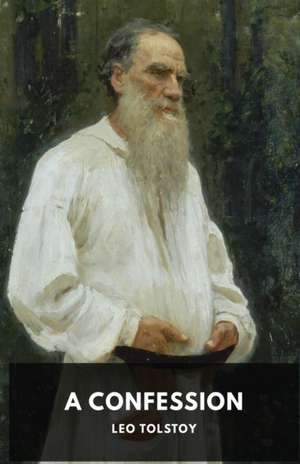
A Confession
Autor Leo Tolstoyen Limba Engleză Paperback – 13 iul 2019
Notăm cu interes modul în care A Confession funcționează ca un instrument de analiză fenomenologică a crizei de sens, oferind o aplicabilitate imediată în studiul psihologiei existențiale și al filosofiei religiei. Scrisă între 1879 și 1880, această lucrare nu este doar o autobiografie spirituală, ci o deconstrucție riguroasă a raționalismului în fața finitudinii. Tolstoi utilizează metafora fântânii și a dragonului pentru a ilustra incapacitatea artei sau a succesului de a îndulci realitatea morții, propunând ulterior o soluție mistică, monistă, în care viața este identificată direct cu divinitatea.
Reținem structura analitică prin care autorul elimină succesiv răspunsurile inadecvate la întrebarea despre sensul existenței. Spre deosebire de personajele din Anna Karenina sau War and Peace (Vintage Classic Russians Series), unde căutările spirituale sunt mediate de narațiune, aici Tolstoi vorbește direct, într-un ton de o onestitate brutală. Această ediție Dover Publications, tradusă de Aylmer Maude, păstrează claritatea tăioasă a originalului rusesc, fiind o alternativă esențială la volumul A Confession and Other Religious Writings pentru cursurile de filosofie morală, cu avantajul de a se concentra strict pe nucleul transformării sale interioare, fără a dispersa atenția cititorului către alte scrieri ocazionale.
Considerăm această lucrare punctul de cotitură în opera autorului. Dacă în Sevastopol Tales violența războiului era sursa reflecției, în A Confession câmpul de luptă devine propria conștiință. Este textul care explică de ce un autor aflat la apogeul faimei literare a ales să abandoneze esteticul în favoarea unui radicalism etic ce va influența ulterior mișcările de nonviolență din secolul XX.
Preț: 100.93 lei
Carte disponibilă
Livrare economică 13-27 noiembrie
Specificații
ISBN-10: 2491251191
Pagini: 80
Dimensiuni: 129 x 198 x 5 mm
Greutate: 0.09 kg
Editura: Les prairies numériques
V-ar putea interesa
-
 The PrinceNiccolo Machiavelli-20%Preț: 45.17 lei56.59 lei
 -
 On FriendshipMichel De Montaigne-21%Preț: 44.27 lei55.87 lei
 -
 A Vindication of the Rights of WomanMary Wollstonecraft-19%Preț: 45.74 lei56.65 lei
 -
 On the Pleasure of HatingWilliam Hazlitt-20%Preț: 44.92 lei56.50 lei
 -
 A Room of One's OwnVirginia Woolf-20%Preț: 45.61 lei56.67 lei
 -
 Great Ideas Why I WriteGeorge Orwell-20%Preț: 45.15 lei56.53 lei
 -
 The SymposiumPlato-19%Preț: 45.54 lei56.53 lei
 -
 On SuicideDavid Hume-19%Preț: 45.61 lei56.59 lei
 -
 The Myth of SisyphusAlbert Camus-19%Preț: 45.70 lei56.72 lei
 -
 Preț: 56.60 lei
 -
 The Fastidious AssassinsAlbert CamusPreț: 55.61 lei
 -
 Man Alone with HimselfFriedrich NietzschePreț: 55.34 lei
 -
 Useful Work v. Useless ToilWilliam MorrisPreț: 55.56 lei
 -
 Days of ReadingMarcel ProustPreț: 55.61 lei
 -
 Great Ideas Human HappinessBlaise Pascal-20%Preț: 45.09 lei56.53 lei
 -
 NatureRalph Waldo EmersonPreț: 56.55 lei
 -
 Great Ideas Tao Te ChingLao-Tzu-30%Preț: 39.67 lei56.39 lei
 -
 UtopiaThomas More-20%Preț: 45.57 lei56.80 lei
 -
 On SolitudeMichel De Montaigne-19%Preț: 45.88 lei56.73 lei
 -
 Great Ideas of the Abuse of WordsJohn Locke-19%Preț: 45.91 lei56.75 lei
 -
 An Answer to the Question: 'What Is Enlightenment?'Immanuel Kant-20%Preț: 45.43 lei56.65 lei
 -
 On LibertyJohn Stuart MillPreț: 56.12 lei
 -
 Great Ideas V Night WalksCharles DickensPreț: 55.54 lei
 -
 Decline of the English MurderGeorge Orwell-21%Preț: 44.09 lei55.57 lei
 -
 Some Thoughts on the Common ToadGeorge OrwellPreț: 55.58 lei
 -
 The Tao of NatureChuang Tzu-29%Preț: 40.22 lei56.87 lei
 -
 On ConspiraciesNiccolo Machiavelli-19%Preț: 45.84 lei56.72 lei
 -
 MeditationsRene Descartes-20%Preț: 44.30 lei55.70 lei
 -
 Great Ideas V NationalismRabindranath Tagore-29%Preț: 39.82 lei56.40 lei
De ce să citești această carte
Recomandăm această carte cititorilor interesați de intersecția dintre literatură și teologie. Este o lectură densă, dar scurtă, care oferă o perspectivă rară asupra modului în care un geniu literar își gestionează colapsul interior. Veți câștiga o înțelegere profundă a tranziției de la realismul rus la misticismul social, descoperind de ce Tolstoi a considerat că viața fără o ancoră spirituală este imposibilă.
Despre autor
Lev Nikolaevici Tolstoi (1828–1910) este recunoscut drept unul dintre cei mai importanți scriitori ai literaturii universale, autor al capodoperelor War and Peace și Anna Karenina. Născut într-o familie aristocratică, a cunoscut succesul literar timpuriu, dar în anii 1870 a trecut printr-o criză morală profundă care i-a redefinit întreaga existență. Această transformare l-a condus spre un creștinism anarhist și pacifist, bazat pe interpretarea literală a Predicii de pe Munte. Ideile sale despre rezistența nonviolentă, expuse în scrierile sale filosofice, au exercitat o influență majoră asupra unor lideri precum Mahatma Gandhi și Martin Luther King Jr.