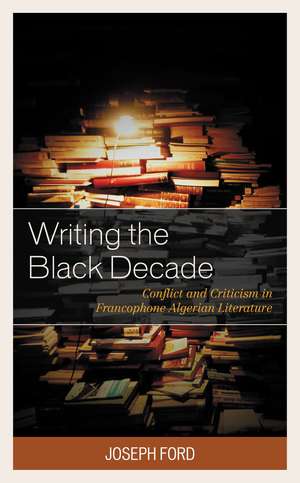
Writing the Black Decade: Conflict and Criticism in Francophone Algerian Literature: After the Empire: The Francophone World and Postcolonial France
Autor Joseph Forden Limba Engleză Paperback – 18 aug 2022
Din seria After the Empire: The Francophone World and Postcolonial France
- 22%
 Preț: 375.48 lei
 - 29%
 Preț: 342.63 lei
 - 29%
 Preț: 343.67 lei
 - 35%
 Preț: 594.01 lei
 - 35%
 Preț: 594.73 lei
 - 29%
 Preț: 343.67 lei
 - 31%
 Preț: 529.40 lei
 - 25%
 Preț: 306.46 lei
 - 23%
 Preț: 335.60 lei
 - 35%
 Preț: 594.56 lei
 - 29%
 Preț: 561.12 lei
 - 26%
 Preț: 592.68 lei
 - 23%
 Preț: 320.82 lei
 - 24%
 Preț: 318.74 lei
 - 23%
 Preț: 321.63 lei
 - 30%
 Preț: 505.39 lei
 - 36%
 Preț: 565.57 lei
 - 29%
 Preț: 345.51 lei
 - 30%
 Preț: 564.34 lei
 - 29%
 Preț: 346.12 lei
 - 35%
 Preț: 594.73 lei
 - 29%
 Preț: 341.92 lei
 - 34%
 Preț: 568.23 lei
 - 33%
 Preț: 594.98 lei
 - 29%
 Preț: 342.93 lei
 - 23%
 Preț: 322.99 lei
 - 34%
 Preț: 552.85 lei
 - 22%
 Preț: 326.24 lei
 - 14%
 Preț: 633.75 lei
 - 35%
 Preț: 593.23 lei
 - 23%
 Preț: 319.28 lei
 - 23%
 Preț: 321.15 lei
 - 22%
 Preț: 327.05 lei
 - 35%
 Preț: 807.77 lei
 - 34%
 Preț: 568.84 lei
 - 25%
 Preț: 306.14 lei
 - 34%
 Preț: 608.79 lei
 - 36%
 Preț: 679.02 lei
 - 29%
 Preț: 344.06 lei
 - 23%
 Preț: 335.38 lei
Preț: 254.83 lei
Preț vechi: 349.56 lei
-27%
Puncte Express: 382
Carte tipărită la comandă
Livrare economică 03-17 decembrie
Livrare prin curier în România Termenul estimat este afișat lângă disponibilitate.
Transport gratuit de la 400.00 lei Plată online sau ramburs, în funcție de opțiunile comenzii.
Retur gratuit în 14 zile Comandă securizată și suport în română.
Specificații
ISBN-13: 9781498581882
ISBN-10: 1498581889
Pagini: 178
Dimensiuni: 152 x 228 x 14 mm
Greutate: 0.27 kg
Editura: Bloomsbury Publishing
Colecția Lexington Books
Seria After the Empire: The Francophone World and Postcolonial France
Locul publicării:New York, United States
ISBN-10: 1498581889
Pagini: 178
Dimensiuni: 152 x 228 x 14 mm
Greutate: 0.27 kg
Editura: Bloomsbury Publishing
Colecția Lexington Books
Seria After the Empire: The Francophone World and Postcolonial France
Locul publicării:New York, United States
V-ar putea interesa
-
 -32%Preț: 522.06 lei767.49 lei
 -
 -36%Preț: 771.62 lei1207.71 lei
 -
 -33%Preț: 582.88 lei863.79 lei
 -
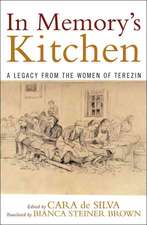 In Memory's Kitchen: A Legacy from the Women of TerezinCara de Silva-16%Preț: 139.07 lei166.53 lei
 -
 -13%Preț: 118.08 lei135.63 lei
 -
 November 22, 1963: A Reference Guide to the JFK AssassinationWilliam E. Scott-35%Preț: 565.06 lei865.26 lei
 -
 HannibalG. P. BakerPreț: 144.99 lei
 -
 Sulla the FortunateG. P. BakerPreț: 116.49 lei
 -
 Sorokin and Civilization: A Centennial AssessmentJoseph B. Ford-18%Preț: 718.55 lei876.28 lei
 -
 A Short Course in the Secret WarChristopher FelixPreț: 120.87 lei
 -
 Lost Treasures of American HistoryW. C. JamesonPreț: 93.91 lei
Cuprins
Acknowledgments
Introduction: Writing the Black Decade
Chapter 1: Rethinking Testimonial Literature in Rachid Mimouni, Assia Djebar and Maïssa Bey
Chapter 2: Exploring Complicity in Salim Bachi
Chapter 3: Beyond a Grotesque Aesthetics of the Black Decade in Habib Ayyoub
Chapter 4: Specters of the Black Decade in Kamel Daoud's Meursault, contre-enquête
Chapter 5: Deconstructing Oppositional Criticism in Mustapha Benfodil's Archéologie du chaos [amoureux]
Conclusion: Beyond the Language of Crisis and Conflict
Bibliography
About the Author
Introduction: Writing the Black Decade
Chapter 1: Rethinking Testimonial Literature in Rachid Mimouni, Assia Djebar and Maïssa Bey
Chapter 2: Exploring Complicity in Salim Bachi
Chapter 3: Beyond a Grotesque Aesthetics of the Black Decade in Habib Ayyoub
Chapter 4: Specters of the Black Decade in Kamel Daoud's Meursault, contre-enquête
Chapter 5: Deconstructing Oppositional Criticism in Mustapha Benfodil's Archéologie du chaos [amoureux]
Conclusion: Beyond the Language of Crisis and Conflict
Bibliography
About the Author
Recenzii
Ford assesses the focus of Algerian writers, artists, and journalists' focus on the events of Algeria's Black Decade (1990s) in their literary and journalistic narratives. He argues that particular authors relied on familiar-recidivist-tropes of Algerian violence inherited from the 1954-62 Algerian War of Independence, mirroring the headlines in the French press. Ford proposes the tropes were appropriated in three ways: some gathered literary accounts rooted in oppositional rendering (Rachid Mimouni, Assia Djebar, and Maïssa Bey [Samia Benameur]); others (Salim Bachi and Habib Ayyoub) inserted their testimonials in allegorical or mythical frameworks.. In dialogue with Valérie Orlando's The Algerian New Novel and Jane Hiddleston's Writing after Postcolonialism, this informative work problematizes the position of writers facing national tragedy. Recommended. Upper-division undergraduates through faculty.
This is undoubtedly a thorough and well-argued book, which offers an important source for those interested in contemporary Algerian literature, and Algerian culture more broadly.
Writing the Black Decade is a lively and incisive analysis of francophone literature focused on Algeria's civil war of the 1990s. Ford's approach is refreshing and original in that it both offers nuanced analysis of a range of important works not generally well-known to anglophone audiences and probes the effects of the media debates to which they have given rise. While attentive to the subtleties of the works under scrutiny, Ford astutely points out the ways in which literature too can contribute to the binary and conflictual structures they set out to criticise. This study makes a highly significant intervention at once into the study of Algerian literature and into debates on the politics of literary criticism.
This welcome book is a prompt to think more deeply and with greater nuance about literary representations of Algeria's 'Black Decade'. Ford asks a fundamental question about how to understand literature in a time of conflict and he responds with an assured and necessary corrective to the celebration of literature as a form of emancipation. Deftly, and through a range of compelling readings, Ford argues that much Algerian literature written in French distorted or obscured the messy realities that were at play. And yet Ford refuses a simple binary concluding that while literary works in Algeria have been shaped by their material conditions of production and reception, they have also contributed to shaping ideas that circulate within Algeria and its broader transnational public sphere. Ford makes a fresh contribution to an important debate and his book will be a key reference for scholars working on Francophone Algerian literature since 1988.
This is undoubtedly a thorough and well-argued book, which offers an important source for those interested in contemporary Algerian literature, and Algerian culture more broadly.
Writing the Black Decade is a lively and incisive analysis of francophone literature focused on Algeria's civil war of the 1990s. Ford's approach is refreshing and original in that it both offers nuanced analysis of a range of important works not generally well-known to anglophone audiences and probes the effects of the media debates to which they have given rise. While attentive to the subtleties of the works under scrutiny, Ford astutely points out the ways in which literature too can contribute to the binary and conflictual structures they set out to criticise. This study makes a highly significant intervention at once into the study of Algerian literature and into debates on the politics of literary criticism.
This welcome book is a prompt to think more deeply and with greater nuance about literary representations of Algeria's 'Black Decade'. Ford asks a fundamental question about how to understand literature in a time of conflict and he responds with an assured and necessary corrective to the celebration of literature as a form of emancipation. Deftly, and through a range of compelling readings, Ford argues that much Algerian literature written in French distorted or obscured the messy realities that were at play. And yet Ford refuses a simple binary concluding that while literary works in Algeria have been shaped by their material conditions of production and reception, they have also contributed to shaping ideas that circulate within Algeria and its broader transnational public sphere. Ford makes a fresh contribution to an important debate and his book will be a key reference for scholars working on Francophone Algerian literature since 1988.