
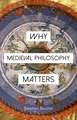
Why Medieval Philosophy Matters: Why Philosophy Matters
Autor Stephen Boulteren Limba Engleză Hardback – 24 ian 2019
Why Medieval Philosophy is also provides a introduction to medieval philosophy more generally exploring how this area of philosophy has been received, debated and, sometimes, dismissed in the history of philosophy.



Preț: 535.76 lei
Preț vechi: 767.84 lei
-30%
Puncte Express: 804
Carte tipărită la comandă
Livrare economică 30 noiembrie-14 decembrie
Livrare prin curier în România Termenul estimat este afișat lângă disponibilitate.
Transport gratuit pentru acest produs Plată online sau ramburs, în funcție de opțiunile comenzii.
Retur gratuit în 14 zile Comandă securizată și suport în română.
Specificații
ISBN-13: 9781350094154
ISBN-10: 1350094153
Pagini: 216
Dimensiuni: 148 x 218 x 18 mm
Greutate: 0.4 kg
Editura: Bloomsbury Publishing
Colecția Bloomsbury Academic
Seria Why Philosophy Matters
Locul publicării:London, United Kingdom
ISBN-10: 1350094153
Pagini: 216
Dimensiuni: 148 x 218 x 18 mm
Greutate: 0.4 kg
Editura: Bloomsbury Publishing
Colecția Bloomsbury Academic
Seria Why Philosophy Matters
Locul publicării:London, United Kingdom
Cuprins
preface
Introduction
Chapter 1. Medieval Philosophy and Common Sense
Chapter 2. Medieval Philosophy and the Sciences
Chapter 3. Medieval Philosophy and Methodology
Chapter 4. What Philosophers Used to Know (The art of distinctions)
Chapter 5. The Best Argument for the Existence of God (Scotus' De Primo Principio)
Chapter 6. Medieval Philosophy and the Problem of Western Disenchantment
bibliography
index
Introduction
Chapter 1. Medieval Philosophy and Common Sense
Chapter 2. Medieval Philosophy and the Sciences
Chapter 3. Medieval Philosophy and Methodology
Chapter 4. What Philosophers Used to Know (The art of distinctions)
Chapter 5. The Best Argument for the Existence of God (Scotus' De Primo Principio)
Chapter 6. Medieval Philosophy and the Problem of Western Disenchantment
bibliography
index
Recenzii
This volume is important for recognizing the value of medieval philosophy and its place in Western intellectual history. Scholarly yet accessible, the book will be embraced by both specialists and generalists, including those who wish to expand their interests beyond texts assigned in most introductory philosophy courses. Summing Up: Recommended. Upper-division undergraduates through faculty.
Stephen Boulter's book provides a cogent answer to the question of why medieval philosophy matters, by making the case that the scholastics had a distinctive and strong sense of their identity and utility within society as philosophers - a sense that has to some degree been forgotten in the modern era. The medievals saw themselves as usefully engaged in addressing important questions arising within the sciences and explored within society at large; their texts paradigmatically convey to the reader a sense of the value of philosophy and of the philosopher's intellectual responsibilities and goals within society at large. The book will be a useful read for anyone, including those who might want to critically engage with its overall argument.
This stimulating and highly original book makes a powerful case for the relevance of medieval philosophy to the methodology and content of contemporary natural sciences. It will be read with profit and great interest by all interested in medieval philosophy and its significance for the modern world.
Stephen Boulter's book provides a cogent answer to the question of why medieval philosophy matters, by making the case that the scholastics had a distinctive and strong sense of their identity and utility within society as philosophers - a sense that has to some degree been forgotten in the modern era. The medievals saw themselves as usefully engaged in addressing important questions arising within the sciences and explored within society at large; their texts paradigmatically convey to the reader a sense of the value of philosophy and of the philosopher's intellectual responsibilities and goals within society at large. The book will be a useful read for anyone, including those who might want to critically engage with its overall argument.
This stimulating and highly original book makes a powerful case for the relevance of medieval philosophy to the methodology and content of contemporary natural sciences. It will be read with profit and great interest by all interested in medieval philosophy and its significance for the modern world.