
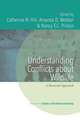
Understanding Conflicts about Wildlife: Studies of the Biosocial Society, cartea 9
Editat de Catherine M. Hill, Amanda D. Webber, Nancy E. C. Pristonen Limba Engleză Hardback – mai 2017

Preț: 695.90 lei
Preț vechi: 848.66 lei
-18%
Puncte Express: 1044
Carte disponibilă
Livrare economică 17 noiembrie-01 decembrie
Livrare express 31 octombrie-06 noiembrie pentru 34.34 lei
Livrare prin curier în România Termenul estimat este afișat lângă disponibilitate.
Transport gratuit pentru acest produs Plată online sau ramburs, în funcție de opțiunile comenzii.
Retur gratuit în 14 zile Comandă securizată și suport în română.
Specificații
ISBN-13: 9781785334627
ISBN-10: 178533462X
Pagini: 230
Dimensiuni: 157 x 235 x 17 mm
Greutate: 0.49 kg
Editura: BERGHAHN BOOKS
Colecția Studies of the Biosocial Society
Seria Studies of the Biosocial Society
ISBN-10: 178533462X
Pagini: 230
Dimensiuni: 157 x 235 x 17 mm
Greutate: 0.49 kg
Editura: BERGHAHN BOOKS
Colecția Studies of the Biosocial Society
Seria Studies of the Biosocial Society
V-ar putea interesa
-
 The Rise And Fall Of The Third ChimpanzeeJared Diamond-18%Preț: 76.98 lei93.60 lei
 -
 Myths and Memories of the NationAnthony D. Smith-30%Preț: 563.05 lei802.74 lei
 -
 The Thinking Ape: Evolutionary Origins of IntelligenceRichard Byrne-17%Preț: 357.06 lei432.39 lei
 -
 -31%Preț: 679.72 lei985.04 lei
 -
 Teeth: A Very Short IntroductionPeter S. Ungar-18%Preț: 59.10 lei72.28 lei
 -
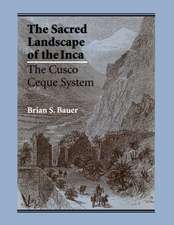 The Sacred Landscape of the Inca: The Cusco Ceque SystemBrian S. BauerPreț: 287.85 lei
 -
 After Empire: Melancholia or Convivial Culture?Paul GilroyPreț: 405.99 lei
 -
 Human Population GeneticsJohn H. Relethford-23%Preț: 535.99 lei696.08 lei
 -
 Dental Functional MorphologyPeter W. LucasPreț: 463.51 lei
 -
 The Changing BodyRoderick FloudPreț: 291.73 lei
 -
 The Human StoryRobin DunbarPreț: 92.15 lei
 -
 The Mirage of ChinaXin LiuPreț: 262.69 lei
 -
 A Brief History of DrugsAntonio EscohotadoPreț: 84.45 lei
 -
 Thin on the GroundSteven E Churchill-9%Preț: 978.22 lei1074.97 lei
 -
 -23%Preț: 757.54 lei983.83 lei
 -
 Catching Fire: How Cooking Made Us HumanRichard Wrangham-18%Preț: 76.11 lei93.10 lei
Notă biografică
Amanda D. Webber is a Lecturer in Conservation Science at Bristol Zoological Society. She is also an Honorary Research Associate at Oxford Brookes University. Her research focuses on human-wildlife interactions and she is interested in people's perceptions of wildlife (particularly urban or 'pest' species) and the development of co-existence strategies.
Cuprins
List of Figures and Tables
Acknowledgements
Introduction: Complex Problems: Using a Biosocial Approach to Understanding Human-Wildlife Interactions
Catherine M. Hill
Chapter 1. People, Perceptions and 'Pests': Human-Wildlife Interactions and the Politics of Conflict
Phyllis C. Lee
Chapter 2. Block, Push or Pull? Three Responses to Monkey Crop-Raiding in Japan
John Knight
Chapter 3. ¿Unintended Consequences in Conservation: How Conflict Mitigation May Raise the Conflict Level¿ - The Case of Wolf Management in Norway
Ketil Skogen
Chapter 4. Badger-Human Conflict: An Overlooked Historical Context for Bovine TB Debates in the UK
Angela Cassidy
Chapter 5. Savage Values: Conservation and Personhood in Southern Suriname
Marc Brightman
Chapter 6¿. Wildlife Value Orientations as an Approach to Understanding the Social Context of Human-Wildlife Conflict
¿Alia M. Dietsch, Michael J. Manfredo and Tara L. Teel ¿
Chapter 7. A Long Term Comparison of Local Perceptions of Crop Loss to Wildlife at Kibale National Park, Uganda: Exploring Consistency Across Individuals and Sites
Lisa Naughton-Treves, Jessica L'Roe, Andrew L'Roe and Adrian Treves
Chapter 8. Conservation Conflict Transformation: Addressing the Missing Link in Wildlife Conservation
Francine Madden and Brian McQuinn
Chapter 9. Engaging Farmers and Understanding Their Behaviour to Develop Effective Deterrents to Crop Damage by Wildlife
Graham E. Wallace and Catherine M. Hill
Chapter 10. Using Geographic Information Systems (GIS) at Sites of Negative Human-Wildlife Interactions: Current Applications and Future Developments
Amanda D. Webber, Stewart Thompson, Neil Bailey and Nancy E. C. Priston
Index
Acknowledgements
Introduction: Complex Problems: Using a Biosocial Approach to Understanding Human-Wildlife Interactions
Catherine M. Hill
Chapter 1. People, Perceptions and 'Pests': Human-Wildlife Interactions and the Politics of Conflict
Phyllis C. Lee
Chapter 2. Block, Push or Pull? Three Responses to Monkey Crop-Raiding in Japan
John Knight
Chapter 3. ¿Unintended Consequences in Conservation: How Conflict Mitigation May Raise the Conflict Level¿ - The Case of Wolf Management in Norway
Ketil Skogen
Chapter 4. Badger-Human Conflict: An Overlooked Historical Context for Bovine TB Debates in the UK
Angela Cassidy
Chapter 5. Savage Values: Conservation and Personhood in Southern Suriname
Marc Brightman
Chapter 6¿. Wildlife Value Orientations as an Approach to Understanding the Social Context of Human-Wildlife Conflict
¿Alia M. Dietsch, Michael J. Manfredo and Tara L. Teel ¿
Chapter 7. A Long Term Comparison of Local Perceptions of Crop Loss to Wildlife at Kibale National Park, Uganda: Exploring Consistency Across Individuals and Sites
Lisa Naughton-Treves, Jessica L'Roe, Andrew L'Roe and Adrian Treves
Chapter 8. Conservation Conflict Transformation: Addressing the Missing Link in Wildlife Conservation
Francine Madden and Brian McQuinn
Chapter 9. Engaging Farmers and Understanding Their Behaviour to Develop Effective Deterrents to Crop Damage by Wildlife
Graham E. Wallace and Catherine M. Hill
Chapter 10. Using Geographic Information Systems (GIS) at Sites of Negative Human-Wildlife Interactions: Current Applications and Future Developments
Amanda D. Webber, Stewart Thompson, Neil Bailey and Nancy E. C. Priston
Index
Descriere
Understanding Conflicts About Wildlife unites academics and practitioners to consider the political and social dimensions of 'human-wildlife conflicts'.