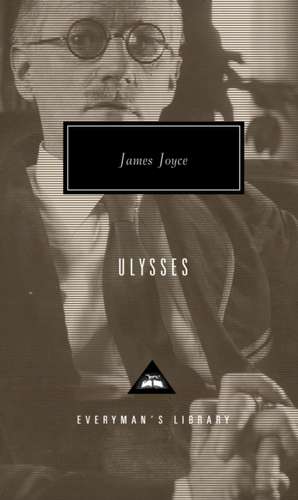
Ulysses
Autor James Joyceen Limba Engleză Hardback – 28 oct 1997
Ce se întâmplă când măreția mitului antic se ciocnește frontal cu monotonia și mizeria unei zile obișnuite dintr-o metropolă modernă? În Ulysses, James Joyce proiectează structura „Odiseei” peste harta labirintică a Dublinului, transformând peregrinările lui Leopold Bloom într-o epopee a banalului. Remarcăm cum tensiunea centrală a operei se naște din acest contrast permanent: între structura formală extrem de rigidă — unde fiecare capitol este asociat unei culori, unei arte și unui organ corporal — și fluxul liber, adesea haotic, al conștiinței personajelor. Suntem de părere că forța acestui roman nu rezidă doar în inovația tehnică, ci în precizia cvasi-chirurgicală cu care Joyce a documentat orașul; autorul însuși afirma că, dacă Dublinul ar fi distrus, ar putea fi reconstruit piatră cu piatră folosind paginile sale drept plan. Cititorul care a apreciat explorarea identității și a mediului social din Dubliners va găsi aici aceleași teme, însă amplificate la o scară monumentală, unde limbajul nu doar descrie realitatea, ci o inventează prin parodie, jargon și simbolism. Spre deosebire de A Portrait of the Artist as a Young Man, unde narativul urmărește formarea unei singure minți, Ulysses devine un organism colectiv, o polifonie de stiluri care a redefinit literatura secolului XX. Ritmul lecturii variază de la introspecția lentă la efervescența comică, oferind o experiență care solicită și recompensează spiritul de observație al cititorului.
Preț: 267.27 lei
Carte disponibilă
Livrare economică 09-23 noiembrie
Specificații
ISBN-10: 0679455132
Pagini: 1144
Dimensiuni: 138 x 212 x 49 mm
Greutate: 1.03 kg
Editura: Knopf Doubleday Publishing Group
V-ar putea interesa
-
 The War of the WorldsH. G. Wells-27%Preț: 47.27 lei64.76 lei
 -
 English Reformations: Religion, Politics, and Society under the TudorsChristopher Haigh-22%Preț: 396.96 lei509.91 lei
 -
 The Importance of Being EarnestOscar Wilde-19%Preț: 20.14 lei24.93 lei
 -
 Preț: 24.96 lei
 -
 Notes from the UndergroundFyodor Dostoyevsky-19%Preț: 23.30 lei28.69 lei
 -
 The PrinceNiccolò MachiavelliPreț: 21.63 lei
 -
 HamletWilliam Shakespeare-18%Preț: 23.87 lei29.07 lei
 -
 Romeo & JulietWilliam Shakespeare-19%Preț: 20.29 lei24.96 lei
 -
 Preț: 38.44 lei
 -
 100 Best-Loved PoemsPhilip Smith-18%Preț: 23.62 lei28.88 lei
 -
 Today Everything ChangesAndy McNab-35%Preț: 22.99 lei35.16 lei
 -
 Altered Carbon: Netflix Altered Carbon book 1Richard Morgan-25%Preț: 60.81 lei80.55 lei
 -
 The Catcher in the Rye. InterpretationshilfeNigel TookeyPreț: 45.75 lei
 -
 I Know Why the Caged Bird SingsMaya AngelouPreț: 140.24 lei
 -
 SiddharthaHermann HessePreț: 54.89 lei
 -
 Preț: 28.01 lei
 -
 Finnegans WakeJames JoycePreț: 40.75 lei
 -
 Women in LoveD. H. LawrencePreț: 38.15 lei
 -
 The Picture of Dorian GrayOscar WildePreț: 30.66 lei
 -
 Robinson CrusoeDaniel DefoePreț: 36.10 lei
 -
 To the LighthouseVirginia WoolfPreț: 36.36 lei
 -
 Hard TimesCharles DickensPreț: 28.01 lei
 -
 RainbowD. H. LawrencePreț: 28.01 lei
 -
 Les Fleurs du MalCharles BaudelairePreț: 54.46 lei
De ce să citești această carte
Recomandăm această ediție Everyman's Library Contemporary Classics celor care doresc să parcurgă textul fundamental al modernismului literar. Cititorul câștigă acces la o operă care a testat limitele limbajului și ale cenzurii, oferind o radiografie totală a condiției umane. Este o lectură esențială pentru a înțelege evoluția romanului contemporan, fiind un monument de inventivitate lingvistică ce transformă o zi de 16 iunie într-o eternitate literară.
Despre autor
James Joyce (1882–1941) a fost un romancier, poet și critic irlandez, considerat una dintre cele mai influente figuri ale avangardei moderniste. Născut în Dublin, a trăit cea mai mare parte a vieții în autoexil în orașe precum Trieste, Zurich și Paris. Opera sa a evoluat de la realismul psihologic din Dubliners (1914) și A Portrait of the Artist as a Young Man (1916), până la experimentele lingvistice radicale din Ulysses și, ulterior, Finnegans Wake. Joyce a revoluționat tehnica fluxului conștiinței, rămânând profund ancorat în topografia și spiritul orașului său natal.
Descriere scurtă
The most famous day in literature is June 16, 1904, when a certain Mr. Leopold Bloom of Dublin eats a kidney for breakfast, attends a funeral, admires a girl on the beach, contemplates his wife’s imminent adultery, and, late at night, befriends a drunken young poet in the city’s red-light district.
An earthy story, a virtuoso technical display, and a literary revolution all rolled into one, James Joyce’s Ulysses is a touchstone of our modernity and one of the towering achievements of the human mind.
Recenzii
“Ulysses has enough verbal splendor to furnish a legion of novels…You will have difficulty finding a fuller portrait of the natural man.” –Harold Bloom, The Western Canon
“One might almost risk praising [Ulysses] for being a work of literature in which the spirit of one man is eternally confirmed in all its complexity.” –from the Introduction
With an Introduction by Craig Raine
Descriere
Notă biografică
Cuprins
- Map: Dublin c. 1904
- Abbreviations
- Introduction
- Composition and Publication History
- Select Bibliography
- A Chronology of James Joyce
- ULYSSES
- Appendix A: The Gilbert and Linati Schemata
- Appendix B: Ulysses: Serialization and Editions
- Appendix C: Errata
- Explanatory Notes