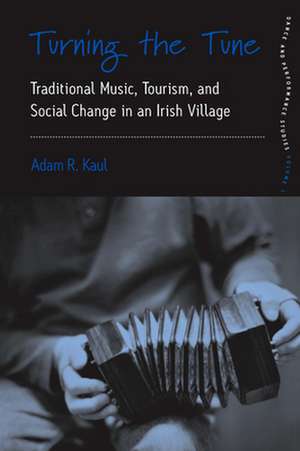
Turning the Tune: Dance and Performance Studies, cartea 3
Autor Adam Kaulen Limba Engleză Hardback – noi 2009
Găsim în Turning the Tune o realizare editorială de o ținută remarcabilă, specifică editurii Berghahn Books. Formatul hardback și calitatea hârtiei susțin un text dens, de o rigoare academică dublată de o sensibilitate etnografică vibrantă. Suntem de părere că această lucrare reușește să captureze nu doar sunetul, ci și textura socială a satului Doolin din County Clare, transformat dintr-o comunitate rurală izolată într-un loc de pelerinaj pentru iubitorii de muzică tradițională. Observăm cu interes cum Adam Kaul structurează materialul în trei secțiuni distincte care ghidează cititorul prin „istoria rememorată”, perioada de revitalizare („The Revival”) și realitatea contemporană a „Tigrului Celtic”. Autorul nu se limitează la o cronică muzicală, ci analizează critic fenomenul „blow-ins” — acei nou-veniți care au preluat ștafeta transmiterii tradiției, chestionând astfel conceptul de autenticitate. Ca și Flowing Tides, volumul pune în valoare importanța regiunii Clare ca centru spiritual al muzicii irlandeze, dar cu un accent distinct pe tensiunea dintre conservarea identității locale și consumul turistic de masă. În contextul operei sale, Turning the Tune se conectează tematic cu explorările anterioare din Cosmopolitanism and Tourism, unde Adam Kaul analiza potențialul cosmopolit al călătoriilor. Aici, însă, perspectiva este mult mai intimă, focalizată pe modul în care globalizarea „acordează” (turns) muzica într-o marfă culturală. Notăm că progresia capitolelor, de la vechile dansuri de la răscruce de drumuri până la sesiunile de muzică modernă din pub-uri, oferă o imagine completă a modului în care o comunitate își renegociază apartenența prin sunet.
Din seria Dance and Performance Studies
-
 Preț: 204.55 lei
 - 23%
 Preț: 801.12 lei
 - 23%
 Preț: 755.07 lei
 -
 Preț: 265.31 lei
 -
 Preț: 267.48 lei
 -
 Preț: 262.35 lei
 - 23%
 Preț: 758.37 lei
 -
 Preț: 268.65 lei
 - 23%
 Preț: 829.78 lei
 -
 Preț: 267.60 lei
 -
 Preț: 263.64 lei
 -
 Preț: 264.71 lei
 - 23%
 Preț: 772.18 lei
 - 23%
 Preț: 758.62 lei
 - 23%
 Preț: 757.76 lei
 - 23%
 Preț: 760.64 lei
Preț: 758.62 lei
Preț vechi: 985.21 lei
-23%
Carte tipărită la comandă
Livrare economică 08-22 decembrie
Specificații
ISBN-10: 1845456238
Pagini: 206
Dimensiuni: 157 x 235 x 16 mm
Greutate: 0.46 kg
Editura: BERGHAHN BOOKS
Colecția Dance and Performance Studies
Seria Dance and Performance Studies
Locul publicării:United Kingdom
V-ar putea interesa
-
 Visual Histories: Photography in the Popular ImaginationMalavika KarlekarPreț: 254.71 lei
 -
 Preț: 423.78 lei
 -
 -18%Preț: 2039.20 lei2486.83 lei
 -
 Chuck Klosterman IVChuck KlostermanPreț: 164.55 lei
 -
 I'll Be Your Mirror: The Selected Andy Warhol InterviewsKenneth GoldsmithPreț: 161.42 lei
 -
 Anthropologies of EducationKathryn M. Anderson-Levitt-23%Preț: 847.97 lei1101.26 lei
 -
 Writing the Dark Side of TravelJonathan SkinnerPreț: 262.57 lei
 -
 Cultures of ColourChris HorrocksPreț: 556.25 lei
 -
 The Simpsons and Their Mathematical SecretsSimon Singh-32%Preț: 63.00 lei92.97 lei
 -
 The Advanced Genius TheoryJason HartleyPreț: 115.13 lei
 -
 Preț: 100.38 lei
 -
 Preț: 134.22 lei
 -
 Music and ManipulationSteve N. BrownPreț: 243.15 lei
 -
 Skilled VisionsCristina GrasseniPreț: 263.56 lei
 -
 Andy Warhol PrintsClaudia Defendi-8%Preț: 580.04 lei630.48 lei
 -
 Yorkshire's Strangest TalesLeonora RustamovaPreț: 113.45 lei
 -
 The Palgrave Handbook of Popular Culture as PhilosophyDean A. Kowalski-9%Preț: 5282.97 lei5805.46 lei
 -
 Disability and Video GamesMarkus Spöhrer-18%Preț: 985.01 lei1201.23 lei
De ce să citești această carte
Recomandăm această carte cercetătorilor și pasionaților de etnomuzicologie care doresc să înțeleagă ce se ascunde în spatele fațadei turistice a Irlandei. Cititorul va câștiga o perspectivă profundă asupra modului în care tradiția supraviețuiește prin schimbare și cum muzica devine un liant social între localnici și vizitatori. Este un studiu esențial despre cum turismul poate atât să erodeze, cât și să revitalizeze o moștenire culturală vie.
Despre autor
Adam Kaul este un antropolog specializat în studiul turismului, muzicii și performanței, cu un interes marcat pentru dinamica schimbărilor sociale în comunitățile rurale. Lucrările sale, precum Leisure and Death sau Cosmopolitanism and Tourism, examinează adesea intersecția dintre experiența umană și procesele globale de consum cultural. Prin cercetările sale de teren în Irlanda, Kaul a devenit o voce importantă în analiza modului în care identitatea locală este performată și transformată în contextul migrației și al turismului internațional, aducând o perspectivă critică asupra conceptului de tradiție în secolul XXI.
Descriere scurtă
Notă biografică
Cuprins
- Conceptual Orientation
- Conceptual Organization
- Doolin
Chapter 2. The Old Days
- Ethnography, History and Memory
- Subsistence and Seasonality
- Argonauts of the Eastern Atlantic
- Seasonality Tourism in Clare in 1859
- (On the Origins of a New Species)
- Traditional Irish Music of the "Old Days"
- The Céilí and the Crossroads Dance
- The Country House Dance
- The Dance Halls and The Céilí Bands
- Early Collections and Early Sessions
- Conclusions
- A Changing Economy
- The Folk Revival
- Internal Changes in Irish Music
- The Revival Arrives
- Turning the Tune
- Conclusions
Chapter 4. The Celtic Tiger
- Celtic Tourism
- Mass Tourists
- Coach Tours
- "Travelers", Working Tourists, and Visitors
- Conclusions
- Locals
- Blow-ins
- Negotiations of Belonging
- Conclusions
Chapter 6. Consolidation and Globalization
- Traditional Music of the Celtic Tiger
- Doolin's Celtic Music Industry
- Bands and Sessions, Performing and Playing
- Paying to Play
- Conclusions
- Appropriation
- Adoption
- Complementary Discourses
- Phenomenology of the Session
- Premeditated Spontaneity
- Music as a Conversation
- Perfect Embodiment and Good Craic
- Conclusions
- History, Globalization, and Tourism
- Appropriation, Tradition, and Cosmopolitanism
- The Trope of Authenticity
- Credibility
- One's Relationship to the Locale
- One's Epistemological Relationship to the Music
- Immediate Context
- Seasonality
- The Interaction of Personalities
- Good Man, Yourself
Index