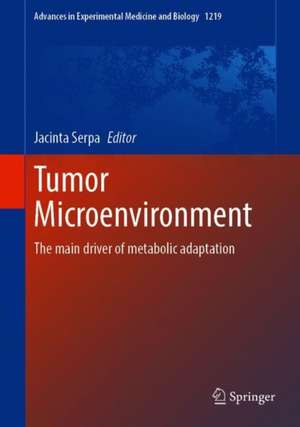
Tumor Microenvironment: Advances in Experimental Medicine and Biology, cartea 1219
Editat de Jacinta Serpaen Limba Engleză Hardback – 5 mar 2020
Publicată sub egida Springer în cadrul seriei Advances in Experimental Medicine and Biology, prima ediție a volumului Tumor Microenvironment marchează o schimbare de paradigmă în oncologia moleculară, concentrându-se pe adaptarea metabolică drept principal motor al supraviețuirii tumorale. Putem afirma că această lucrare depășește simpla descriere a geneticii cancerului, oferind o analiză clinică a modului în care celulele maligne își reciclează relațiile interspecifice pentru a asigura biomasa necesară proliferării. Suntem de părere că noutatea absolută a acestui volum constă în integrarea microbiotei și a adipocitelor ca parteneri biologici activi în dinamica metabolică a tumorii. Structura editorială este riguros împărțită în două secțiuni fundamentale. Prima secțiune analizează presiunea selectivă a microenvironmentului, incluzând protocoale actualizate privind rolul lactatului în efectul Warburg și implicarea celulelor endoteliale și a macrofagelor. A doua secțiune se concentrează pe semnalizarea metabolică, detaliind modul în care plasticitatea celulară este orchestrată prin căi precum semnalizarea Wnt. Acest manual de referință este comparabil cu The Heterogeneity of Cancer Metabolism de Anne Le, însă Tumor Microenvironment se distinge prin accentul pus pe interacțiunea cu microorganismele simbiotice și pe modelele de privare de nutrienți. Dacă titluri precum Tumor Microenvironment: Cellular, Metabolic and Immunologic Interactions oferă o privire de ansamblu, volumul editat de Jacinta Serpa oferă o perspectivă tehnică aprofundată asupra reprogramării metabolice ca barieră în calea răspunsului la tratament medicamentos.
Din seria Advances in Experimental Medicine and Biology
- 30%
 Preț: 715.95 lei
 - 5%
 Preț: 689.53 lei
 - 5%
 Preț: 1382.79 lei
 - 5%
 Preț: 688.64 lei
 - 5%
 Preț: 1292.83 lei
 - 5%
 Preț: 1188.59 lei
 - 5%
 Preț: 1331.79 lei
 - 5%
 Preț: 1202.31 lei
 - 5%
 Preț: 1119.61 lei
 - 18%
 Preț: 1084.81 lei
 - 5%
 Preț: 1057.02 lei
 - 5%
 Preț: 1386.42 lei
 - 5%
 Preț: 1162.58 lei
 - 18%
 Preț: 961.19 lei
 - 5%
 Preț: 939.74 lei
 - 18%
 Preț: 964.99 lei
 - 18%
 Preț: 1274.22 lei
 - 5%
 Preț: 1270.34 lei
 - 18%
 Preț: 1134.10 lei
 - 5%
 Preț: 1116.59 lei
 - 18%
 Preț: 1165.27 lei
 - 5%
 Preț: 1169.70 lei
 - 5%
 Preț: 1415.11 lei
 - 5%
 Preț: 1305.79 lei
 - 18%
 Preț: 1391.33 lei
 - 18%
 Preț: 1357.94 lei
 - 18%
 Preț: 1243.43 lei
 - 5%
 Preț: 1603.17 lei
 - 5%
 Preț: 1347.21 lei
 - 18%
 Preț: 1130.52 lei
 - 5%
 Preț: 1134.11 lei
 - 24%
 Preț: 968.09 lei
 - 15%
 Preț: 667.86 lei
 - 5%
 Preț: 1054.94 lei
 - 18%
 Preț: 914.93 lei
 - 18%
 Preț: 980.36 lei
 - 5%
 Preț: 1117.40 lei
 - 20%
 Preț: 1742.49 lei
 - 5%
 Preț: 731.13 lei
 - 18%
 Preț: 1352.09 lei
 - 5%
 Preț: 1099.72 lei
 - 18%
 Preț: 2531.37 lei
 - 5%
 Preț: 1002.59 lei
 - 18%
 Preț: 1413.77 lei
 - 5%
 Preț: 723.85 lei
 - 5%
 Preț: 1069.50 lei
 - 5%
 Preț: 696.54 lei
 - 18%
 Preț: 966.88 lei
Preț: 1191.45 lei
Preț vechi: 1254.16 lei
-5%
Carte disponibilă
Livrare economică 31 octombrie-14 noiembrie
Specificații
ISBN-10: 3030340244
Pagini: 456
Ilustrații: VII, 443 p. 1 illus.
Dimensiuni: 183 x 260 x 29 mm
Greutate: 1.15 kg
Ediția:1st ed. 2020
Editura: Springer
Colecția Advances in Experimental Medicine and Biology
Seria Advances in Experimental Medicine and Biology
Locul publicării:Cham, Switzerland
De ce să citești această carte
Această resursă este esențială pentru oncologi și cercetători care doresc să înțeleagă de ce terapiile standard eșuează în fața plasticității metabolice. Cititorul câștigă o viziune integrată asupra modului în care tumorile exploatează resursele de energie ale gazdei, de la adipocite la microbiota intestinală, oferind baze teoretice solide pentru dezvoltarea unor strategii terapeutice care să țintească nu doar celula canceroasă, ci întregul său sistem de suport metabolic.
Despre autor
Jacinta Serpa este o autoritate recunoscută în domeniul oncobiologiei, activând ca editor pentru această ediție sub egida Springer. Expertiza sa se concentrează pe studiul metabolismului tumoral și al interacțiunilor complexe din microenvironmentul canceros. Prin coordonarea acestui volum în cadrul seriei Advances in Experimental Medicine and Biology, Serpa reunește contribuții multidisciplinare care reflectă cele mai recente descoperiri în biochimia și fiziopatologia cancerului, consolidând legătura dintre cercetarea fundamentală și aplicațiile clinice în oncologie.
Descriere scurtă
The subjects will be presented from the conceptual point of view of the cross-cancer mechanisms and also particularizing some models that can be examples and enlightening within the different areas.
Cuprins
Notă biografică
Textul de pe ultima copertă
This work was written by experts and dedicated to researchers with interests in cancer biology, TME, cancer metabolism and therapy. It will interest the Advances in Experimental Medicine and Biology readership, including basic researchers, analytic researchers, bio-engineers and clinicians.