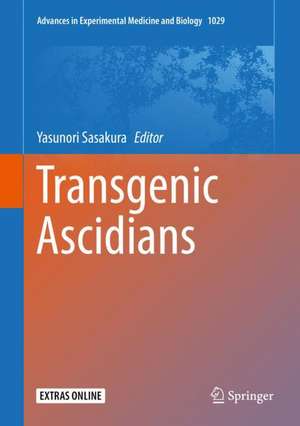
Transgenic Ascidians: Advances in Experimental Medicine and Biology, cartea 1029
Editat de Yasunori Sasakuraen Limba Engleză Hardback – 5 apr 2018
Sub coordonarea lui Yasunori Sasakura, cercetător de renume în biologia marină, volumul de față reprezintă prima sinteză exhaustivă dedicată tehnicilor de transgeneză aplicate ascidiilor, organisme model esențiale pentru înțelegerea planului corporal al cordatelor. Observăm cum această primă ediție publicată de Springer reușește să consolideze peste două decenii de rafinament tehnologic, oferind protocoale riguroase pentru specii cheie precum Ciona și Halocynthia roretzi. Din punct de vedere metodologic, Transgenic Ascidians extinde cadrul tehnic propus de Microinjection de David J. Carroll, aducând date noi și specifice despre integrarea ADN-ului în genomul celulelor vii ale nevertebratelor marine. Putem afirma că lucrarea se distinge prin abordarea practică a unor tehnologii de ultimă oră, precum sistemele de knockout bazate pe CRISPR/Cas9 și TALENs, dar și prin detalii fine despre utilizarea ADN-ului cis-reglator ca instrument molecular. Structura narativă a textului urmează o progresie logică, de la bazele microinjecției și electroporației, descrise în primele cinci capitole, până la metode complexe de marcare celulară și transgeneză a liniei germinale. Merită menționat faptul că autorii nu se limitează la prezentarea tehnicilor, ci includ secțiuni dedicate analizei enhancerilor și mecanismelor moleculare care controlează formarea notocordului. Tonul este unul precis și tehnic, transformând fiecare capitol într-un ghid de laborator ce facilitează replicarea experimentelor și îmbunătățirea sistemelor de studiu pentru sistemul nervos și dezvoltarea embrionară.
Din seria Advances in Experimental Medicine and Biology
- 30%
 Preț: 752.07 lei
 - 5%
 Preț: 1334.86 lei
 - 5%
 Preț: 1212.42 lei
 - 5%
 Preț: 1335.15 lei
 - 5%
 Preț: 1207.57 lei
 - 5%
 Preț: 1142.42 lei
 - 18%
 Preț: 1163.92 lei
 - 5%
 Preț: 1057.02 lei
 - 5%
 Preț: 1487.84 lei
 - 5%
 Preț: 1200.13 lei
 - 5%
 Preț: 942.82 lei
 - 18%
 Preț: 992.48 lei
 - 18%
 Preț: 1274.22 lei
 - 5%
 Preț: 1275.48 lei
 - 18%
 Preț: 1157.14 lei
 - 5%
 Preț: 1138.79 lei
 - 18%
 Preț: 1170.08 lei
 - 5%
 Preț: 1206.95 lei
 - 18%
 Preț: 1268.90 lei
 - 5%
 Preț: 1347.73 lei
 - 18%
 Preț: 1462.85 lei
 - 18%
 Preț: 1459.28 lei
 - 18%
 Preț: 1283.66 lei
 - 5%
 Preț: 1679.37 lei
 - 5%
 Preț: 1352.87 lei
 - 18%
 Preț: 1166.87 lei
 - 5%
 Preț: 1138.79 lei
 - 24%
 Preț: 966.03 lei
 - 15%
 Preț: 667.86 lei
 - 5%
 Preț: 1137.79 lei
 - 18%
 Preț: 981.18 lei
 - 18%
 Preț: 980.36 lei
 - 5%
 Preț: 1199.06 lei
 - 5%
 Preț: 750.62 lei
 - 18%
 Preț: 1451.34 lei
 - 5%
 Preț: 1133.64 lei
 - 18%
 Preț: 2616.27 lei
 - 5%
 Preț: 1075.08 lei
 - 18%
 Preț: 1443.07 lei
 - 5%
 Preț: 745.85 lei
 - 5%
 Preț: 1146.99 lei
 - 5%
 Preț: 696.54 lei
 - 18%
 Preț: 1037.10 lei
 - 5%
 Preț: 1363.25 lei
 - 5%
 Preț: 1084.55 lei
 - 5%
 Preț: 701.25 lei
Preț: 980.33 lei
Preț vechi: 1195.53 lei
-18%
Carte disponibilă
Livrare economică 16-30 noiembrie
Specificații
ISBN-10: 9811075441
Pagini: 212
Ilustrații: X, 201 p.
Dimensiuni: 183 x 260 x 17 mm
Greutate: 0.59 kg
Ediția:1st ed. 2018
Editura: Springer
Colecția Advances in Experimental Medicine and Biology
Seria Advances in Experimental Medicine and Biology
Locul publicării:Singapore, Singapore
De ce să citești această carte
Această lucrare este indispensabilă cercetătorilor care utilizează ascidiile ca model experimental, oferind acces rapid la protocoale verificate de transgeneză. Cititorul câștigă o înțelegere profundă a tehnicilor CRISPR/Cas9 și TALENs aplicate specific pe nevertebrate marine. Este un ghid practic ce permite implementarea imediată în laborator a unor metode de manipulare genetică ce pot elucida mecanismele fundamentale ale evoluției cordatelor.
Despre autor
Yasunori Sasakura este un distins profesor și cercetător japonez, activând în cadrul Shimoda Marine Research Center de la Universitatea din Tsukuba. Expertiza sa principală vizează biologia dezvoltării și genetica moleculară, fiind recunoscut la nivel internațional pentru contribuțiile sale inovatoare în dezvoltarea sistemelor de transpunere pentru studiul ascidiilor. Activitatea sa de editor pentru acest volum reflectă autoritatea sa în domeniu, Sasakura fiind unul dintre pionierii care au transformat specia Ciona intestinalis într-un model genetic robust pentru înțelegerea evoluției vertebratelor.
Descriere scurtă
Ascidians have been one of the most important model animals in developmental biology for studying molecular and cellular processes underlying formation of the chordate body plan. Transgenic techniques such as microinjection, electropolation, cis-element analysis and application, and TALENs and CRISPR/Cas9 have been developed in ascidians for more than 20 years, and now many applied methods, some of which are unique in ascidians, have been accumulated. Those extensive technological innovations, such as cell isolation, cell labeling, germ-line transformation, marker transgenic lines, and the experimental systems for studying notochord formation and nervous system, are exceptional particularly in marine invertebrates.
This book is useful for ascidian researchers to quickly access the techniques in which they are interested as well as to compare each technology to become familiar with specialized tips, and for biologists of other organisms to learn the unique techniques and ingenious attempts specific to ascidians. Providing detailed and easily understandable descriptions of techniques, the book will inspire ascidian specialists to improve their techniques, encourage anyone wanting to begin studying ascidians, and enable readers to immediately apply the techniques to the organisms they research.