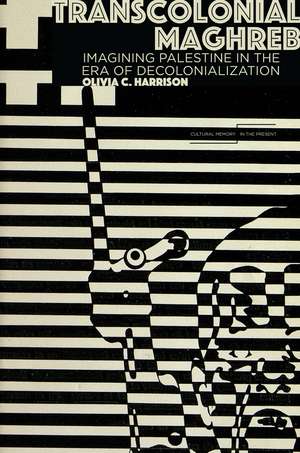
Transcolonial Maghreb: Imagining Palestine in the Era of Decolonization: Cultural Memory in the Present
Editat de Olivia Harrisonen Limba Engleză Hardback – 18 noi 2015
Transcolonial Maghreb offers the first thorough analysis of the ways in which Moroccan, Algerian, and Tunisian writers have engaged with the Palestinian question and the Palestinian-Israeli conflict for the past fifty years. Arguing that Palestine has become the figure par excellence of the colonial in the purportedly postcolonial present, the book reframes the field of Maghrebi studies to account for transversal political and aesthetic exchanges across North Africa and the Middle East. Olivia C. Harrison examines and contextualizes writings by the likes of Abdellatif Laâbi, Kateb Yacine, Ahlam Mosteghanemi, Albert Memmi, Abdelkebir Khatibi, Jacques Derrida, and Edmond El Maleh, covering a wide range of materials that are, for the most part, unavailable in English translation: popular theater, literary magazines, television series, feminist texts, novels, essays, unpublished manuscripts, letters, and pamphlets written in the three main languages of the Maghreb—Arabic, French, and Berber. The result has wide implications for the study of transcolonial relations across the Global South.
Din seria Cultural Memory in the Present
-
 Preț: 197.90 lei
 -
 Preț: 203.23 lei
 -
 Preț: 173.57 lei
 - 23%
 Preț: 776.60 lei
 -
 Preț: 194.38 lei
 -
 Preț: 270.62 lei
 -
 Preț: 156.33 lei
 -
 Preț: 208.61 lei
 - 19%
 Preț: 666.52 lei
 - 23%
 Preț: 727.13 lei
 -
 Preț: 201.43 lei
 -
 Preț: 207.49 lei
 -
 Preț: 156.69 lei
 -
 Preț: 161.65 lei
 -
 Preț: 172.54 lei
 -
 Preț: 195.70 lei
 -
 Preț: 237.77 lei
 - 19%
 Preț: 703.84 lei
 -
 Preț: 211.24 lei
 -
 Preț: 273.04 lei
 -
 Preț: 288.78 lei
 -
 Preț: 237.13 lei
 -
 Preț: 210.16 lei
 -
 Preț: 158.20 lei
 -
 Preț: 236.86 lei
 -
 Preț: 212.37 lei
 - 19%
 Preț: 590.04 lei
 -
 Preț: 244.32 lei
 -
 Preț: 194.76 lei
 -
 Preț: 152.77 lei
 -
 Preț: 170.67 lei
 -
 Preț: 227.84 lei
 -
 Preț: 196.13 lei
 -
 Preț: 518.94 lei
 -
 Preț: 195.70 lei
 -
 Preț: 171.73 lei
 -
 Preț: 200.85 lei
 -
 Preț: 201.64 lei
 - 19%
 Preț: 707.29 lei
 - 19%
 Preț: 560.54 lei
 - 23%
 Preț: 755.88 lei
 -
 Preț: 219.86 lei
 -
 Preț: 233.59 lei
 -
 Preț: 197.07 lei
 -
 Preț: 214.83 lei
 - 23%
 Preț: 726.86 lei
Preț: 462.73 lei
Puncte Express: 694
Carte tipărită la comandă
Livrare economică 02-16 decembrie
Livrare prin curier în România Termenul estimat este afișat lângă disponibilitate.
Transport gratuit pentru acest produs Plată online sau ramburs, în funcție de opțiunile comenzii.
Retur gratuit în 14 zile Comandă securizată și suport în română.
Specificații
ISBN-13: 9780804794213
ISBN-10: 0804794219
Pagini: 232
Dimensiuni: 152 x 229 x 18 mm
Greutate: 0.48 kg
Editura: Stanford University Press
Colecția Stanford University Press
Seria Cultural Memory in the Present
ISBN-10: 0804794219
Pagini: 232
Dimensiuni: 152 x 229 x 18 mm
Greutate: 0.48 kg
Editura: Stanford University Press
Colecția Stanford University Press
Seria Cultural Memory in the Present
V-ar putea interesa
-
 Shakespeare and GenreA. GuneratnePreț: 406.28 lei
 -
 Black Authors and Illustrators of Books for Children and Young AdultsBarbara Thrash Murphy-15%Preț: 482.92 lei568.13 lei
 -
 Machine and Metaphor: The Ethics of Language in American RealismJennifer C. Cook-15%Preț: 470.51 lei553.53 lei
 -
 Preț: 332.09 lei
 -
 The Epic of GilgameshMaureen KovacsPreț: 95.72 lei
 -
 Preț: 531.48 lei
 -
 Preț: 535.61 lei
 -
 An Obsession with History: Russian Writers Confront the PastAndrew WachtelPreț: 225.63 lei
 -
 Figuring Authorship in Antebellum AmericaMichael Newbury-19%Preț: 448.10 lei553.20 lei
 -
 Preț: 196.13 lei
 -
 Preț: 268.85 lei
 -
 -19%Preț: 508.40 lei627.66 lei
 -
 Preț: 520.10 lei
 -
 Preț: 192.93 lei
 -
 I Me MineGeorge HarrisonPreț: 374.11 lei
 -
 HandschriftenregisterGundolf Keil-23%Preț: 1598.11 lei2075.47 lei
 -
 Geschichte der estnischen LiteraturCornelius Th. Hasselblatt-23%Preț: 2627.04 lei3411.74 lei
 -
 SangspruchdichtungDorothea Klein-23%Preț: 1204.89 lei1564.80 lei
 -
 -23%Preț: 2677.58 lei3477.36 lei
 -
 -23%Preț: 849.69 lei1103.50 lei
 -
 Perspektiven zur Sozialgeschichte der LiteraturJörg Schönert-23%Preț: 879.94 lei1142.78 lei
 -
 Aristoteles HispanusVerena Dehmer-23%Preț: 884.00 lei1148.06 lei
 -
 Entgöttertes LeidMartin A. Hainz-23%Preț: 1759.21 lei2284.68 lei
 -
 -23%Preț: 1282.48 lei1665.57 lei
 -
 Rhet - StGert Ueding-23%Preț: 1559.51 lei2025.33 lei
 -
 Gespenster und GelehrteYvonne Wübben-23%Preț: 1202.17 lei1561.27 lei
Recenzii
"Closely engaged with a vast body of literary texts, Transcolonial Maghreb is timely and greatly informative. It offers an important theoretical contribution to postcolonial studies."—Gil Hochberg, University of California, Los Angeles
Notă biografică
Olivia C. Harrison is Assistant Professor of French and Middle East Studies at the University of Southern California.
Descriere
Arguing that Palestine has come to signify the colonial, broadly conceived, in the decolonizing world, this book offers the first thorough analysis of the ways in which Moroccan, Algerian, and Tunisian writers have engaged with the Palestinian question and the Palestinian-Israeli conflict for the past fifty years.