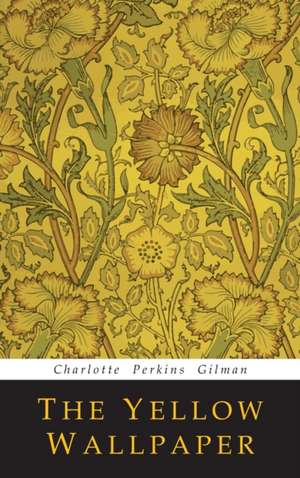
The Yellow Wallpaper
Autor Charlotte Perkins Gilmanen Limba Engleză Hardback – 22 mai 2023
Poate fi oare izolarea forțată, impusă sub masca grijii maritale, mai degrabă o formă de tortură decât un tratament? În această scurtă dar densă operă de ficțiune, descoperim o cronică tulburătoare a pierderii autonomiei feminine. Scrisă cu o furie stăpânită, The Yellow Wallpaper ne introduce în mintea unei femei captive nu doar într-o cameră cu un tapet galben respingător, ci și într-o structură socială care îi neagă dreptul la stimulare intelectuală și exprimare creativă. Notăm cu interes cum tonul narativ glisează de la o observație sarcastică, aproape resemnată, către o obsesie febrilă, pe măsură ce protagonista începe să deslușească siluete care se târăsc în spatele modelului complicat de pe perete. Imaginați-vă tensiunea psihologică și atmosfera apăsătoare din The Yellow Wallpaper And Selected Writings, mutată într-un decor de izolare domestică victoriană unde liniștea este obligatorie, iar scrisul este un act de rebeliune clandestină. Față de alte lucrări ale autoarei, precum Herland, unde Charlotte Perkins Gilman explorează viziuni utopice despre societăți conduse de femei, aici perspectiva este intimă și claustrofobică, concentrându-se pe efectele devastatoare ale lipsei de libertate asupra psihicului uman. Este un roman polițist al minții, unde agresorul este adesea invizibil, ascuns sub bunele intenții ale medicinei secolului al XIX-lea. Ritmul este unul insidios, oglindind degradarea lentă a percepției, iar finalul rămâne unul dintre cele mai stranii și discutate momente din literatura americană.
Preț: 124.61 lei
Carte tipărită la comandă
Livrare economică 09-15 iulie
Specificații
ISBN-10: 1684228212
Pagini: 24
Dimensiuni: 157 x 235 x 6 mm
Greutate: 0.2 kg
Editura: Martino Fine Books
V-ar putea interesa
-
 Preț: 58.00 lei
 -
 Preț: 105.58 lei
 -
 The Golem and the JinniHelene WeckerPreț: 113.95 lei
 -
 A Note Of MadnessTabitha SuzumaPreț: 77.31 lei
 -
 PygmyChuck PalahniukPreț: 91.21 lei
 -
 Catch-22: 50th Anniversary EditionJoseph Heller-18%Preț: 59.93 lei72.94 lei
 -
 The Wisdom of PsychopathsKevin Dutton-26%Preț: 63.68 lei85.73 lei
 -
 East of EdenJohn Steinbeck-35%Preț: 61.93 lei94.65 lei
 -
 The Problem that Has No NameBetty Friedan-40%Preț: 16.68 lei27.93 lei
 -
 Boys of My YouthJo Ann BeardPreț: 96.64 lei
 -
 Dictionary of the Khazars (F)Milorad Pavic-20%Preț: 91.00 lei113.75 lei
 -
 Preț: 60.77 lei
 -
 We Should All Be FeministsChimamanda Ngozi AdichiePreț: 53.88 lei
 -
 Stumbling on HappinessDaniel GilbertPreț: 94.48 lei
 -
 Bun B's Rapper Coloring and Activity BookShea SerranoPreț: 64.62 lei
 -
 How to LiveSarah BakewellPreț: 114.02 lei
 -
 The Life-Changing Magic of Tidying UpMarie KondoPreț: 100.65 lei
 -
 Tom JonesHenry FieldingPreț: 40.40 lei
 -
 Daniel DerondaGeorge EliotPreț: 40.25 lei
 -
 The RainbowD. H. LawrencePreț: 24.60 lei
 -
 Eroberung des NutzlosenWerner HerzogPreț: 117.59 lei
De ce să citești această carte
Recomandăm această carte oricărui cititor interesat de originile literaturii feministe și de explorările psihologice profunde. The Yellow Wallpaper oferă o perspectivă istorică dură asupra tratamentului sănătății mintale la femei, fiind în același timp o lectură captivantă prin atmosfera sa gotică. Veți câștiga o înțelegere mai clară a modului în care autonomia personală este esențială pentru echilibrul psihic, totul într-un format compact, perfect pentru o lectură intensă.
Despre autor
Charlotte Perkins Gilman (1860–1935) a fost o figură centrală a feminismului american, sociolog și scriitoare a cărei viață a fost marcată de o luptă constantă pentru independență. Crescută într-o familie cu legături intelectuale puternice (fiind nepoata lui Harriet Beecher Stowe), dar marcată de sărăcie și abandonul tatălui, Gilman a devenit o voce critică la adresa structurilor opresive ale căsătoriei victoriene. Experiența sa personală cu depresia și tratamentul restrictiv impus de medici a stat la baza operei sale cele mai cunoscute, transformând suferința individuală într-o critică socială universală ce continuă să fie studiată și astăzi.
Descriere
First appearing in 1892 The Yellow Wallpaper is a searing vision of a distinctively feminine form of madness and commands attention as an arresting tale of horror and a moving look into a woman's mind.
The story uncompromisingly thrusts the reader into the mind of the narrator. She is a woman forced, ostensibly for her own good, into a 'rest cure', a psychological straitjacket so constricting that she begins to unravel. Her mental dissolution is described with such fierce immediacy that The Yellow Wallpaper has been read and anthologized as a chilling horror tale. While it can easily be appreciated for its disorienting thrills, the story's true resonance comes from its matter-of-fact portrayal of a woman pushed to the rim of sanity by society's demands and her family's utter inability to conceive of the fact that she cannot fit within their strictures. Shot through with unforgettable images of the yellow wallpaper, its shadowy depths and what seems to lurk there, The Yellow Wallpaper builds to a climax that combines the narrative impact of an Edgar Allan Poe story with a wrenching protest of the treatment of women. Unique and genre-bending, Gilman's story was unrivaled in its era and its power endures undiminished today.
With an eye-catching new cover, and professionally typeset manuscript, this edition of The Yellow Wallpaper is both modern and readable.
Descriere scurtă
Textul de pe ultima copertă
Written from a feminist perspective, often focusing on the inferior status accorded to women by society, the tales include "turned," an ironic story with a startling twist, in which a husband seduces and impregnates a naive servant; "Cottagette," concerning the romance of a young artist and a man who's apparently too good to be true; "Mr. Peebles' Heart," a liberating tale of a fiftyish shopkeeper whose sister-in-law, a doctor, persuades him to take a solo trip to Europe, with revivifying results; "The Yellow Wallpaper"; and three other outstanding stories.
These charming tales are not only highly readable and full of humor and invention, but also offer ample food for thought about the social, economic, and personal relationship of men and women and how they might be improved."
Recenzii
A great work of literature, the product of a questing, burning intellect
I loved it. I loved the unnerving, sarcastic tone, the creepy ending, the clarity of its critique of the popular nineteenth century