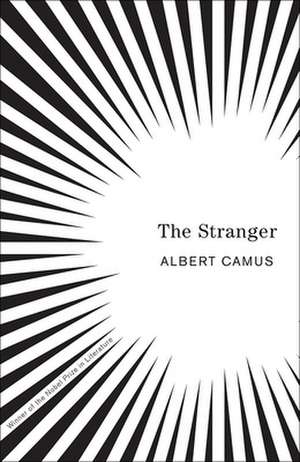
The Stranger
Autor Albert Camus Traducere de Matthew Warden Limba Engleză Hardback – 28 feb 1989 – vârsta de la 14 ani
Ce se întâmplă atunci când refuzul de a minți în privința propriilor sentimente devine o sentință la moarte? Tensiunea centrală din The Stranger nu rezidă în crima comisă pe plaja toridă din Algeria, ci în coliziunea frontală dintre onestitatea radicală, aproape biologică, a lui Meursault și mecanismele ipocrite ale societății care cere spectacolul remușcării. Notăm cu interes felul în care Albert Camus construiește un personaj care privește lumea cu o claritate științifică, dar rămâne complet străin de convențiile ei morale.
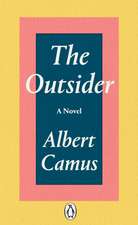
Considerăm că stilul acestui text, redat cu precizie în limba engleză de Matthew Ward, reflectă perfect acea stare de epuizare spirituală și alienare care a marcat secolul XX. Narațiunea este de o simplitate înșelătoare, cu fraze scurte și tăioase care ascund o profunzime metafizică tulburătoare. Pe același raft cu The Outsider de Albert Camus — titlu sub care lucrarea este cunoscută în spațiul britanic — această ediție se distinge prin fidelitatea față de tonul „alb”, detașat, pe care Camus l-a teoretizat ca fiind singurul capabil să descrie absurdul.
În contextul operei sale, The Stranger reprezintă piatra de temelie pentru ceea ce autorul va dezvolta ulterior în eseuri precum The Myth of Sisyphus. Dacă în The Fall explorarea vinovăției este una complexă și stratificată, aici Camus optează pentru o puritate a prezentului continuu, unde soarele, marea și indiferența universului sunt singurele certitudini. Este un roman polițist care se transformă rapid într-un proces al conștiinței, unde acuzatul nu este judecat pentru fapta sa, ci pentru faptul că nu a plâns la înmormântarea mamei sale.
Preț: 179.02 lei
Carte disponibilă
Livrare economică 21 octombrie-04 noiembrie
Specificații
ISBN-10: 0812416694
Dimensiuni: 125 x 207 x 14 mm
Greutate: 0.22 kg
Ediția:Vintage Intl.
Editura: Perfection Learning
V-ar putea interesa
-
 To the LighthouseVirginia WoolfPreț: 28.01 lei
 -
 Brave New WorldAldous HuxleyPreț: 63.49 lei
 -
 Doctor ZhivagoBoris Pasternak-36%Preț: 59.93 lei93.44 lei
 -
 Song of SolomonToni Morrison-25%Preț: 59.67 lei79.32 lei
 -
 The PlagueAlbert Camus-27%Preț: 57.08 lei77.76 lei
 -
 The First ManAlbert Camus-27%Preț: 57.18 lei77.82 lei
 -
 Naked LunchWilliam S. BurroughsPreț: 78.17 lei
 -
 -26%Preț: 53.19 lei71.75 lei
 -
 Of Mice and MenJohn SteinbeckPreț: 62.64 lei
 -
 Thus Spoke Zarathustra: A Book for Everyone and NobodyFriedrich NietzschePreț: 83.63 lei
 -
 The OutsiderAlbert Camus-21%Preț: 49.49 lei62.70 lei
 -
 Crime And PunishmentFyodor DostoyevskyPreț: 59.57 lei
 -
 A Life Worth LivingRobert ZaretskyPreț: 146.75 lei
 -
 With the Old BreedE B SledgePreț: 61.80 lei
 -
 Fahrenheit 451Ray BradburyPreț: 65.59 lei
 -
 Flowers For Algernon: A Modern Literary ClassicDaniel KeyesPreț: 95.68 lei
 -
 Heaven Official's Blessing: Tian Guan Ci Fu (Novel) Vol. 5Mo Xiang Tong XiuPreț: 125.20 lei
 -
 Lonely Planet's Best Ever Photography TipsLonely Planet-11%Preț: 38.75 lei43.33 lei
 -
 Karamazov BrothersFyodor DostoevskyPreț: 42.00 lei
 -
 Man's Search For MeaningViktor E. FranklPreț: 62.55 lei
 -
 The Island of Dr MoreauH. G. WellsPreț: 49.68 lei
 -
 The Count of Monte CristoAlexandre DumasPreț: 42.42 lei
 -
 LinksNatsuki Kizu-19%Preț: 57.22 lei70.98 lei
 -
 Normal PeopleSally RooneyPreț: 96.68 lei
De ce să citești această carte
Recomandăm această lectură esențială pentru oricine dorește să exploreze bazele filozofiei absurdului printr-o poveste captivantă și provocatoare. Cititorul va câștiga o perspectivă unică asupra integrității personale și a modului în care societatea sancționează nonconformismul emoțional. Este o carte subțire ca volum, dar care lasă o amprentă durabilă asupra modului în care înțelegem libertatea individuală și indiferența lumii.
Despre autor
Albert Camus (1913–1960), laureat al Premiului Nobel pentru Literatură în 1957, a fost un romancier, dramaturg și filozof francez născut în Algeria. Personalitate marcantă a rezistenței franceze și editor al ziarului Combat, Camus a devenit vocea morală a unei generații confruntate cu absurdul existenței. Deși a fost adesea asociat cu existențialismul, el a preferat să își definească viziunea prin prisma absurdismului. Opera sa, care include titluri fundamentale precum The Plague și The Rebel, analizează constant revolta omului în fața unei lumi lipsite de sens aparent, căutând o etică a solidarității și a măsurii.
Descriere
Notă biografică
Sandra Smith is the translator of all twelve novels by Irène Némirovsky; a new translation of Camus’ L’Etranger (The Outsider, Penguin UK); and The Necklace and Other Stories: Maupassant for Modern Times (Liveright). Her translation of Némirovsky’s Suite Française won the French-American Foundation and Florence Gould Foundation Translation Prize for Fiction, as well as the PEN Book-of-the-Month Club Translation Prize. After ten years as a Fellow of Robinson College, Cambridge, Smith now lives in New York.
Jacques Ferrandez was born in Algeria in 1955. In 1987, he began his Notebooks from the Orient, a series of panoramic portraits depicting the history of the French presence in Algeria, for which he was awarded the Historia Prix Spécial. An indisputable expert on the Algerian question, he adapted Camus’s novel The Stranger as well as his new interpretation of The First Man. His books have been the subject of many exhibitions in France and Algeria.