
The Return of the Native
Autor Thomas Hardyen Limba Engleză Hardback – 30 oct 2018
Against the lowering background of Egdon Heath, fiery Eustacia Vye passes her days, wishing only for passionate love. She believes that her escape from Egdon lies in marriage to Clym Yeobright, home from Paris and discontented with his work there. But Clym wishes to return to the Egdon community; a desire which sets him in opposition to his wife and brings them both to despair.
Based on the first edition of the text, this edition includes detailed notes of later revisions made by Hardy, glossary, bibliography and useful chronology of author's life. In her introduction Penny Bouhmelha identifies the literary and classical allusions in Hardy's text, in particular the parallels with Flaubert's Madame Bovary and with the Oedipus story. In so doing she demonstrates Hardy's claim for tragic status for ordinary human lives and the ways that the characters in the novel - especially the ill-fated lovers and Damon Wildeve - spoil their chances to master their own destinies.
Thomas Hardy (1840-1928), born Higher Brockhampton, near Dorchester, originally trained as an architect before earning his living as a writer. Though he saw himself primarily as a poet, Hardy was the author of some of the late eighteenth century's major novels: The Mayor of Casterbridge (1886), Tess of the D'Urbervilles (1891), Far from the Madding Crowd (1874), and Jude the Obscure (1895). Amidst the controversy caused by Jude the Obscure, he turned to the poetry he had been writing all his life. In the next thirty years he published over nine hundred poems and his epic drama in verse, The Dynasts.
If you enjoyed The Return of the Native, you might like Anne Brontë's The Tenant of Wildfell Hall, also available in Penguin Classics.
'The greatest tragic writer among the English novelists'
Virginia Woolf
Preț: 277.74 lei
Puncte Express: 417
Carte tipărită la comandă
Livrare economică 01-08 iunie
Specificații
ISBN-13: 9781731701794
ISBN-10: 1731701799
Pagini: 436
Dimensiuni: 157 x 235 x 30 mm
Greutate: 0.86 kg
Editura: Simon & Brown
ISBN-10: 1731701799
Pagini: 436
Dimensiuni: 157 x 235 x 30 mm
Greutate: 0.86 kg
Editura: Simon & Brown
V-ar putea interesa
-
 Jane EyreCharlotte BrontePreț: 24.60 lei
 -
 Wuthering HeightsEmily BrontePreț: 24.60 lei
 -
 Silas MarnerGeorge EliotPreț: 24.60 lei
 -
 Selected Poems of Thomas HardyThomas HardyPreț: 97.86 lei
 -
 The Fiddler of the Reels and Other StoriThomas HardyPreț: 91.76 lei
 -
 The Enchanted AprilElizabeth von ArnimPreț: 68.28 lei
 -
 OCR Tess of the d'UrbervillesThomas HardyPreț: 97.21 lei
 -
 The Literary Notebooks of Thomas HardyThomas Hardy-18%Preț: 929.36 lei1133.37 lei
 -
 Far from the Madding CrowdThomas HardyPreț: 103.37 lei
 -
 The Importance of Being Earnest and Other PlaysOscar WildePreț: 32.83 lei
 -
 Major BarbaraGeorge Bernard ShawPreț: 50.12 lei
 -
 Tess of the d'UrbervillesThomas HardyPreț: 41.36 lei
 -
 Normal PeopleSally Rooney-20%Preț: 55.54 lei69.03 lei
 -
 Happy Marriage?!, Vol. 3Maki EnjojiPreț: 52.85 lei
 -
 -19%Preț: 470.21 lei580.51 lei
 -
 The Picture of Dorian GrayOscar WildePreț: 34.92 lei
 -
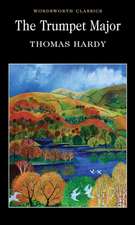 The Trumpet-MajorThomas HardyPreț: 24.60 lei
 -
 Les Vieux Papiers d'Un Imprimeur: Recueil PoétiqueVingtrinier-APreț: 133.02 lei
 -
 Preț: 139.83 lei
 -
 Preț: 169.75 lei
 -
 Le Retour d'Apollon, Poëme SatiriqueViollet-Le-Duc-EPreț: 77.09 lei
 -
 Nouvel Art Poétique. Poëme En Un ChantViollet-Le-Duc-EPreț: 90.11 lei
 -
 Six Mois de la Vie d'Un Jeune Homme (1797)Viollet-Le-Duc-EPreț: 140.35 lei
 -
 Flambeaux Éteints: PoèmesVivien-RPreț: 83.32 lei
 -
 Preț: 83.52 lei
 -
 En Guise de Quelques ObservationsVivier-EPreț: 83.32 lei
 -
 La Femme, Ou Les Six Amours. AmitiéVoiart-EPreț: 125.45 lei
Notă biografică
Thomas Hardy (1840 - 1928) was an English novelist and poet. A Victorian realist in the tradition of George Eliot, he was influenced both in his novels and in his poetry by Romanticism, especially William Wordsworth. He was highly critical of much in Victorian society, though Hardy focused more on a declining rural society. While Hardy wrote poetry throughout his life and regarded himself primarily as a poet, his first collection was not published until 1898. Initially, therefore, he gained fame as the author of such novels as Far from the Madding Crowd (1874), The Mayor of Casterbridge (1886), Tess of the d'Urbervilles (1891), and Jude the Obscure (1895). During his lifetime, Hardy's poetry was acclaimed by younger poets (particularly the Georgians) who viewed him as a mentor. After his death his poems were lauded by Ezra Pound, W. H. Auden and Philip Larkin. Many of his novels concern tragic characters struggling against their passions and social circumstances and they are often set in the semi-fictional region of Wessex; initially based on the medieval Anglo-Saxon kingdom, Hardy's Wessex eventually came to include the counties of Dorset, Wiltshire, Somerset, Devon, Hampshire and much of Berkshire, in southwest and south central England. He destroyed the manuscript of his first, unplaced novel, but -- encouraged by mentor and friend George Meredith -- tried again. His important work took place in an area of southern England he called Wessex, named after the English kingdom that existed before the Norman Conquest.
Textul de pe ultima copertă
Leak and savage, Egdon Heath seems to breathe darkness and it claws back those who rise above it. Against this background Hardy's players come together, weaving a web of deceit and death.
Extras
A SATURDAY afternoon in November was approaching the time of twilight, and the vast tract of unenclosed wild known as Egdon Heath embrowned itself moment by moment. Overhead the hollow stretch of whitish cloud shutting out the sky was as a tent which had the whole heath for its floor.
The heaven being spread with this pallid screen and the earth with the darkest vegetation, their meeting-line at the horizon was clearly marked. In such contrast the heath wore the appearance of an instalment of night which had taken up its place before its astronomical hour was come: darkness had to a great extent arrived hereon, while day stood distinct in the sky. Looking upwards, a furze-cutter would have been inclined to continue work; looking down, he would have decided to finish his faggot and go home. The distant rims of the world and of the firmament seemed to be a division in time no less than a division in matter. The face of the heath by its mere complexion added half an hour to evening; it could in like manner retard the dawn, sadden noon, anticipate the frowning of storms scarcely generated, and intensify the opacity of a moonless midnight to a cause of shaking dread.
In fact, precisely at this transitional point of its nightly roll into darkness the great and particular glory of the Egdon waste began, and nobody could be said to understand the heath who had not been there at such a time. It could best be felt when it could not clearly be seen, its complete effect and explanation lying in this and the succeeding hours before the next dawn: then, and only then, did it tell its true tale. The spot was, indeed, a near relation of night, and when night showed itself an apparent tendency to gravitate together could be perceived in its shades and the scene. The sombre stretch of rounds and hollows seemed to rise and meet the evening gloom in pure sympathy, the heath exhaling darkness as rapidly as the heavens precipitated it. And so the obscurity in the air and the obscurity in the land closed together in a black fraternization towards which each advanced half-way.
The place became full of a watchful intentness now; for when other things sank brooding to sleep the heath appeared slowly to awake and listen. Every night its Titanic form seemed to await something; but it had waited thus, unmoved, during so many centuries, through the crises of so many things, that it could only be imagined to await one last crisis—the final overthrow.
The heaven being spread with this pallid screen and the earth with the darkest vegetation, their meeting-line at the horizon was clearly marked. In such contrast the heath wore the appearance of an instalment of night which had taken up its place before its astronomical hour was come: darkness had to a great extent arrived hereon, while day stood distinct in the sky. Looking upwards, a furze-cutter would have been inclined to continue work; looking down, he would have decided to finish his faggot and go home. The distant rims of the world and of the firmament seemed to be a division in time no less than a division in matter. The face of the heath by its mere complexion added half an hour to evening; it could in like manner retard the dawn, sadden noon, anticipate the frowning of storms scarcely generated, and intensify the opacity of a moonless midnight to a cause of shaking dread.
In fact, precisely at this transitional point of its nightly roll into darkness the great and particular glory of the Egdon waste began, and nobody could be said to understand the heath who had not been there at such a time. It could best be felt when it could not clearly be seen, its complete effect and explanation lying in this and the succeeding hours before the next dawn: then, and only then, did it tell its true tale. The spot was, indeed, a near relation of night, and when night showed itself an apparent tendency to gravitate together could be perceived in its shades and the scene. The sombre stretch of rounds and hollows seemed to rise and meet the evening gloom in pure sympathy, the heath exhaling darkness as rapidly as the heavens precipitated it. And so the obscurity in the air and the obscurity in the land closed together in a black fraternization towards which each advanced half-way.
The place became full of a watchful intentness now; for when other things sank brooding to sleep the heath appeared slowly to awake and listen. Every night its Titanic form seemed to await something; but it had waited thus, unmoved, during so many centuries, through the crises of so many things, that it could only be imagined to await one last crisis—the final overthrow.
Recenzii
The Return of the Native was a radical departure for Thomas Hardy, ushering in his tragic literary vision of the world. Though set in a small space (Egdon Heath in the fictional county of Wessex) and short time (the main action spans a year and a day), the novel addresses the broad social and intellectual upheavals of the Victorian age. Much of this turmoil is embodied in the character of Eustacia Vye, the novel’s wilful female protagonist. A complex, independent young woman, Eustacia is a sympathetic but ultimately tragic figure, the epitome of what the narrator calls the “irrepressible New.”
The appendices to this Broadview edition place the novel in the context of Hardy’s career and the scientific and social ideas of the time. Documents include contemporary reviews, related writings by Hardy, and materials on biology, geology, and the “Woman Question.” Illustrations from the original serialization in Belgravia magazine and Hardy’s performance text of the mummers’ play are also included.
“Simon Avery’s edition of The Return of the Native, Hardy’s first great classic, provides a beautifully balanced, meticulously researched resource. Avery’s editorial approach is, in every respect, new and fresh—even in his interpretation of the novel’s denouement. Offering a wide range of critical perspectives, the compelling Introduction features a rich collection of viewpoints and critiques in a manner so informative, compact, and stylish that exploration becomes the modus operandi within and beyond the plot. In turn, the appendices at the end of the book complement the contextualising of the Introduction and footnotes. A selection of Hardy’s other writings in prose and poetry adds textual weight and structural balance overall.” — Rosemarie Morgan, University of St. Andrews
“Simon Avery has edited Hardy’s The Return of the Native with great skill: his footnotes are detailed and extensive without becoming intrusive; his bibliography of further reading selects judiciously from old and new materials; and he gives a generous range of contemporary materials to help contextualise the book. Alongside the unmistakable nineteenth-century concerns present in Hardy’s novel, Avery alerts us to less well-known ones, illuminating in particular Hardy’s depiction of Eustacia Vye, who can be seen from this edition as a precursor to Sue Bridehead, the proto-feminist of Jude the Obscure. Distinctively too, Avery includes a selection of Hardy’s poetry, helpfully breaking down the barrier between Hardy the novelist and Hardy the poet. In all respects, the volume continues the excellent standard of Broadview Hardy editions.” — Ralph Pite, Bristol University
The appendices to this Broadview edition place the novel in the context of Hardy’s career and the scientific and social ideas of the time. Documents include contemporary reviews, related writings by Hardy, and materials on biology, geology, and the “Woman Question.” Illustrations from the original serialization in Belgravia magazine and Hardy’s performance text of the mummers’ play are also included.
“Simon Avery’s edition of The Return of the Native, Hardy’s first great classic, provides a beautifully balanced, meticulously researched resource. Avery’s editorial approach is, in every respect, new and fresh—even in his interpretation of the novel’s denouement. Offering a wide range of critical perspectives, the compelling Introduction features a rich collection of viewpoints and critiques in a manner so informative, compact, and stylish that exploration becomes the modus operandi within and beyond the plot. In turn, the appendices at the end of the book complement the contextualising of the Introduction and footnotes. A selection of Hardy’s other writings in prose and poetry adds textual weight and structural balance overall.” — Rosemarie Morgan, University of St. Andrews
“Simon Avery has edited Hardy’s The Return of the Native with great skill: his footnotes are detailed and extensive without becoming intrusive; his bibliography of further reading selects judiciously from old and new materials; and he gives a generous range of contemporary materials to help contextualise the book. Alongside the unmistakable nineteenth-century concerns present in Hardy’s novel, Avery alerts us to less well-known ones, illuminating in particular Hardy’s depiction of Eustacia Vye, who can be seen from this edition as a precursor to Sue Bridehead, the proto-feminist of Jude the Obscure. Distinctively too, Avery includes a selection of Hardy’s poetry, helpfully breaking down the barrier between Hardy the novelist and Hardy the poet. In all respects, the volume continues the excellent standard of Broadview Hardy editions.” — Ralph Pite, Bristol University
Descriere
Descriere de la o altă ediție sau format:
The Return of the Native was a radical departure for Thomas Hardy, ushering in his tragic literary vision of the world. Though set in a small space (Egdon Heath in the fictional county of Wessex) and short time (the main action spans a year and a day), the novel addresses the broad social and intellectual upheavals of the Victorian age. Much of this turmoil is embodied in the character of Eustacia Vye, the novel’s wilful female protagonist. A complex, independent young woman, Eustacia is a sympathetic but ultimately tragic figure, the epitome of what the narrator calls the “irrepressible New.”
The appendices to this Broadview edition place the novel in the context of Hardy’s career and the scientific and social ideas of the time. Documents include contemporary reviews, related writings by Hardy, and materials on biology, geology, and the “Woman Question.” Illustrations from the original serialization in Belgravia magazine and Hardy’s performance text of the mummers’ play are also included.
The Return of the Native was a radical departure for Thomas Hardy, ushering in his tragic literary vision of the world. Though set in a small space (Egdon Heath in the fictional county of Wessex) and short time (the main action spans a year and a day), the novel addresses the broad social and intellectual upheavals of the Victorian age. Much of this turmoil is embodied in the character of Eustacia Vye, the novel’s wilful female protagonist. A complex, independent young woman, Eustacia is a sympathetic but ultimately tragic figure, the epitome of what the narrator calls the “irrepressible New.”
The appendices to this Broadview edition place the novel in the context of Hardy’s career and the scientific and social ideas of the time. Documents include contemporary reviews, related writings by Hardy, and materials on biology, geology, and the “Woman Question.” Illustrations from the original serialization in Belgravia magazine and Hardy’s performance text of the mummers’ play are also included.
Cuprins
Acknowledgements
Introduction
Thomas Hardy: A Brief Chronology
A Note on the Text
The Return of the Native
Appendix A: Prefaces and Maps
Appendix G: Arthur Hopkins’s Illustrations for the Monthly Serialization of Belgravia (1878)
Select Bibliography
Introduction
Thomas Hardy: A Brief Chronology
A Note on the Text
The Return of the Native
Appendix A: Prefaces and Maps
- The Preface to the 1895 Wessex Novels Edition
- The Postscript added to the 1912 Wessex Edition
- From the General Preface to the Novels and Poems (1912)
- Map of Egdon Heath (1878)
- Map of Wessex (1895)
- From The Athenaeum (23 November 1878)
- Hardy’s response to the Athenaeum review (30 November 1878)
- From W.E. Henley, The Academy (30 November 1878)
- From the Saturday Review (4 January 1879)
- From the Spectator (8 February 1879)
- From the New Quarterly Magazine (October 1879)
- From Havelock Ellis, “Thomas Hardy’s Novels,” Westminster Review (April 1883)
- Positivism: from Auguste Comte, System of Positive Polity (1851−54; trans. 1875−76)
- The Individual and Freedom: from John Stuart Mill, On Liberty (1859)
- The Woman Question: from John Ruskin, Sesame and Lilies (1865) and John Stuart Mill, The Subjection of Women (1869)
- Hedonism and Modernity: from Walter Pater, Studies in the History of the Renaissance (1873)
- From Charles Lyell, Principles of Geology (1830−33)
- From Charles Darwin, On the Origin of Species by Means of Natural Selection (1859)
- From Herbert Spencer, The Principles of Biology (1864−67)
- From Thomas Hardy, A Pair of Blue Eyes (1873)
- A Selection of Hardy’s Poetry
- Hap
- At a Bridal
- Neutral Tones
- Nature’s Questioning
- An August Midnight
- The Dead Man Walking
- By the Barrows
- The Roman Road
- The Moth-Signal
- The Oxen
- Welcome Home
- The Graveyard of Dead Creeds
- Domicilium
- From “The Dorsetshire Labourer” (1883)
- From “The Profitable Reading of Fiction” (1888)
- From “Candour in English Fiction” (1890)
- From The Life of Thomas Hardy (1928; 1930)
Appendix G: Arthur Hopkins’s Illustrations for the Monthly Serialization of Belgravia (1878)
Select Bibliography