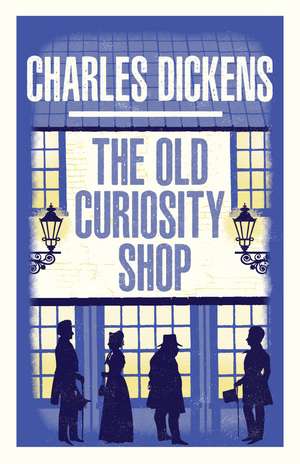
The Old Curiosity Shop: Annotated Edition: Alma Classics Evergreens
Autor Charles Dickensen Limba Engleză Paperback – 22 apr 2024
Dickens's fourth novel, initially serialized in his magazine Master Humphrey's Clock between 1840 and 1841, The Old Curiosity Shop proved to be a huge hit on publication and is still regarded as one of its author's major works, featuring one of his best-loved and most memorable heroines.
Din seria Alma Classics Evergreens
- 11%
 Preț: 39.56 lei
 -
 Preț: 68.45 lei
 -
 Preț: 51.93 lei
 -
 Preț: 53.79 lei
 -
 Preț: 51.47 lei
 - 9%
 Preț: 52.23 lei
 - 7%
 Preț: 53.92 lei
 - 7%
 Preț: 53.32 lei
 -
 Preț: 50.57 lei
 - 6%
 Preț: 56.17 lei
 -
 Preț: 51.44 lei
 -
 Preț: 52.66 lei
 -
 Preț: 52.65 lei
 -
 Preț: 61.43 lei
 -
 Preț: 54.43 lei
 -
 Preț: 63.56 lei
 -
 Preț: 63.35 lei
 -
 Preț: 53.50 lei
 -
 Preț: 46.21 lei
 -
 Preț: 51.96 lei
 - 10%
 Preț: 45.40 lei
 -
 Preț: 43.56 lei
 -
 Preț: 53.14 lei
 -
 Preț: 44.46 lei
 -
 Preț: 63.41 lei
 - 19%
 Preț: 76.25 lei
 -
 Preț: 67.90 lei
 -
 Preț: 51.96 lei
 - 10%
 Preț: 44.91 lei
 -
 Preț: 64.19 lei
 - 7%
 Preț: 54.37 lei
 -
 Preț: 59.72 lei
 -
 Preț: 52.17 lei
 -
 Preț: 58.03 lei
 -
 Preț: 51.15 lei
 -
 Preț: 78.12 lei
 -
 Preț: 59.31 lei
 -
 Preț: 67.20 lei
 -
 Preț: 66.33 lei
 - nou
 Preț: 87.31 lei
 -
 Preț: 58.09 lei
 -
 Preț: 65.59 lei
 -
 Preț: 57.29 lei
Preț: 67.72 lei
Puncte Express: 102
Carte disponibilă
Livrare economică 09-23 noiembrie
Livrare express 23-29 octombrie pentru 29.27 lei
Livrare prin curier în România Termenul estimat este afișat lângă disponibilitate.
Transport gratuit de la 400.00 lei Plată online sau ramburs, în funcție de opțiunile comenzii.
Retur gratuit în 14 zile Comandă securizată și suport în română.
Specificații
ISBN-13: 9781847499073
ISBN-10: 1847499074
Pagini: 530
Dimensiuni: 128 x 198 x 36 mm
Greutate: 0.41 kg
Editura: Alma Books COMMIS
Colecția Alma Classics
Seria Alma Classics Evergreens
ISBN-10: 1847499074
Pagini: 530
Dimensiuni: 128 x 198 x 36 mm
Greutate: 0.41 kg
Editura: Alma Books COMMIS
Colecția Alma Classics
Seria Alma Classics Evergreens
V-ar putea interesa
-
 A Christmas CarolCharles DickensPreț: 28.32 lei
 -
 Hard TimesCharles DickensPreț: 28.01 lei
 -
 The Last UnicornPeter S. BeaglePreț: 125.97 leiRecomandat
 -
 David CopperfieldCharles DickensPreț: 54.73 lei
 -
 The Last UnicornPeter S. Beagle-25%Preț: 59.87 lei79.99 lei
 -
 Classic Starts®: Oliver TwistCharles DickensPreț: 61.97 lei
 -
 A Christmas CarolCharles DickensPreț: 29.27 lei
 -
 Great ExpectationsCharles DickensPreț: 32.41 lei
 -
 Oliver TwistCharles DickensPreț: 37.41 lei
 -
 David CopperfieldCharles DickensPreț: 40.99 lei
 -
 A Tale of Two CitiesCharles DickensPreț: 37.55 lei
 -
 The Pickwick PapersCharles DickensPreț: 40.39 lei
 -
 ShirleyCharlotte BrontëPreț: 38.92 lei
 -
 Bleak HouseCharles DickensPreț: 41.29 lei
 -
 Little DorritCharles DickensPreț: 40.98 lei
 -
 Our Mutual FriendCharles DickensPreț: 28.01 lei
 -
 Martin ChuzzlewitCharles DickensPreț: 41.00 lei
 -
 Hard TimesCharles DickensPreț: 28.01 lei
 -
 Dombey and SonCharles DickensPreț: 28.01 lei
 -
 Complete Ghost StoriesCharles DickensPreț: 36.87 lei
 -
 Barnaby RudgeCharles DickensPreț: 39.35 lei
Textul de pe ultima copertă
The Old Curiosity Shop is a story of the road, a genre at which Dickens excelled. Little Nell and her grandfather, pursued relentlessly through England by the evil and loathsome dwarf Quilp, meet a fascinating variety of vividly portrayed characters, including Mrs. Jarley, and Codlin and Short, the Punch and Judy men.
Notă biografică
Charles Dickens (1812-1870)
Charles Dickens was born on February 7, 1812, in Portsea, England. His parents were middle-class and suffered financially. When Dickens was twelve years old, his family faced financial crisis, which forced him to quit school and work in a shoe polish manufacturing factory. Dickens's mother and siblings eventually joined him. Dickens continued to work at the factory for several months. In the factory the horrific conditions haunted him throughout his life. Dickens never forgot the day when a senior boy in the warehouse took it upon himself to instruct Dickens how to do his work more efficiently.
As a young adult, Dickens worked as a law clerk and later as a journalist. He perceived the darker social conditions of the Industrial Revolution. A collection of semi-fictional sketches entitled Sketches by Boz earned him recognition as a writer. Dickens began to make money from his writing when he published his first novel, The Pickwick Papers in 1836. The Pickwick Papers was hugely popular and Dickens became a literary celebrity at the age of twenty-five. Dickens's themes included wealth and poverty, love and rejection, and the eventual triumph of good over evil. In 1836, Dickens married Catherine Hogarth, but after twenty years of marriage and their ten children, he fell in love with Ellen Ternan, an actress many years his junior. Soon after, Dickens and his wife separated. Dickens remained a prolific writer to the end of his life, and his novels - Great Expectations, A Tale of Two Cities, A Christmas Carol, David Copperfield, and Bleak House - continued to earn critical and popular acclaim. He died of a stroke in 1870, at the age of 58.
Recenzii
The present volume in the Clarendon edition gives the impression of being a work of love for it must have cost untold hours to reach this minutely annotated edition ... Elizabeth Brennan's extensive introduction to the edition does not only hold the key to the different manuscripts used, it presents a fascinating account of the genesis of the novel.