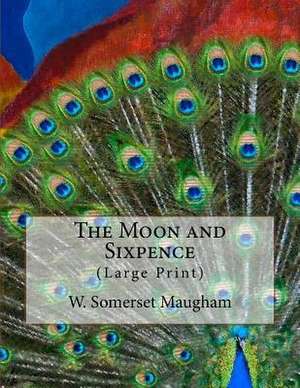
The Moon and Sixpence
Autor W. Somerset Maugham Editat de John Gahan F. I. E.en Limba Engleză Paperback
Preț: 62.95 lei
Puncte Express: 94
Carte disponibilă
Livrare economică 20 mai-03 iunie
Specificații
ISBN-13: 9781511683586
ISBN-10: 1511683589
Pagini: 166
Dimensiuni: 216 x 279 x 9 mm
Greutate: 0.4 kg
Ediția:Text mare
Editura: CreateSpace Independent Publishing Platform
ISBN-10: 1511683589
Pagini: 166
Dimensiuni: 216 x 279 x 9 mm
Greutate: 0.4 kg
Ediția:Text mare
Editura: CreateSpace Independent Publishing Platform
V-ar putea interesa
-
 To the LighthouseVirginia WoolfPreț: 24.60 lei
 -
 Sacre BleuChristopher MoorePreț: 70.44 lei
 -
 Far Eastern TalesW. Somerset Maugham-20%Preț: 55.12 lei68.78 lei
 -
 The Razor's EdgeW. Somerset Maugham-19%Preț: 55.82 lei69.20 lei
 -
 Einstein's MonstersMartin Amis-21%Preț: 47.81 lei60.81 lei
 -
 Keep the Aspidistra FlyingGeorge Orwell-20%Preț: 49.03 lei61.54 lei
 -
 Storyteller: The Life of Robert Louis StevensonLeo DamroschPreț: 187.70 lei
 -
 VagabondTim CurryPreț: 180.85 lei
 -
 Of Human Bondage: 100th Anniversary EditionW. Somerset MaughamPreț: 41.75 lei
 -
 Lust for LifeIrving StonePreț: 111.50 lei
 -
 Heart of DarknessJoseph Conrad-21%Preț: 21.61 lei27.24 lei
 -
 The Picture of Dorian GrayOscar WildePreț: 33.39 lei
 -
 Rain and Other South Sea StoriesW. Somerset MaughamPreț: 39.76 lei
 -
 Of Human BondageW. Somerset MaughamPreț: 47.15 lei
 -
 Wild ThingSue PrideauxPreț: 223.51 lei
 -
 The Secret Lives of Somerset MaughamSelina Hastings-26%Preț: 86.98 lei118.08 lei
 -
 Madame MatisseSophie HaydockPreț: 104.41 lei
 -
 Art Masters: Paul GauguinCaroline BuglerPreț: 107.37 lei
 -
 -26%Preț: 81.88 lei111.16 lei
 -
 Collected Stories of W. Somerset MaughamW. Somerset MaughamPreț: 227.45 lei
 -
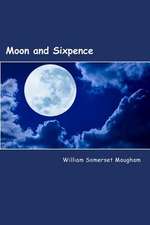 Moon and SixpenceWilliam Somerset MaughamPreț: 67.99 lei
 -
 The MagicianW. Somerset MaughamPreț: 50.02 lei
 -
 The Pilgrim's ProgressJohn BunyanPreț: 43.43 lei
 -
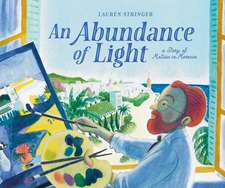 An Abundance of Light: A Story of Matisse in MoroccoLauren Stringer-17%Preț: 76.81 lei92.53 leiRecomandat
 -
 The Great Novels and Short Stories of Somerset MaughamW. Somerset MaughamPreț: 119.20 lei
 -
 The Two RobertsDamian BarrPreț: 130.70 lei
 -
 Preț: 40.38 lei
 -
 VermeerAndrew Graham DixonPreț: 221.22 lei
 -
 Paul Gauguin: Ramblings of a PainterPaul Gauguin-22%Preț: 46.66 lei60.07 lei
 -
 GauguinIF WALTHERPreț: 106.64 lei
Descriere
Descriere de la o altă ediție sau format:
Charles Strickland, a conventional stockbroker, abandons his wife and children for Paris and Tahiti, to live his life as a painter. Inspired by the life of Paul Gauguin, The Moon and Sixpence is at once a satiric caricature of Edwardian conventions and a vivid portrayal of the mentality of a genius.
Charles Strickland, a conventional stockbroker, abandons his wife and children for Paris and Tahiti, to live his life as a painter. Inspired by the life of Paul Gauguin, The Moon and Sixpence is at once a satiric caricature of Edwardian conventions and a vivid portrayal of the mentality of a genius.
Notă biografică
W. Somerset Maugham (1874-1965) was an English novelist, playwright, and short story writer. Born in Paris, he was orphaned as a boy and sent to live with an emotionally distant uncle. He struggled to fit in as a student at The King¿s School in Canterbury and demanded his uncle send him to Heidelberg University, where he studied philosophy and literature. In Germany, he had his first affair with an older man and embarked on a career as a professional writer. After completing his degree, Maugham moved to London to begin medical school. There, he published Liza of Lambeth (1897), his debut novel. Emboldened by its popular and critical success, he dropped his pursuit of medicine to devote himself entirely to literature. Over his 65-year career, he experimented in form and genre with such works as Lady Frederick (1907), a play, The Magician (1908), an occult novel, and Of Human Bondage (1915). The latter, an autobiographical novel, earned Maugham a reputation as one of the twentieth century¿s leading authors, and continues to be recognized as his masterpiece. Although married to Syrie Wellcome, Maugham considered himself both bisexual and homosexual at different points in his life. During and after the First World War, he worked for the British Secret Intelligence Service as a spy in Switzerland and Russia, writing of his experiences in Ashenden: Or the British Agent (1927), a novel that would inspire Ian Fleming¿s James Bond series. At one point the highest-paid author in the world, Maugham led a remarkably eventful life without sacrificing his literary talent.
Recenzii
"[A] witty, compelling roman à clef...that mock[s] the way the world makes saints of the sinners who are often its best artists." -The Boston Globe
"It is very difficult for a writer of my generation, if he is honest, to pretend indifference to the work of Somerset Maugham.... He was always so entirely there." -Gore Vidal
"It is very difficult for a writer of my generation, if he is honest, to pretend indifference to the work of Somerset Maugham.... He was always so entirely there." -Gore Vidal
Textul de pe ultima copertă
Based on the life of Paul Gauguin, The Moon and Sixpence is W. Somerset Maugham's ode to the powerful forces behind creative genius.
Charles Strickland is a staid banker, a man of wealth and privilege. He is also a man possessed of an unquenchable desire to create art. As Strickland pursues his artistic vision, he leaves London for Paris and Tahiti, and in his quest makes sacrifices that leave the lives of those closest to him in tatters. Through Maugham's sympathetic eye Strickland's tortured and cruel soul becomes a symbol of the blessing and the curse of transcendent artistic genius, and the cost in human lives it sometimes demands.