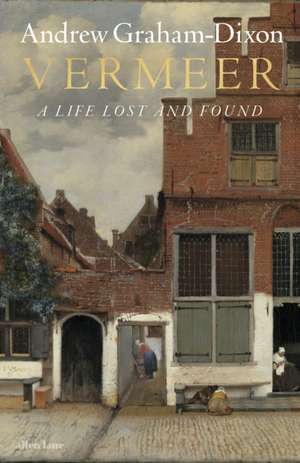
Vermeer
Autor Andrew Graham-Dixonen Limba Engleză Hardback – 23 oct 2025
O dramatizare erudită a unei vieți care, timp de secole, a fost redusă la tăcerea hipnotică a pânzelor sale. Într-o Republică Olandeză marcată de zgomotul barjelor de transport și de ecoul exploziilor prafului de pușcă, Andrew Graham-Dixon îl extrage pe Johannes Vermeer din mitul „Sfinxului de la Delft” pentru a-l plasa în centrul unei realități politice și familiale turbulente. Stilul narativ al autorului transformă cercetarea academică într-o investigație cinematică, unde fiecare detaliu de arhivă devine o piesă de puzzle într-o lume a alianțelor religioase periculoase. Apreciem modul în care Graham-Dixon echilibrează analiza artistică riguroasă cu portretul intim al unui om care a ales pacifismul într-o epocă a masacrelor. Descoperim un artist profund conectat la societatea sa, de la brutari filantropi la filosofi, a cărui existență domestică era departe de liniștea picturilor sale, fiind marcată de tensiuni cu o soacră autoritară și episoade de violență familială. Dacă în lucrări anterioare precum Art: The Definitive Visual Guide sau The Story of Painting, autorul oferea o perspectivă panoramică asupra istoriei artei, aici el aplică o lentilă microscopică asupra unui singur geniu, reușind să explice nu doar cum a pictat Vermeer, ci mai ales de ce. Cine a apreciat portretul complex din Vermeer's Family Secrets va găsi aici aceeași profunzime biografică, aplicată însă unui context social și politic mult mai vast. În timp ce alte lucrări se concentrează pe tehnica luminii, Graham-Dixon pune accent pe rețeaua umană de susținere, revelând rolul crucial, până acum ignorat, al unei femei care i-a fost principal mecena. Este o reevaluare necesară care transformă „Fata cu cercel de perlă” dintr-o simplă imagine iconică într-un manifest al unui context istoric precis și fascinant.
Preț: 232.23 lei
Carte disponibilă
Livrare economică 06-20 noiembrie
Livrare express 22-28 octombrie pentru 46.76 lei
Specificații
ISBN-10: 1846147107
Pagini: 416
Dimensiuni: 159 x 239 x 41 mm
Greutate: 0.74 kg
Editura: Penguin Books
Colecția Allen Lane
V-ar putea interesa
-
 Life in ProgressHans Ulrich ObristPreț: 140.03 lei
 -
 Art WorkSally MannPreț: 195.88 lei
 -
 Keep LaughingChris McCauslandPreț: 191.73 lei
 -
 VagabondTim CurryPreț: 194.64 lei
 -
 OasisJill Furmanovsky-15%Preț: 346.18 lei406.27 lei
 -
 The Story of Art in 1000 PiecesSusie HodgePreț: 117.68 lei
 -
 Epiphany!Lara MildenbergPreț: 92.50 lei
 -
 Year with Gilbert WhiteJenny UglowPreț: 194.49 lei
 -
 VermeerWayne Franits-16%Preț: 118.00 lei140.74 lei
 -
 Derek Jarman: The Authorised BiographyTony PeakePreț: 235.46 lei
 -
 VermeerArthur K Wheelock-9%Preț: 126.37 lei139.40 lei
 -
 The PilgrimColin MaclachlanPreț: 190.08 lei
 -
 Art Masters: MichelangeloSusie HodgePreț: 111.98 lei
 -
 ShakespeareJudi DenchPreț: 93.83 lei
 -
 BackstageDonna LeonPreț: 93.84 lei
 -
 Over the RainbowAlex JamesPreț: 78.06 lei
 -
 Look CloserRobert Douglas-FairhurstPreț: 144.73 lei
 -
 VermeerAlexander AdamsPreț: 86.80 lei
De ce să citești această carte
Recomandăm această biografie cititorilor care doresc să descopere omul din spatele capodoperelor. Andrew Graham-Dixon demontează imaginea artistului izolat, oferind în schimb portretul unui intelectual implicat în mișcări radicale și pacifiste. Veți câștiga o înțelegere nouă a Epocii de Aur olandeze și a modului în care haosul unei vieți de familie complicate poate genera, prin contrast, cea mai sublimă liniște din istoria picturii europene.