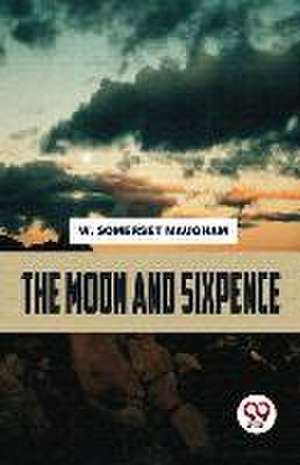
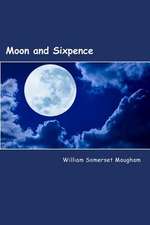
Moon and Sixpence
Autor W. Somerset Maughamen Limba Engleză Paperback – 4 ian 2023
Preț: 99.11 lei
Puncte Express: 149
Carte disponibilă
Livrare economică 16-30 noiembrie
Livrare express 31 octombrie-06 noiembrie pentru 30.55 lei
Livrare prin curier în România Termenul estimat este afișat lângă disponibilitate.
Transport gratuit de la 400.00 lei Plată online sau ramburs, în funcție de opțiunile comenzii.
Retur gratuit în 14 zile Comandă securizată și suport în română.
Specificații
ISBN-13: 9789357488075
ISBN-10: 9357488073
Pagini: 198
Dimensiuni: 140 x 216 x 13 mm
Greutate: 0.26 kg
Editura: DOUBLE 9 BOOKSLLP
ISBN-10: 9357488073
Pagini: 198
Dimensiuni: 140 x 216 x 13 mm
Greutate: 0.26 kg
Editura: DOUBLE 9 BOOKSLLP
V-ar putea interesa
-
 To the LighthouseVirginia WoolfPreț: 28.01 lei
 -
 Sacre BleuChristopher MoorePreț: 73.85 lei
 -
 Far Eastern TalesW. Somerset Maugham-19%Preț: 57.58 lei70.95 lei
 -
 The Razor's EdgeW. Somerset Maugham-17%Preț: 60.34 lei72.65 lei
 -
 Einstein's MonstersMartin Amis-20%Preț: 51.13 lei63.84 lei
 -
 Keep the Aspidistra FlyingGeorge Orwell-26%Preț: 53.15 lei71.65 lei
 -
 Storyteller: The Life of Robert Louis StevensonLeo DamroschPreț: 222.91 lei
 -
 VagabondTim CurryPreț: 194.48 lei
 -
 Of Human Bondage: 100th Anniversary EditionW. Somerset MaughamPreț: 44.46 lei
 -
 Lust for LifeIrving StonePreț: 117.64 lei
 -
 Heart of DarknessJoseph Conrad-19%Preț: 23.18 lei28.58 lei
 -
 The Picture of Dorian GrayOscar WildePreț: 35.93 lei
 -
 Rain and Other South Sea StoriesW. Somerset MaughamPreț: 39.76 lei
 -
 Of Human BondageW. Somerset MaughamPreț: 50.46 lei
 -
 Wild ThingSue PrideauxPreț: 230.58 lei
 -
 The Secret Lives of Somerset MaughamSelina Hastings-24%Preț: 94.02 lei123.95 lei
 -
 Art Masters: Paul GauguinCaroline BuglerPreț: 115.46 lei
 -
 -24%Preț: 88.51 lei116.68 lei
 -
 Collected Stories of W. Somerset MaughamW. Somerset MaughamPreț: 244.58 lei
 -
 Moon and SixpenceWilliam Somerset MaughamPreț: 67.99 lei
 -
 The MagicianW. Somerset MaughamPreț: 50.02 lei
 -
 The Pilgrim's ProgressJohn BunyanPreț: 46.43 lei
 -
 An Abundance of Light: A Story of Matisse in MoroccoLauren Stringer-16%Preț: 81.30 lei96.60 leiRecomandat
 -
 The Great Novels and Short Stories of Somerset MaughamW. Somerset MaughamPreț: 125.91 lei
 -
 The Two RobertsDamian BarrPreț: 157.93 lei
 -
 VermeerAndrew Graham-DixonPreț: 232.23 lei
 -
 Ramblings of a Wannabe PainterPaul Gauguin-20%Preț: 50.16 lei62.79 lei
 -
 GauguinIF WALTHERPreț: 132.82 lei
Descriere
Descriere de la o altă ediție sau format:
Charles Strickland, a conventional stockbroker, abandons his wife and children for Paris and Tahiti, to live his life as a painter. Inspired by the life of Paul Gauguin, The Moon and Sixpence is at once a satiric caricature of Edwardian conventions and a vivid portrayal of the mentality of a genius.
Charles Strickland, a conventional stockbroker, abandons his wife and children for Paris and Tahiti, to live his life as a painter. Inspired by the life of Paul Gauguin, The Moon and Sixpence is at once a satiric caricature of Edwardian conventions and a vivid portrayal of the mentality of a genius.
Notă biografică
W. Somerset Maugham was born in 1874 and lived in Paris until he was ten. He was educated at King's School, Canterbury, and at Heidelberg University. He afterwards walked the wards of St. Thomas's Hospital with a view to practice in medicine, but the success of his first novel, Liza of Lambeth (1897), won him over to letters. Something of his hospital experience is reflected, however, in the first of his masterpieces, Of Human Bondage (1915), and with The Moon and Sixpence (1919) his reputation as a novelist was assured.His position as one of the most successful playwrights on the London stage was being consolidated simultaneously. His first play, A Man of Honour (1903), was followed by a procession of successes just before and after the First World War. (At one point only Bernard Shaw had more plays running at the same time in London.) His theatre career ended with Sheppey (1933).
His fame as a short-story writer began with The Trembling of a Leaf, sub-titled Little Stories of the South Sea Islands, in 1921, after which he published more than ten collections.
W. Somerset Maugham's general books are fewer in number. They include travel books, such as On a Chinese Screen (1922) and Don Fernando (1935), essays, criticism, and the self-revealing The Summing Up (1938) and A Writer's Notebook (1949).
W. Somerset Maugham became a Companion of Honour in 1954. He died in 1965.
Robert Calder is professor of English at the University of Saskatchewan.
His fame as a short-story writer began with The Trembling of a Leaf, sub-titled Little Stories of the South Sea Islands, in 1921, after which he published more than ten collections.
W. Somerset Maugham's general books are fewer in number. They include travel books, such as On a Chinese Screen (1922) and Don Fernando (1935), essays, criticism, and the self-revealing The Summing Up (1938) and A Writer's Notebook (1949).
W. Somerset Maugham became a Companion of Honour in 1954. He died in 1965.
Robert Calder is professor of English at the University of Saskatchewan.
Recenzii
"[A] witty, compelling roman à clef...that mock[s] the way the world makes saints of the sinners who are often its best artists." -The Boston Globe
"It is very difficult for a writer of my generation, if he is honest, to pretend indifference to the work of Somerset Maugham.... He was always so entirely there." -Gore Vidal
"It is very difficult for a writer of my generation, if he is honest, to pretend indifference to the work of Somerset Maugham.... He was always so entirely there." -Gore Vidal
Textul de pe ultima copertă
Based on the life of Paul Gauguin, The Moon and Sixpence is W. Somerset Maugham's ode to the powerful forces behind creative genius. Charles Strickland is a staid banker, a man of wealth and privilege. He is also a man possessed of an unquenchable desire to create art. As Strickland pursues his artistic vision, he leaves London for Paris and Tahiti, and in his quest makes sacrifices that leave the lives of those closest to him in tatters. Through Maugham's sympathetic eye Strickland's tortured and cruel soul becomes a symbol of the blessing and the curse of transcendent artistic genius, and the cost in human lives it sometimes demands.