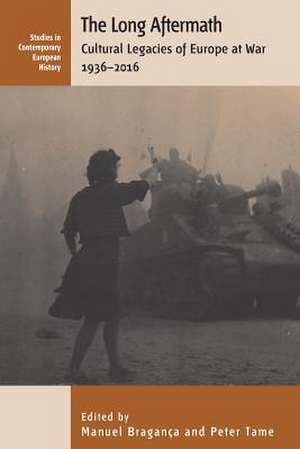
The Long Aftermath: Studies in Contemporary European History, cartea 17
Editat de Manuel Bragança, Peter Tameen Limba Engleză Paperback – feb 2018
Din seria Studies in Contemporary European History
- 23%
 Preț: 765.64 lei
 -
 Preț: 160.46 lei
 - 23%
 Preț: 848.24 lei
 -
 Preț: 262.69 lei
 - 23%
 Preț: 866.22 lei
 -
 Preț: 266.19 lei
 - 23%
 Preț: 849.16 lei
 - 23%
 Preț: 775.60 lei
 - 23%
 Preț: 765.08 lei
 -
 Preț: 222.11 lei
 -
 Preț: 267.39 lei
 -
 Preț: 306.89 lei
 -
 Preț: 309.91 lei
 -
 Preț: 251.35 lei
 - 23%
 Preț: 758.02 lei
 - 23%
 Preț: 760.64 lei
 - 23%
 Preț: 762.78 lei
 -
 Preț: 159.53 lei
 - 23%
 Preț: 774.55 lei
 - 23%
 Preț: 760.12 lei
 - 23%
 Preț: 778.74 lei
 -
 Preț: 264.64 lei
 - 23%
 Preț: 849.63 lei
 -
 Preț: 268.12 lei
 -
 Preț: 354.00 lei
 - 23%
 Preț: 762.68 lei
Preț: 309.43 lei
Puncte Express: 464
Carte tipărită la comandă
Livrare economică 07-21 decembrie
Livrare prin curier în România Termenul estimat este afișat lângă disponibilitate.
Transport gratuit de la 400.00 lei Plată online sau ramburs, în funcție de opțiunile comenzii.
Retur gratuit în 14 zile Comandă securizată și suport în română.
Specificații
ISBN-13: 9781785338205
ISBN-10: 178533820X
Pagini: 408
Dimensiuni: 152 x 229 x 23 mm
Greutate: 0.59 kg
Editura: BERGHAHN BOOKS
Colecția Studies in Contemporary European History
Seria Studies in Contemporary European History
ISBN-10: 178533820X
Pagini: 408
Dimensiuni: 152 x 229 x 23 mm
Greutate: 0.59 kg
Editura: BERGHAHN BOOKS
Colecția Studies in Contemporary European History
Seria Studies in Contemporary European History
V-ar putea interesa
-
 The Second World War: A Short HistoryR. A. C. Parker-20%Preț: 90.42 lei112.88 lei
 -
 First Into NagasakiGeorge WellerPreț: 124.20 lei
 -
 The Fifth PillarMichael TillotsonPreț: 69.26 lei
 -
 Men Of Air: The Doomed Youth Of Bomber CommandKevin Wilson-20%Preț: 112.79 lei140.66 lei
 -
 -17%Preț: 65.89 lei79.85 lei
 -
 Instructions for American Servicemen in Australia, 1942Bodleian LibraryPreț: 45.34 lei
 -
 Preț: 109.43 lei
Descriere
The hostilities in Europe from 1936 to 1945 have exerted enormous influence over the cultural life of Europe. Bringing together over twenty leading scholars across disciplines, this interdisciplinary volume investigates the intertwining dynamics of Europeans' individual and collective memories and the ways in which they have shaped cultural forms.
Notă biografică
Manuel Bragança is Assistant Professor in French Studies in the School of Languages, Cultures and Linguistics at University College Dublin, Ireland, where he is also a member of the Centre for War Studies and of the Humanities Institute. His research interests focus on the historiography and memories of the Second World War in France and Europe. He is an editor of the online research platform H-France and an assistant editor of the journal Open Cultural Studies.
Cuprins
List of Illustrations
Acknowledgements
Foreword: Between World Wars: Remembering War in Europe before 1945
Richard Overy
Introduction: The Long Aftermath of the Long Second World War
Manuel Bragança and Peter Tame
PART I: SPAIN
Chapter 1. Violence and the History and Memory of the Spanish Civil War: Beyond the Crisis of Inherited Narrative Frameworks
Pablo Sánchez León
Chapter 2. Poetry and Silence in Post-Civil War Spain: Carmen Conde, Lucía Sánchez Saornil and Pilar de Valderrama
Jean Andrews
Chapter 3. On Civil-War Memory in Spanish Women's Narratives: The Example of Cristina Fernández Cubas' Cosas que ya no existen
Alison Ribeiro de Menezes
PART II: THE UNITED KINGDOM
Chapter 4. Narrating Britain's War: A 'Four Nations and More' Approach to the People's War
Daniel Travers and Paul Ward
Chapter 5. 'Don't Let's Be Beastly to the Germans': the Representation of Germans in British Second World War Films
Robert Murphy
Chapter 6. Memory and Nation in British Narratives of the Second World War after 1945
Mark Rawlinson
PART III: FRANCE
Chapter 7. A Capital Problem: The Town of Vichy, the Second World War, and the Politics of Identity
Kirrily Freeman
Chapter 8. Tracking the Past in the Places and Spaces of Patrick Modiano's Early Fiction
Peter Tame
Chapter 9. Vercors and the Second World War
Cristina Solé-Castells
PART IV: GERMANY
Chapter 10. Reconstructing D-Day Memory: How Contemporary Politics made Germans Victims of the War
Harold J. Goldberg
Chapter 11. Memories of World War II in German Film after 1945
Christiane Schönfeld
Chapter 12. Ilse Aichinger's Novel The Greater Hope. Poetic Narrative to Deal with Trauma
Marko Pajevic
PART V: ITALY
Chapter 13. Victimhood Asserted: Italian Memories of World War II
Richard J. B. Bosworth
Chapter 14. Re-picturing the Myth: American Characters in Post-War Popular Italian Cinema
Daniela Treveri Gennari
Chapter 15. Italian Resistance Writing in the Years of the 'Second Republic'
Philip Cooke
PART VI: POLAND
Chapter 16. The Second World War in Present-Day Polish Memory and Politics
Andrzej Paczkowski
Chapter 17. Wounded Memory. Rhetorical Strategies Used in Public Discourse on the Katyn Massacre
Urszula Jarecka
Chapter 18. The Second World War in Recent Polish Counterfactual and Alternative (Hi)stories
Marzena Sokolowska-Paryz
PART VII: USSR / RUSSIA
Chapter 19. History Politics and the Changing Meaning of Victory Day in Contemporary Russia
Markku Kangaspuro
Chapter 20. War and Patriotism: Russian War Films and the Lessons for Today
David Gillespie
Chapter 21. Russian Fiction at War
Greg Carleton
Afterword: Memories of War: From the Sacred to the Secular
Jay Winter
Index
Acknowledgements
Foreword: Between World Wars: Remembering War in Europe before 1945
Richard Overy
Introduction: The Long Aftermath of the Long Second World War
Manuel Bragança and Peter Tame
PART I: SPAIN
Chapter 1. Violence and the History and Memory of the Spanish Civil War: Beyond the Crisis of Inherited Narrative Frameworks
Pablo Sánchez León
Chapter 2. Poetry and Silence in Post-Civil War Spain: Carmen Conde, Lucía Sánchez Saornil and Pilar de Valderrama
Jean Andrews
Chapter 3. On Civil-War Memory in Spanish Women's Narratives: The Example of Cristina Fernández Cubas' Cosas que ya no existen
Alison Ribeiro de Menezes
PART II: THE UNITED KINGDOM
Chapter 4. Narrating Britain's War: A 'Four Nations and More' Approach to the People's War
Daniel Travers and Paul Ward
Chapter 5. 'Don't Let's Be Beastly to the Germans': the Representation of Germans in British Second World War Films
Robert Murphy
Chapter 6. Memory and Nation in British Narratives of the Second World War after 1945
Mark Rawlinson
PART III: FRANCE
Chapter 7. A Capital Problem: The Town of Vichy, the Second World War, and the Politics of Identity
Kirrily Freeman
Chapter 8. Tracking the Past in the Places and Spaces of Patrick Modiano's Early Fiction
Peter Tame
Chapter 9. Vercors and the Second World War
Cristina Solé-Castells
PART IV: GERMANY
Chapter 10. Reconstructing D-Day Memory: How Contemporary Politics made Germans Victims of the War
Harold J. Goldberg
Chapter 11. Memories of World War II in German Film after 1945
Christiane Schönfeld
Chapter 12. Ilse Aichinger's Novel The Greater Hope. Poetic Narrative to Deal with Trauma
Marko Pajevic
PART V: ITALY
Chapter 13. Victimhood Asserted: Italian Memories of World War II
Richard J. B. Bosworth
Chapter 14. Re-picturing the Myth: American Characters in Post-War Popular Italian Cinema
Daniela Treveri Gennari
Chapter 15. Italian Resistance Writing in the Years of the 'Second Republic'
Philip Cooke
PART VI: POLAND
Chapter 16. The Second World War in Present-Day Polish Memory and Politics
Andrzej Paczkowski
Chapter 17. Wounded Memory. Rhetorical Strategies Used in Public Discourse on the Katyn Massacre
Urszula Jarecka
Chapter 18. The Second World War in Recent Polish Counterfactual and Alternative (Hi)stories
Marzena Sokolowska-Paryz
PART VII: USSR / RUSSIA
Chapter 19. History Politics and the Changing Meaning of Victory Day in Contemporary Russia
Markku Kangaspuro
Chapter 20. War and Patriotism: Russian War Films and the Lessons for Today
David Gillespie
Chapter 21. Russian Fiction at War
Greg Carleton
Afterword: Memories of War: From the Sacred to the Secular
Jay Winter
Index