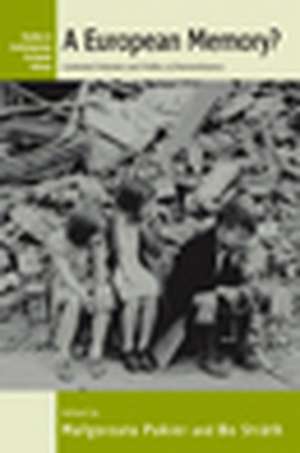
A European Memory?: Studies in Contemporary European History, cartea 6
Editat de Ma¿gorzata Pakier, Bo Stråthen Limba Engleză Hardback – 7 apr 2010
Ma gorzata Pakier has recently received a PhD from the European University Institute in Florence, Department of History and Civilization. She has published articles in Polish and English on discourses and images of the Holocaust in popular culture and film.
Bo Strath was Professor of Contemporary History at the European University Institute in Florence (1997-2007) and is currently Academy of Finland Distinguished Professor of Nordic, European and World History at Helsinki University. His research concentrates on questions of modernity and the use of history in a European and global perspective."
Din seria Studies in Contemporary European History
- 23%
 Preț: 765.64 lei
 -
 Preț: 160.46 lei
 - 23%
 Preț: 848.24 lei
 -
 Preț: 262.69 lei
 - 23%
 Preț: 848.89 lei
 -
 Preț: 266.19 lei
 - 23%
 Preț: 849.16 lei
 -
 Preț: 309.43 lei
 - 23%
 Preț: 760.27 lei
 - 23%
 Preț: 765.08 lei
 -
 Preț: 222.11 lei
 -
 Preț: 267.39 lei
 -
 Preț: 306.89 lei
 -
 Preț: 309.91 lei
 -
 Preț: 251.35 lei
 - 23%
 Preț: 758.02 lei
 - 23%
 Preț: 760.64 lei
 - 23%
 Preț: 762.78 lei
 -
 Preț: 159.53 lei
 - 23%
 Preț: 759.24 lei
 - 23%
 Preț: 760.12 lei
 - 23%
 Preț: 763.32 lei
 -
 Preț: 264.64 lei
 -
 Preț: 268.12 lei
 -
 Preț: 354.00 lei
 - 23%
 Preț: 762.68 lei
Preț: 849.63 lei
Preț vechi: 1103.41 lei
-23%
Puncte Express: 1274
Carte tipărită la comandă
Livrare economică 01-15 decembrie
Livrare prin curier în România Termenul estimat este afișat lângă disponibilitate.
Transport gratuit pentru acest produs Plată online sau ramburs, în funcție de opțiunile comenzii.
Retur gratuit în 14 zile Comandă securizată și suport în română.
Specificații
ISBN-13: 9781845456214
ISBN-10: 1845456211
Pagini: 374
Dimensiuni: 161 x 240 x 25 mm
Greutate: 0.73 kg
Ediția:New.
Editura: BERGHAHN BOOKS
Colecția Studies in Contemporary European History
Seria Studies in Contemporary European History
ISBN-10: 1845456211
Pagini: 374
Dimensiuni: 161 x 240 x 25 mm
Greutate: 0.73 kg
Ediția:New.
Editura: BERGHAHN BOOKS
Colecția Studies in Contemporary European History
Seria Studies in Contemporary European History
V-ar putea interesa
-
 Homeownership and the Labour Market in EuropeCasper van Ewijk-28%Preț: 408.38 lei567.79 lei
 -
 Developments in EU External Relations LawMarise Cremona-31%Preț: 996.97 lei1448.95 lei
 -
 -18%Preț: 1326.52 lei1617.70 lei
 -
 -18%Preț: 1255.17 lei1530.69 lei
 -
 Preț: 343.37 lei
 -
 -16%Preț: 224.82 lei269.19 lei
 -
 Europe 2030Daniel Benjamin-21%Preț: 135.72 lei172.03 lei
 -
 Preț: 243.20 lei
 -
 France and the Construction of Europe, 1944-2007Michael SuttonPreț: 307.85 lei
 -
 Europe After MaastrichtPaul Michael Lützeler-23%Preț: 761.29 lei988.70 lei
 -
 Federalism Doomed?Andreas Heinemann-GrüderPreț: 266.43 lei
 -
 The Shaping of Environmental Policy in FranceJoseph SzarkaPreț: 263.13 lei
 -
 The European PuzzleMarion DemossierPreț: 263.56 lei
 -
 France and the Construction of Europe, 1944-2007Michael Sutton-23%Preț: 850.13 lei1104.06 lei
 -
 Council of Ministers: Political Authority in the European UnionPhilippa Sherrington-24%Preț: 644.90 lei852.58 lei
Notă biografică
Malgorzata Pakier is Assistant Professor at the Institute of Sociology, Warsaw School of Social Sciences and Humanities, and is also active in planning the Museum of the History of Polish Jews. She received her PhD from the European University Institute in Florence, Department of History and Civilization. Her research interests include the media of memory, especially film, museum, and city spaces, and Holocaust memory and representation.
Cuprins
List of Illustrations
Acknowledgements
Notes on Contributors
Introduction: A European Memory?
Malgorzata Pakier and Bo Stråth
Part I. Europe, Memory, Politics, and History. Uneasy Relationships
Chapter 1. On 'European Memory': Some Conceptual and Normative Remarks
Jan -Werner Müller
Chapter 2. The Uses of History and the Third Wave of Europeanization
Klas-Göran Karlsson
Chapter 3. Halecki Revisited: Europe's Conflicting Cultures of Remembrance
Stefan Troebst
Chapter 4. Iconic Remembering and Religious Icons: Fundamentalist Strategies in European Memory Politics?
Wolfgang Kaschuba
Chapter 5. Culture, Politics, Palimpsest. Theses on Memory and Society
Heidemarie Uhl
Chapter 6. Damnatio Memoriae and the Power of Remembrance. Reflections on Memory and History
Frederick Whitling
Chapter 7. Seeing Dark and Writing Light: Photography Approaching Dark and Obscure Histories
James Kaye
Part II. Remembering Europe's Dark Pasts
Section 1. Remembering the Second World War:
Chapter 8. Remembering the Second World War in Western Europe 1945 - 2005
Stefan Berger
Chapter 9. Practices and Politics of Second World War Remembrance. (Trans-)National Perspectives from Eastern and South-eastern Europe
Heike Karge
Chapter 10. A Victory Celebrated. Danish and Norwegian Celebrations of the Liberation
Clemens Maier
Section 2. Towards a Europeanization of the Commemoration of the Holocaust:
Chapter 11. Remembering Europe's Heart of Darkness - Legacies of the Holocaust in Post-war European Societies
Cecilie Felicia Stokholm Banke
Chapter 12. Holocaust Remembrance and Restitution of Jewish Property in the Czech Republic and Poland after 1989
Stanislaw Tyszka
Chapter 13. A Europeanization of the Holocaust Memory? German and Polish Reception of Europa, Europa (1990) by Agnieszka Holland
Malgorzata Pakier
Chapter 14. Italian Commemoration of the Shoah. The Construction of a Survivor-oriented Narrative and its Impact on Italian Politics and Practices of Remembrance
Ruth Nattermann
Section 3. Coming to Terms with Europe's Communist Past:
Chapter 15. Managing the History of the Past in the Former Communist States
Arfon Rees
Chapter 16. Eurocommunism. Commemorating Communism in Contemporary Eastern Europe
Péter Apor
Chapter 17. The Memory of the Dead Body
Senadin Musabegovic
Chapter 18. Neither Help nor Pardon? Communist Pasts in Western Europe
Kevin Morgan
Section 4. Coming to Terms with Europe's Colonial Past:
Chapter 19. Politics of Remembrance, Colonialism, and the Algerian War in France
Jan Jansen
Chapter 20. Memory Politics and the Use of History: Finnish-speaking Minorities at the North Calotte
Lars Elenius
Conclusion: Nightmares or Daydreams? A Postscript on the Europeanization of Memories
Konrad H. Jarausch
Bibliography
Acknowledgements
Notes on Contributors
Introduction: A European Memory?
Malgorzata Pakier and Bo Stråth
Part I. Europe, Memory, Politics, and History. Uneasy Relationships
Chapter 1. On 'European Memory': Some Conceptual and Normative Remarks
Jan -Werner Müller
Chapter 2. The Uses of History and the Third Wave of Europeanization
Klas-Göran Karlsson
Chapter 3. Halecki Revisited: Europe's Conflicting Cultures of Remembrance
Stefan Troebst
Chapter 4. Iconic Remembering and Religious Icons: Fundamentalist Strategies in European Memory Politics?
Wolfgang Kaschuba
Chapter 5. Culture, Politics, Palimpsest. Theses on Memory and Society
Heidemarie Uhl
Chapter 6. Damnatio Memoriae and the Power of Remembrance. Reflections on Memory and History
Frederick Whitling
Chapter 7. Seeing Dark and Writing Light: Photography Approaching Dark and Obscure Histories
James Kaye
Part II. Remembering Europe's Dark Pasts
Section 1. Remembering the Second World War:
Chapter 8. Remembering the Second World War in Western Europe 1945 - 2005
Stefan Berger
Chapter 9. Practices and Politics of Second World War Remembrance. (Trans-)National Perspectives from Eastern and South-eastern Europe
Heike Karge
Chapter 10. A Victory Celebrated. Danish and Norwegian Celebrations of the Liberation
Clemens Maier
Section 2. Towards a Europeanization of the Commemoration of the Holocaust:
Chapter 11. Remembering Europe's Heart of Darkness - Legacies of the Holocaust in Post-war European Societies
Cecilie Felicia Stokholm Banke
Chapter 12. Holocaust Remembrance and Restitution of Jewish Property in the Czech Republic and Poland after 1989
Stanislaw Tyszka
Chapter 13. A Europeanization of the Holocaust Memory? German and Polish Reception of Europa, Europa (1990) by Agnieszka Holland
Malgorzata Pakier
Chapter 14. Italian Commemoration of the Shoah. The Construction of a Survivor-oriented Narrative and its Impact on Italian Politics and Practices of Remembrance
Ruth Nattermann
Section 3. Coming to Terms with Europe's Communist Past:
Chapter 15. Managing the History of the Past in the Former Communist States
Arfon Rees
Chapter 16. Eurocommunism. Commemorating Communism in Contemporary Eastern Europe
Péter Apor
Chapter 17. The Memory of the Dead Body
Senadin Musabegovic
Chapter 18. Neither Help nor Pardon? Communist Pasts in Western Europe
Kevin Morgan
Section 4. Coming to Terms with Europe's Colonial Past:
Chapter 19. Politics of Remembrance, Colonialism, and the Algerian War in France
Jan Jansen
Chapter 20. Memory Politics and the Use of History: Finnish-speaking Minorities at the North Calotte
Lars Elenius
Conclusion: Nightmares or Daydreams? A Postscript on the Europeanization of Memories
Konrad H. Jarausch
Bibliography
Recenzii
"As the most comprehensive scholarly venture to use the memory concept for a broad assessment of the dark legacies of Nazism, Communism, and World War II for a common European identity, the volume has no equal. It overwhelms the reader with a plethora of both new and well established information and reflection - The overall direction coincides with the current trend towards internationalization of national histories. It can be considered a strong contribution to this important and worthwhile trend." * Frank Trommler, University of Pennsylvania