
The Last Man
Autor Mary Shelleyen Limba Engleză Hardback – 19 iun 2020
| Toate formatele și edițiile | Preț | Express |
|---|---|---|
| Paperback (27) | 49.54 lei 22-36 zile | +17.99 lei 5-11 zile |
| Flame Tree Publishing – 16 iul 2019 | 49.54 lei 22-36 zile | +17.99 lei 5-11 zile |
| Little Brown – 20 iul 2023 | 71.01 lei 22-36 zile | +55.24 lei 5-11 zile |
| Penguin LLC US – 9 apr 2024 | 90.13 lei 22-36 zile | +15.50 lei 5-11 zile |
| W. W. Norton & Company – 7 mar 2023 | 119.74 lei 22-36 zile | +20.70 lei 5-11 zile |
| BROADVIEW PR – 11 sep 1996 | 228.58 lei 22-36 zile | |
| CREATESPACE – | 64.67 lei 22-36 zile | |
| CreateSpace Independent Publishing Platform – | 92.61 lei 22-36 zile | |
| CREATESPACE – | 103.85 lei 22-36 zile | |
| – | 105.77 lei 22-36 zile | |
| Mint Editions – feb 2021 | 108.29 lei 22-36 zile | |
| Gray Rabbit Publishing – 27 feb 2010 | 109.14 lei 43-57 zile | |
| BISON BOOKS – mai 2006 | 111.71 lei 22-36 zile | |
| Sharp Ink – 22 noi 2023 | 113.23 lei 38-44 zile | |
| – | 117.26 lei 43-57 zile | |
| Atopon Books – 5 dec 2023 | 120.69 lei 22-36 zile | |
| LIGHTNING SOURCE INC – 4 sep 2018 | 121.07 lei 17-23 zile | |
| CREATESPACE – | 123.65 lei 22-36 zile | |
| – | 124.71 lei 22-36 zile | |
| – | 126.18 lei 22-36 zile | |
| Simi Press – 2023 | 126.33 lei 43-57 zile | |
| CREATESPACE – | 144.74 lei 22-36 zile | |
| CreateSpace Independent Publishing Platform – | 146.54 lei 22-36 zile | |
| – | 151.12 lei 22-36 zile | |
| CREATESPACE – | 154.41 lei 22-36 zile | |
| – | 155.36 lei 22-36 zile | |
| Bibliotech Press – 15 sep 2020 | 157.14 lei 43-57 zile | |
| CREATESPACE – | 216.22 lei 22-36 zile | |
| Hardback (4) | 152.80 lei 43-57 zile | |
| Alicia Editions – 19 iun 2020 | 152.80 lei 43-57 zile | |
| Mint Editions – 9 feb 2021 | 157.28 lei 22-36 zile | |
| Gray Rabbit Publishing – 3 apr 2018 | 164.56 lei 43-57 zile | |
| Lulu – 23 feb 2015 | 315.28 lei 43-57 zile |
Preț: 152.80 lei
Puncte Express: 229
Preț estimativ în valută:
27.02€ • 31.71$ • 23.44£
27.02€ • 31.71$ • 23.44£
Carte tipărită la comandă
Livrare economică 09-23 martie
Specificații
ISBN-13: 9782357284999
ISBN-10: 2357284994
Pagini: 356
Dimensiuni: 157 x 235 x 25 mm
Greutate: 0.69 kg
Editura: Alicia Editions
ISBN-10: 2357284994
Pagini: 356
Dimensiuni: 157 x 235 x 25 mm
Greutate: 0.69 kg
Editura: Alicia Editions
V-ar putea interesa
-
 Robinson CrusoeDaniel De FoePreț: 24.60 lei
 -
 Frankenstein (Collins Classics)Mary ShelleyPreț: 24.60 lei
 -
 Three Gothic NovelsHorace Walpole-19%Preț: 72.51 lei90.07 lei
 -
 The Purple CloudM.P. SHIEL-20%Preț: 55.54 lei69.14 lei
 -
 -22%Preț: 57.66 lei74.03 lei
 -
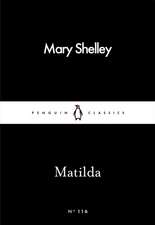 MatildaMary Shelley-38%Preț: 17.22 lei27.69 lei
 -
 FrankensteinMary Wollstonecraft ShelleyPreț: 35.04 lei
 -
 The Last ManDavid R. DowPreț: 68.58 lei
 -
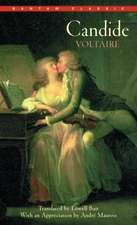 CandideVoltairePreț: 30.08 lei
 -
 -23%Preț: 686.01 lei890.92 lei
 -
 Mary Shelley in BathMary ShelleyPreț: 135.73 lei
 -
 Mary Shelley: Gothic TalesMary Shelley-34%Preț: 28.64 lei43.42 lei
 -
 Frankenstein (Special Edition)Mary ShelleyPreț: 122.92 lei
 -
 The Last ManMary Wollstonecraft ShelleyPreț: 56.95 lei
 -
 Everything Must GoDorian Lynskey-48%Preț: 47.22 lei90.02 lei
 -
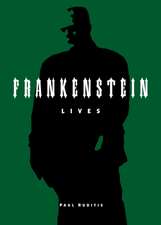 Frankenstein LivesPaul Ruditis-18%Preț: 86.44 lei105.62 lei
 -
 The Book of RevelationsJuliet NicolsonPreț: 151.44 lei
 -
 Atwood, M: Life Before ManMargaret Atwood-19%Preț: 55.82 lei69.32 lei
 -
 Mary Shelley Horror StoriesMary Shelley-11%Preț: 126.43 lei141.51 lei
 -
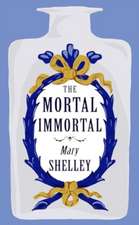 The Mortal ImmortalMary ShelleyPreț: 36.06 lei
 -
 Frankenstein & Other TalesMary Shelley-13%Preț: 59.96 lei68.78 lei
 -
 The Last ManMary Wollstonecraft ShelleyPreț: 24.60 lei
 -
 Last And First MenOlaf Stapledon-28%Preț: 54.65 lei75.52 lei
 -
 Transformation and other stories (Legend Classics)Mary Shelley-9%Preț: 65.45 lei72.08 lei
 -
 The Time MachineH. G. WellsPreț: 31.83 lei
Notă biografică
Mary Wollstonecraft Shelley was born in 1797 to the feminist Mary Wollstonecraft and the radical philosopher William Godwin. At the age of 16, she fell in love with the poet Percy Bysshe Shelley, and they left England together against her father's will, traveling throughout Europe. When Percy died in 1822, drowning in a boat during a storm, Mary Shelley had already had to cope with two suicides, miscarriage, family illness, financial stress, and the deaths of three of her children. She returned to England in 1823 and was given a small allowance by her father-in-law to support her surviving child, Percy Florence. She died on February 1, 1851, possibly from a brain tumor. When her family opened her writing desk, they found locks of her dead children's hair, a notebook she had shared with Percy, and a copy of his poem Adonaïs with one page folded around a silk parcel containing some of his ashes and the remains of his heart.
Descriere
Descriere de la o altă ediție sau format:
Mary Shelley’s third published novel, The Last Man, is a disillusioned vision of the end of civilization, set in the twenty-first century. The book offers a sweeping account of war, plague, love, and desolation. It is the sort of apocalyptic vision that was widespread at the time, though Shelley’s treatment of the theme goes beyond the conventional; it is extraordinarily interesting and deeply moving.
If The Last Man is in some sense a “conventional” text of the period, it is also intensely personal in its origin; Shelley refers in her journal to the last man as her alter ego, “the last relic of a beloved race, my companions extinct before me.” The novel thus develops out of and contributes to a network of story and idea in which fantasy, allusion, convention, and autobiography are densely interwoven.
This new version of the first edition (1826) sets out to provide not only a thoroughly annotated text, but also contextual materials to help the reader acquire knowledge of the intellectual and literary milieu out of which the novel emerged. Appendices include material on “the last man” as early nineteenth-century hero, texts from the debate initiated by Malthus in 1798 about the adequacy of food supply to sustain human population, various accounts of outbreaks of plague, and Shelley’s poems representing her feelings after the death of her husband.
Mary Shelley’s third published novel, The Last Man, is a disillusioned vision of the end of civilization, set in the twenty-first century. The book offers a sweeping account of war, plague, love, and desolation. It is the sort of apocalyptic vision that was widespread at the time, though Shelley’s treatment of the theme goes beyond the conventional; it is extraordinarily interesting and deeply moving.
If The Last Man is in some sense a “conventional” text of the period, it is also intensely personal in its origin; Shelley refers in her journal to the last man as her alter ego, “the last relic of a beloved race, my companions extinct before me.” The novel thus develops out of and contributes to a network of story and idea in which fantasy, allusion, convention, and autobiography are densely interwoven.
This new version of the first edition (1826) sets out to provide not only a thoroughly annotated text, but also contextual materials to help the reader acquire knowledge of the intellectual and literary milieu out of which the novel emerged. Appendices include material on “the last man” as early nineteenth-century hero, texts from the debate initiated by Malthus in 1798 about the adequacy of food supply to sustain human population, various accounts of outbreaks of plague, and Shelley’s poems representing her feelings after the death of her husband.
Recenzii
Mary Shelley’s third published novel, The Last Man, is a disillusioned vision of the end of civilization, set in the twenty-first century. The book offers a sweeping account of war, plague, love, and desolation. It is the sort of apocalyptic vision that was widespread at the time, though Shelley’s treatment of the theme goes beyond the conventional; it is extraordinarily interesting and deeply moving.
If The Last Man is in some sense a “conventional” text of the period, it is also intensely personal in its origin; Shelley refers in her journal to the last man as her alter ego, “the last relic of a beloved race, my companions extinct before me.” The novel thus develops out of and contributes to a network of story and idea in which fantasy, allusion, convention, and autobiography are densely interwoven.
This new version of the first edition (1826) sets out to provide not only a thoroughly annotated text, but also contextual materials to help the reader acquire knowledge of the intellectual and literary milieu out of which the novel emerged. Appendices include material on “the last man” as early nineteenth-century hero, texts from the debate initiated by Malthus in 1798 about the adequacy of food supply to sustain human population, various accounts of outbreaks of plague, and Shelley’s poems representing her feelings after the death of her husband.
“Anne McWhir’s edition of The Last Man is first rate! Mary Shelley’s novel is well served by a careful editor who provides an informed introduction, comprehensive annotations, and well-chosen appendices that contextualize this richly complex novel—Shelley herself would have been pleased!” — Charles E. Robinson, University of Delaware
If The Last Man is in some sense a “conventional” text of the period, it is also intensely personal in its origin; Shelley refers in her journal to the last man as her alter ego, “the last relic of a beloved race, my companions extinct before me.” The novel thus develops out of and contributes to a network of story and idea in which fantasy, allusion, convention, and autobiography are densely interwoven.
This new version of the first edition (1826) sets out to provide not only a thoroughly annotated text, but also contextual materials to help the reader acquire knowledge of the intellectual and literary milieu out of which the novel emerged. Appendices include material on “the last man” as early nineteenth-century hero, texts from the debate initiated by Malthus in 1798 about the adequacy of food supply to sustain human population, various accounts of outbreaks of plague, and Shelley’s poems representing her feelings after the death of her husband.
“Anne McWhir’s edition of The Last Man is first rate! Mary Shelley’s novel is well served by a careful editor who provides an informed introduction, comprehensive annotations, and well-chosen appendices that contextualize this richly complex novel—Shelley herself would have been pleased!” — Charles E. Robinson, University of Delaware
Cuprins
Acknowledgements
Introduction
Mary Wollstonecraft Shelley: A Brief Chronology
A Note on the Text
The Last Man
Appendix A: Some Contemporaries of the Last Man
Introduction
Mary Wollstonecraft Shelley: A Brief Chronology
A Note on the Text
The Last Man
- Introduction
- Volume 1
- Volume 2
- Volume 3
Appendix A: Some Contemporaries of the Last Man
- George Gordon, Lord Byron, “Darkness” (1816)
- Thomas Campbell, “The Last Man” (1823)
- Thomas Campbell, letter in The Times, 24 March 1825
- Thomas Hood, from “The Last Man” (1826)
- George Dibdin Pitt, from The Last Man; or; The Miser of Eltham Green (1833)
- Thomas Love Beddoes, notes for a projected play, The Last Man
- Virgil, from Aeneid 6
- Jean-Baptiste Cousin de Grainville, from The Last Man; or Omegarus and Syderia, A Romance in Futurity (1806)
- Edward Gibbon, from The Decline and Fall of the Roman Empire (1776-88)
- Daniel Defoe, from A Journal of the Plague Year (1722)
- Charles Brockden Brown, from Arthur Mervyn (1799-1800)
- John Wilson, from The City of the Plague (1816)
- From “Contagion and Sanitary Laws,” Westminster Review 3 (1825): 134-67
- Constantin Francois de Chasseboeuf, comte de Volney, from The Ruins (1791)
- William Godwin, from Political Justice (1793)
- Thomas Robert Malthus, from An Essay on Population (1798)
- Mary Wollstonecraft, from The French Revolution (1794)
- Edmund Burke, from A Letter to a Noble Lord (1796)
- Percy Bysshe Shelley, from Notes to Queen Mab (1813)
- Percy Bysshe Shelley, from Preface to The Revolt of Islam (1818)
- William Godwin, from Essay on Sepulchres (1809)
- “The Choice”
- “On Reading Wordsworth’s Lines on Peel Castle”
- “To Jane— (with the ’Last Man’)”
- From The Literary Magnet of Monthly Journal of the Belles Lettres, ns 1 (January 1826): 56
- From The Literary Gazette, and Journal of the Belles Letters, 474 ( Saturday 18 Feb. 1826): 56
- From Monthly Review 1 (1826): 333-35
- From Blackwood’s 21 (January 1827): 54
- From Mary Shelley, Rambles in Germany and Italy (1844)