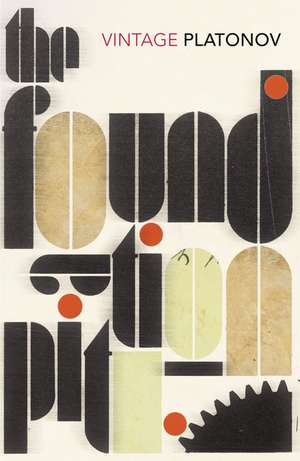
The Foundation Pit
Autor Andrey Platonov Traducere de Robert Chandler, Elizabeth Chandler, Olga Meersonen Limba Engleză Paperback – 4 noi 2010
Preț: 58.02 lei
Preț vechi: 71.63 lei
-19%
Puncte Express: 87
Carte disponibilă
Livrare economică 13-25 noiembrie
Livrare express 30 octombrie-05 noiembrie pentru 31.85 lei
Livrare prin curier în România Termenul estimat este afișat lângă disponibilitate.
Transport gratuit de la 400.00 lei Plată online sau ramburs, în funcție de opțiunile comenzii.
Retur gratuit în 14 zile Comandă securizată și suport în română.
Specificații
ISBN-13: 9780099529743
ISBN-10: 0099529742
Pagini: 240
Dimensiuni: 129 x 196 x 18 mm
Greutate: 0.18 kg
Editura: Vintage Publishing
ISBN-10: 0099529742
Pagini: 240
Dimensiuni: 129 x 196 x 18 mm
Greutate: 0.18 kg
Editura: Vintage Publishing
V-ar putea interesa
-
 MotherlandJulia IoffePreț: 195.96 lei
 -
 DemonsFyodor Dostoevsky-27%Preț: 70.77 lei96.56 lei
 -
 Notes From UndergroundFyodor Dostoevsky-27%Preț: 51.59 lei71.05 lei
 -
 SoulAndrey Platonov-18%Preț: 65.85 lei80.02 lei
 -
 Preț: 93.27 lei
 -
 DemonsFyodor DostoyevskyPreț: 97.82 lei
 -
 Yankees in PetrogradJill RoesePreț: 141.86 lei
 -
 Molotov's Magic LanternRachel PolonskyPreț: 108.19 lei
 -
 The Bridge Over The Neroch And Other WorksLeonid TsypkinPreț: 71.57 lei
 -
 Preț: 108.19 lei
 -
 The AssistantRobert WalserPreț: 107.57 lei
 -
 As a Man Grows OlderItalo SvevoPreț: 121.29 lei
 -
 The Doomed CityArkady Strugatsky-25%Preț: 60.79 lei80.55 lei
 -
 That Awful Mess on the Via MerulanaCarlo Emilio GaddaPreț: 107.54 lei
 -
 SoulAndrey PlatonovPreț: 127.04 lei
 -
 A Schoolboy's DiaryRobert WalserPreț: 95.28 lei
 -
 The UndeadSvetlana Satchkova-18%Preț: 88.22 lei108.16 lei
 -
 Just the PlagueLudmila UlitskayaPreț: 70.24 lei
 -
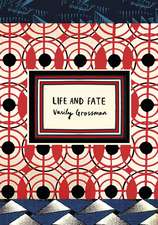 Life and Fate (Vintage Classic Russians Series)Vasily Grossman-14%Preț: 98.98 lei114.53 lei
 -
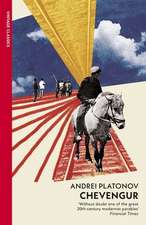 ChevengurAndrey PlatonovPreț: 95.35 lei
 -
 Reminiscences of Tolstoy, Chekhov and AndreevMaxim GorkyPreț: 105.54 lei
 -
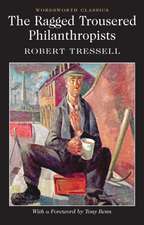 The Ragged Trousered PhilanthropistsRobert TressellPreț: 28.01 lei
 -
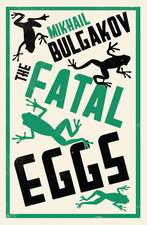 The Fatal Eggs: New TranslationMikhail BulgakovPreț: 56.50 lei
 -
 Devils: New TranslationFyodor DostoevskyPreț: 77.11 lei
 -
 X and Other Stories: Newly Translated and AnnotatedYevgeny Zamyatin-5%Preț: 69.84 lei73.22 lei
 -
 The Lady of the MineSergei LebedevPreț: 99.07 lei
Notă biografică
Andrey Platonovich Platonov (1899-1951) began publishing poems and articles in 1918, while studying engineering. Between 1927 and 1932 he wrote his most politically controversial works, some of them first published in Russian only in the 1990s. After reading his story 'For Future Use', Stalin referred to Platonov as 'an agent of our enemies'. From September 1942, after being recommended to the chief editor of Red Star by his friend Vasily Grossman, Platonov worked as a war correspondent. He died in 1951, of tuberculosis caught from his son, who had spent three years in the Gulag. Happy Moscow, one of his finest novels, was first published in Russia only in 1991; letters, notebook entries and unfinished stories continue to appear.
Recenzii
"I squint back on our century and I see six writers I think it will be remembered for. They are Marcel Proust, Franz Kafka, Robert Musil, William Faulkner, Andrey Platonov and Samuel Beckett.... They are summits in the literary landscape of our century ... What's more, they don't lose an inch of their status when compared to the giants of fiction from the previous century."—Joseph Brodsky
“The most exciting literary discovery I made this past year was Andrey Platonov… his reputation has grown to the point that he is frequently considered the greatest Russian prose writer of the twentieth century. His masterpiece is The Foundation Pit, which boils all the utopianism and horror of the forced collectivization and industrialization of the early 1930s into 150 tightly written…. English-speaking readers are lucky to have the superb translation by Robert Chandler and Olga Meerson, published last year by New York Review Books…. Platonov’s brilliant short works can be sampled in the collection Soul, also published by NYRB.” —The Millions
"Andrey Platonov has not yet received the attention he richly deserves here...[he] turns out to be one of the finest writers of the 20th century, worthy to stand alongside Kafka and Joyce." --The Arts Fuse
"He has been described as the greatest Russian writer of the 20th century, but some of his most controversial works, written between 1927 and 1932, were not published in the Soviet Union until the 1980s. Platonov's The Foundation Pit is a satirical response to Stalin's programme of crash industrialisation and collectivisation." ߝGuardian
"Platonov's writing can retain enormous power in English...The foreign reader can also now begin to get an idea of the shape of Platonov's development as a writer. The Foundation Pit, written at the time of the brutal collectivization campaign of the late 1920s, plays out an image of equally brutal directnessߝa construction site on which nothing ever gets built. The pit just gets wider and deeper until it comes to represent a grave - of Stalinism's Promethean ambitions, and of the author's political idealism. The effect on the reader is almost physically winding." ߝThe Moscow Times
"Acclaimed by Joseph Brodsky as one of the great Russian writers of the twentieth century, Andrey Platonov comes with a formidable reputation, matched only by his relative obscurity." ߝThe Observer (London)
"Andrey Platonov is the most exciting Russian writer to be rediscovered since the end of the Soviet Union. Born in 1899, one of a railway worker's 10 children, he was an engineer, a party member and a model proletarian writer before doubts about Communism, and his literary imagination, landed him in trouble with Stalin. His work stopped being published in the early 1930s and only resurfaced 40 years after his death in 1951...The Foundation Pit will stand out as his masterpiece." ߝThe Independent (London)
"In Platonov's prose, it is impossible to find a single dull or inelegant sentence... For Platonov's work testifies to the only political responsibility owed by any writer to any reader: to describe the world as faithfully, and as compellingly, as possible. Platonov deserves to be published; he rewards being read." ߝThe Times (London)
"In Russian writer Andrei Platonov's novel The Foundation Pit, written in 1930 but not published in Russia until 1987, the characters must struggle not only with the interminable Soviet works project of the title, but with strange spiritual maladies...One of the most deeply original writers of the 20th century." ߝThe National Post
"Nearly all his work is rooted in a particular place and time, and it is hard to think of another writer who so expertly animated the sadness and unease of the Soviet period. His fiction, at its best, has the timeless quality of parable or folklore." ߝNew Statesman
"Counting Andrei Platonov among the greatest Russian prose writers of this century, Joseph Brodsky considered him to be 'quite untranslatable, and, in one sense, that's a good thing: for the language into which he cannot be translated.' The Foundation Pit distresses the Russian language, showing it splayed and shattered by the demands of revolution. In this nihilistic allegory, completed in 1930 but not published in the Soviet Union until 1987, workers dig the foundation pit for an enormous dwelling to be called the All-Proletarian Home...a grim, readable Platonov whose most familiar neighbor, in apocalyptic sensibility, is Samuel Beckett." ߝThe New York Times
"Andrey Platonov is one of Russia's greatest modernist scribes. Like his fellow science-fiction writer Yevgeny Zamyatin - author of the astonishing futurist novel We, published in the 20s - he was also among that tortured country's most prescient literary artists...The Foundation Pit, written in 1930 and now published for the first time in English, is his most striking attempt to convey the extreme estrangement suffered by ordinary people as collectivisation in agriculture proceeded across the USSR...one of the most prophetic nihilistic tales of this ruined century." ߝThe West Australian
"Completed in 1930 but unpublished during his lifetime, Platonov's masterpiece, a scathing satire of the Soviet attempt to build a workers' utopia, gauges the vast human tragedy of Stalinism, portraying a society organized and regimented around a monstrous lie, and thus bereft of meaning, hope, integrity, humanity...His dark parable is a great dirge for Mother Russia as well as a savage analysis of the split consciousness fostered by an oppressive system. Platonov's books are still being unearthed in Russia decades after his death." ߝPublishers Weekly
"Andrey Platonov's absurdist parable The Foundation Pit is a masterly achievement...Much of the genius of The Foundation Pit lies in Platonov's objective style and the lively invariably abusive dialogue, contrasting with oddly moving, isolated asides of brittle beauty. It is a Russian Waiting for Godot crossed with Lewis Carroll and Maxim Gorky - there is even a bear working as an apprentice blacksmith, frantically making horseshoes as if there were no tomorrow. And in this book, there isn't. According to the late Joseph Brodsky, Platonov 'simply had a tendency to see his words to their logical - that is absurd, that is totally paralyzing end. In other words, like no other Russian writer before or after him Platonov was able to reveal a self destructive, eschatological element within the language itself.' The Foundation Pit is extraordinary: strange, almost abrupt, a hallucinatory, nightmarish parable of hysterical laughter and terrifying silences." ߝThe Irish Times
"These books are indescribable. The power of devastation they inflict upon their subject matter exceeds by far any demands of social criticism and should be measured in units that have very little to do with literature as such." ߝJoseph Brodsky
“A 20th-century Russian masterpiece...The Foundation Pit is a savage satire on collectivisation, a nightmarish vision of humanity trapped by the infernal machinery of totalitarianism...Platonov's grimly comic vision of a brave new world is as universal in its implications as any other account of a hellish utopia our century has produced..the dance of madness in The Foundation Pit is articulated as the suppression of anything human - sorrow and joy, hope and despair." ߝThe Sydney Morning Herald
"Like Candide, Platonov's novel is a plotless allegory of human striving...The forced industrialisation of Russia, which began in 1928 and is the historical background of The Foundation Pit, left an estimated 15.2m dead. Even if one considers Platonov's masterpiece merely as a conte philosophique, one may note that his model universe was more amply observed than Voltaire's. He was also a writer perhaps the only writer to have advanced Russian prose beyond what had been achieved by Chekhov not a philosopher in literary disguise..." ߝThe Times (London)
"Brilliant...Obviously a masterpiece." ߝPaul Theroux
“Perhaps the only writer to have advanced Russian prose beyond what had been achieved by Chekhov.” ߝThe Times (London)
“One of Russia’s most insistent and valuable dissident voices.” ߝLos Angeles Times
“Among the greatest Russian prose writers of this century.” ߝNew York Times
“In Russia it is Platonov who is increasingly described as the best writer of the post-revolutionary epoch.” ߝTimes Literary Supplement (London)
“The most exciting literary discovery I made this past year was Andrey Platonov… his reputation has grown to the point that he is frequently considered the greatest Russian prose writer of the twentieth century. His masterpiece is The Foundation Pit, which boils all the utopianism and horror of the forced collectivization and industrialization of the early 1930s into 150 tightly written…. English-speaking readers are lucky to have the superb translation by Robert Chandler and Olga Meerson, published last year by New York Review Books…. Platonov’s brilliant short works can be sampled in the collection Soul, also published by NYRB.” —The Millions
"Andrey Platonov has not yet received the attention he richly deserves here...[he] turns out to be one of the finest writers of the 20th century, worthy to stand alongside Kafka and Joyce." --The Arts Fuse
"He has been described as the greatest Russian writer of the 20th century, but some of his most controversial works, written between 1927 and 1932, were not published in the Soviet Union until the 1980s. Platonov's The Foundation Pit is a satirical response to Stalin's programme of crash industrialisation and collectivisation." ߝGuardian
"Platonov's writing can retain enormous power in English...The foreign reader can also now begin to get an idea of the shape of Platonov's development as a writer. The Foundation Pit, written at the time of the brutal collectivization campaign of the late 1920s, plays out an image of equally brutal directnessߝa construction site on which nothing ever gets built. The pit just gets wider and deeper until it comes to represent a grave - of Stalinism's Promethean ambitions, and of the author's political idealism. The effect on the reader is almost physically winding." ߝThe Moscow Times
"Acclaimed by Joseph Brodsky as one of the great Russian writers of the twentieth century, Andrey Platonov comes with a formidable reputation, matched only by his relative obscurity." ߝThe Observer (London)
"Andrey Platonov is the most exciting Russian writer to be rediscovered since the end of the Soviet Union. Born in 1899, one of a railway worker's 10 children, he was an engineer, a party member and a model proletarian writer before doubts about Communism, and his literary imagination, landed him in trouble with Stalin. His work stopped being published in the early 1930s and only resurfaced 40 years after his death in 1951...The Foundation Pit will stand out as his masterpiece." ߝThe Independent (London)
"In Platonov's prose, it is impossible to find a single dull or inelegant sentence... For Platonov's work testifies to the only political responsibility owed by any writer to any reader: to describe the world as faithfully, and as compellingly, as possible. Platonov deserves to be published; he rewards being read." ߝThe Times (London)
"In Russian writer Andrei Platonov's novel The Foundation Pit, written in 1930 but not published in Russia until 1987, the characters must struggle not only with the interminable Soviet works project of the title, but with strange spiritual maladies...One of the most deeply original writers of the 20th century." ߝThe National Post
"Nearly all his work is rooted in a particular place and time, and it is hard to think of another writer who so expertly animated the sadness and unease of the Soviet period. His fiction, at its best, has the timeless quality of parable or folklore." ߝNew Statesman
"Counting Andrei Platonov among the greatest Russian prose writers of this century, Joseph Brodsky considered him to be 'quite untranslatable, and, in one sense, that's a good thing: for the language into which he cannot be translated.' The Foundation Pit distresses the Russian language, showing it splayed and shattered by the demands of revolution. In this nihilistic allegory, completed in 1930 but not published in the Soviet Union until 1987, workers dig the foundation pit for an enormous dwelling to be called the All-Proletarian Home...a grim, readable Platonov whose most familiar neighbor, in apocalyptic sensibility, is Samuel Beckett." ߝThe New York Times
"Andrey Platonov is one of Russia's greatest modernist scribes. Like his fellow science-fiction writer Yevgeny Zamyatin - author of the astonishing futurist novel We, published in the 20s - he was also among that tortured country's most prescient literary artists...The Foundation Pit, written in 1930 and now published for the first time in English, is his most striking attempt to convey the extreme estrangement suffered by ordinary people as collectivisation in agriculture proceeded across the USSR...one of the most prophetic nihilistic tales of this ruined century." ߝThe West Australian
"Completed in 1930 but unpublished during his lifetime, Platonov's masterpiece, a scathing satire of the Soviet attempt to build a workers' utopia, gauges the vast human tragedy of Stalinism, portraying a society organized and regimented around a monstrous lie, and thus bereft of meaning, hope, integrity, humanity...His dark parable is a great dirge for Mother Russia as well as a savage analysis of the split consciousness fostered by an oppressive system. Platonov's books are still being unearthed in Russia decades after his death." ߝPublishers Weekly
"Andrey Platonov's absurdist parable The Foundation Pit is a masterly achievement...Much of the genius of The Foundation Pit lies in Platonov's objective style and the lively invariably abusive dialogue, contrasting with oddly moving, isolated asides of brittle beauty. It is a Russian Waiting for Godot crossed with Lewis Carroll and Maxim Gorky - there is even a bear working as an apprentice blacksmith, frantically making horseshoes as if there were no tomorrow. And in this book, there isn't. According to the late Joseph Brodsky, Platonov 'simply had a tendency to see his words to their logical - that is absurd, that is totally paralyzing end. In other words, like no other Russian writer before or after him Platonov was able to reveal a self destructive, eschatological element within the language itself.' The Foundation Pit is extraordinary: strange, almost abrupt, a hallucinatory, nightmarish parable of hysterical laughter and terrifying silences." ߝThe Irish Times
"These books are indescribable. The power of devastation they inflict upon their subject matter exceeds by far any demands of social criticism and should be measured in units that have very little to do with literature as such." ߝJoseph Brodsky
“A 20th-century Russian masterpiece...The Foundation Pit is a savage satire on collectivisation, a nightmarish vision of humanity trapped by the infernal machinery of totalitarianism...Platonov's grimly comic vision of a brave new world is as universal in its implications as any other account of a hellish utopia our century has produced..the dance of madness in The Foundation Pit is articulated as the suppression of anything human - sorrow and joy, hope and despair." ߝThe Sydney Morning Herald
"Like Candide, Platonov's novel is a plotless allegory of human striving...The forced industrialisation of Russia, which began in 1928 and is the historical background of The Foundation Pit, left an estimated 15.2m dead. Even if one considers Platonov's masterpiece merely as a conte philosophique, one may note that his model universe was more amply observed than Voltaire's. He was also a writer perhaps the only writer to have advanced Russian prose beyond what had been achieved by Chekhov not a philosopher in literary disguise..." ߝThe Times (London)
"Brilliant...Obviously a masterpiece." ߝPaul Theroux
“Perhaps the only writer to have advanced Russian prose beyond what had been achieved by Chekhov.” ߝThe Times (London)
“One of Russia’s most insistent and valuable dissident voices.” ߝLos Angeles Times
“Among the greatest Russian prose writers of this century.” ߝNew York Times
“In Russia it is Platonov who is increasingly described as the best writer of the post-revolutionary epoch.” ߝTimes Literary Supplement (London)