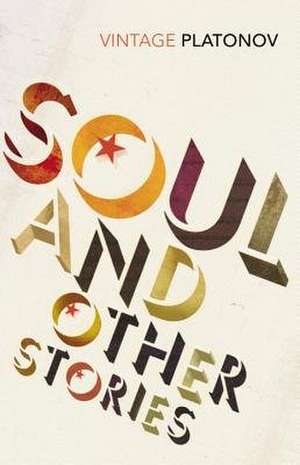
Soul
Autor Andrey Platonov Traducere de Elizabeth Chandler, Olga Meerson, Robert Chandleren Limba Engleză Paperback – aug 2013
Observăm în Soul o poartă de acces către universul fragil și totodată dens al lui Andrey Platonov, un scriitor a cărui voce a supraviețuit deceniilor de cenzură sovietică pentru a fi recunoscută astăzi drept esențială. Această ediție publicată de Vintage Publishing nu este doar o simplă antologie, ci o recuperare istorică: cuprinde opt lucrări, inclusiv celebra nuvelă care dă titlul volumului, prezentate pentru prima dată în varianta lor integrală, necenzurată. Dacă The Foundation Pit v-a captivat prin explorarea distopică a colectivizării și a limbajului ideologic, Soul extinde experiența în direcția unei explorări metafizice a supraviețuirii umane în condiții de deprivare extremă. Remarcăm o schimbare de ton față de lucrările sale pur politice; aici, Platonov este la cel mai înalt nivel de subtilitate și căldură. În povestirea „The Return”, autorul analizează trauma întoarcerii acasă a unui ofițer după Al Doilea Război Mondial, o temă recurentă în opera sa, tratată cu o onestitate care l-a plasat, în viziunea lui Joseph Brodsky, printre rarii scriitori capabili să înregistreze cutremurul spiritual al epocii. Stilul său, descris adesea ca un „realism alternativ”, îmbină poezia stranie cu o umanitate dureroasă. În nuvela centrală, călătoria protagonistului în stepele Asiei Centrale devine o metaforă pentru regăsirea identității într-un spațiu unde oamenii au pierdut până și facultatea vorbirii. Traducerea realizată de Robert Chandler și echipa sa reușește să păstreze acea textură lingvistică unică, „murdară” și profundă, care face din Platonov un egal al lui Kafka în literatura universală.
Preț: 65.85 lei
Preț vechi: 80.02 lei
-18%
Carte disponibilă
Livrare economică 06-17 noiembrie
Livrare express 22-28 octombrie pentru 37.69 lei
Specificații
ISBN-10: 0099455137
Pagini: 400
Ilustrații: 1 map (black and white)
Dimensiuni: 128 x 198 x 30 mm
Greutate: 0.29 kg
Editura: Vintage Publishing
V-ar putea interesa
-
 Summer in the CityElizabeth ChandlerPreț: 54.48 lei
 -
 Love at First ClickElizabeth ChandlerPreț: 56.33 lei
 -
 The Nice and the GoodIris Murdoch-18%Preț: 66.10 lei80.16 lei
 -
 The CaveJosé Saramago-19%Preț: 57.49 lei70.91 lei
 -
 Broken AprilIsmail Kadare-20%Preț: 56.15 lei70.35 lei
 -
 The HippopotamusStephen Fry-31%Preț: 55.07 lei80.05 lei
 -
 Ape and EssenceAldous Huxley-20%Preț: 55.71 lei69.83 lei
 -
 Preț: 91.64 lei
 -
 The Girl You Left BehindJojo MoyesPreț: 81.15 lei
 -
 The AssistantRobert WalserPreț: 107.57 lei
 -
 As a Man Grows OlderItalo SvevoPreț: 121.29 lei
 -
 After YouJojo Moyes-18%Preț: 59.52 lei72.37 lei
 -
 Kissed by an AngelElizabeth ChandlerPreț: 92.52 lei
 -
 That Awful Mess on the Via MerulanaCarlo Emilio GaddaPreț: 107.54 lei
 -
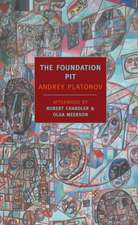 The Foundation PitAndrey PlatonovPreț: 106.03 lei
 -
 A Schoolboy's DiaryRobert WalserPreț: 95.28 lei
 -
 The DressmakerRosalie Ham-19%Preț: 57.56 lei70.93 lei
 -
 The Gospel According to Jesus ChristJosé Saramago-19%Preț: 58.01 lei71.21 lei
 -
 Die BücherdiebinMarkus ZusakPreț: 110.72 lei
De ce să citești această carte
Recomandăm această carte cititorilor care caută o literatură de profunzime filosofică și istorică. Este o ocazie rară de a descoperi un maestru al prozei ruse prin texte care au fost mult timp interzise. Veți câștiga o perspectivă unică asupra rezilienței spiritului uman în fața regimurilor totalitare, totul printr-un limbaj poetic care transformă suferința în artă pură.
Despre autor
Andrey Platonov (1899–1951) este considerat unul dintre cei mai vizionari scriitori ai perioadei sovietice, deși mare parte din opera sa a fost suprimată în timpul vieții. Stilul său distinctiv, care combină elemente de utopie, filozofie rusă și o critică subtilă a marxism-leninismului, l-a transformat într-o figură centrală a literaturii ruse de secol XX. Lucrările sale, precum The River Potudan, explorează adesea intersecția dintre viața cotidiană și marile transformări politice, fiind marcat de o sensibilitate aparte pentru condiția umană marginalizată.
Notă biografică
Descriere scurtă
'For the mind, everthing is in the future' Platonov once wrote; 'for the heart, everything is in the past'. The protagonist of Soul is a young man torn between these opposing desires, sent as a kind of missionary to bring the values of modern Russia to his childhood home town in Central Asia. In this strange, haunting novella, as well as in the seven stories that accompany it, a rediscovered master of twentieth century Russian literature is shown at his wisest and most humane.
WITH AN AFTERWORD BY JOHN BERGER
Recenzii
"I squint back on our century and I see six writers I think it will be remembered for. They are Marcel Proust, Franz Kafka, Robert Musil, William Faulkner, Andrey Platonov and Samuel Beckett.... They are summits in the literary landscape of our century ... What's more, they don't lose an inch of their status when compared to the giants of fiction from the previous century."—Joseph Brodsky
"Soul ( New York Review Books ) gathered eight works from another Slavic giant, Andrei Platonov. Works of great tenderness and insight in the face of oppression, they're brilliantly rendered by one of the great translators of our time, Robert Chandler, and his team. It features a striking afterword by John Berger..." --The Guardian
"Andrey Platonov has not yet received the attention he richly deserves here...[he] turns out to be one of the finest writers of the 20th century, worthy to stand alongside Kafka and Joyce. So thanks to NYRB Classics for publishing the Platonov collection Soul, which contains an informatively polemical introduction by Chandler, a smattering of stories ('Among Animals and Plants' appeared last year in The New Yorker), and the short novels 'Soul' and 'The Return.'" --The Arts Fuse
“In Russia it is Platonov who is increasingly described as the best writer of the post-revolutionary epoch.” ߝVictor Erofeyev, The Times Literary Supplement
"Andrey Platonov is increasingly being recognized, in Russia and elsewhere, as one of the greatest writers of the Soviet period." ߝThe Spectator
“Platonov is a realist as only the Russians can be realists, unsparing and utterly without any literary device except the exact and telling detail. The result seems. . .more myth than reality, as Platonov’s Russia is incredibly strange.” ߝGuy Davenport
“Reading Platonov is always an exhilarating, depressing and moving experience.” ߝSlavonica
"The most exciting Russian writer to be rediscovered since the end of the Soviet Union." ߝThe Independent (UK)
"In Platonov's prose, it is impossible to find a single inelegant sentence." ߝThe Times (UK)
"In this century the best Russian prose has been written by our poets and Platonov, but he is an exception...Platonov speaks of a nation which in a sense has become a victim of its own language; or, more precisely, he speaks of this language itself which turns out to be capable of generating a fictive world and then falling into grammatical dependence on it." ߝJoseph Brodsky
“As his versions of Andrey Platonov prove, Robert Chandler is the supreme translator of difficult Russian rose.” ߝThe Literary Review
“Rarely does literture come this close to music.” ߝThe Observer (UK)
"In Soul, Platonov weaves together Sufi philosophy, Persian travelogue, socialist realism, and the language of Soviet bureaucracy into a magical tissue with the luminous, universal quality of myth. Soul is an unforgettably weird retelling of a familiar story: the struggle of an educated young man to assimilate his present with his past." ߝElif Batuman, The Daily Beast