
The Dialectics of Discipleship: Karl Barth, Sanctification and Theological Ethics: T&T Clark Enquiries in Theological Ethics
Autor Dr Chris Swannen Limba Engleză Paperback – 20 mar 2025
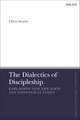
With a focus on the role the image of discipleship plays in giving conceptual structure and shape to Barth's distinctive account of the correspondence between divine agency and sanctified human agency, this book evaluates the ramifications of his discipleship-shaped vision of sanctification. In doing this, it gives special attention to Barth's own personal mixed record with regard to Christian discipleship. Ultimately, Swann retrieves a number of important resources for contemporary theological ethics from Barth's theology of discipleship.
| Toate formatele și edițiile | Preț | Express |
|---|---|---|
| Paperback (1) | 198.00 lei 22-36 zile | |
| Bloomsbury Publishing – 20 mar 2025 | 198.00 lei 22-36 zile | |
| Hardback (1) | 526.24 lei 43-57 zile | |
| Bloomsbury Publishing – 21 sep 2023 | 526.24 lei 43-57 zile |
Din seria T&T Clark Enquiries in Theological Ethics
- nou
 Preț: 193.70 lei
 -
 Preț: 224.61 lei
 - 29%
 Preț: 197.36 lei
 - 25%
 Preț: 222.60 lei
 - 37%
 Preț: 559.73 lei
 - 31%
 Preț: 205.53 lei
 - 29%
 Preț: 197.50 lei
 - 17%
 Preț: 237.12 lei
 - 37%
 Preț: 525.51 lei
 - 27%
 Preț: 202.25 lei
 - 32%
 Preț: 482.18 lei
 - 26%
 Preț: 231.30 lei
 - 27%
 Preț: 199.07 lei
 - 34%
 Preț: 526.24 lei
 - 26%
 Preț: 229.51 lei
 - 37%
 Preț: 526.43 lei
 - 26%
 Preț: 237.12 lei
 - 14%
 Preț: 557.80 lei
 - 32%
 Preț: 203.52 lei
 - 28%
 Preț: 243.99 lei
 - 25%
 Preț: 224.42 lei
 - 29%
 Preț: 196.96 lei
 - 28%
 Preț: 238.36 lei
 - 27%
 Preț: 247.79 lei
 - 27%
 Preț: 197.79 lei
 - 34%
 Preț: 526.73 lei
 - 27%
 Preț: 203.06 lei
 - 26%
 Preț: 238.74 lei
 - 27%
 Preț: 197.60 lei
 - 37%
 Preț: 525.33 lei
Preț: 198.00 lei
Preț vechi: 270.42 lei
-27%
Puncte Express: 297
Preț estimativ în valută:
34.99€ • 41.17$ • 30.55£
34.99€ • 41.17$ • 30.55£
Carte disponibilă
Livrare economică 16-30 martie
Specificații
ISBN-13: 9780567708823
ISBN-10: 0567708829
Pagini: 256
Dimensiuni: 154 x 234 x 18 mm
Greutate: 0.4 kg
Editura: Bloomsbury Publishing
Colecția T&T Clark
Seria T&T Clark Enquiries in Theological Ethics
Locul publicării:London, United Kingdom
ISBN-10: 0567708829
Pagini: 256
Dimensiuni: 154 x 234 x 18 mm
Greutate: 0.4 kg
Editura: Bloomsbury Publishing
Colecția T&T Clark
Seria T&T Clark Enquiries in Theological Ethics
Locul publicării:London, United Kingdom
Cuprins
Introduction:
The Contemporary "Turn" to Discipleship
Part I. The Turn to Discipleship in Barth
Chapter one:
Barth and His Critics on Discipleship
Chapter two:
The Problem and Promise of Discipleship in Church Dogmatics IV/2
Chapter three:
Discipleship and the Dialectics of Freedom in §66.3
Chapter four:
Discipleship and the Shape of Correspondence in §66
Chapter five:
Discipleship and the Shaping of Correspondence
Part II. Discipleship and Theological Ethics in Barth
Chapter six:
Discipleship, Christian Living, and Moral Agency
Chapter seven:
Discipleship, Ecclesiology, and Moral Ecology
Chapter eight:
Discipleship, Christian Suffering, and Moral Passion
Part III. Resourcing the Contemporary "Turn" to Discipleship
Chapter nine:
With, Against, and Beyond Barth on Discipleship
Conclusion:
The Significance of Discipleship for Theological Ethics
The Contemporary "Turn" to Discipleship
Part I. The Turn to Discipleship in Barth
Chapter one:
Barth and His Critics on Discipleship
Chapter two:
The Problem and Promise of Discipleship in Church Dogmatics IV/2
Chapter three:
Discipleship and the Dialectics of Freedom in §66.3
Chapter four:
Discipleship and the Shape of Correspondence in §66
Chapter five:
Discipleship and the Shaping of Correspondence
Part II. Discipleship and Theological Ethics in Barth
Chapter six:
Discipleship, Christian Living, and Moral Agency
Chapter seven:
Discipleship, Ecclesiology, and Moral Ecology
Chapter eight:
Discipleship, Christian Suffering, and Moral Passion
Part III. Resourcing the Contemporary "Turn" to Discipleship
Chapter nine:
With, Against, and Beyond Barth on Discipleship
Conclusion:
The Significance of Discipleship for Theological Ethics
Recenzii
The two great strengths of Chris Swann's book are, first, his careful and detailed delineation of Barth's account of the call to discipleship and its pivotal role within his doctrine of sanctification, and the subsequent treatment of church and Christian life in Church Dogmatics IV/2. Second, his consistent focus on what was surely a central concern of Karl Barth throughout his career: the practical utility of theology for the life and proclamation of the Christian community. Swann displays with clarity and sensitivity the relevance of the call to discipleship for the church and the Christian vis-à-vis the world, avoiding the twin dangers of cultural accommodation and reactionary sectarianism. Faithful response to the present call and direction of the one Lord frees the believers for joyful openness to the world in missional self-giving, in correspondence to the way of Jesus himself in the world. This is a book not only for Barth scholars but pastors and others concerned with present life and witness of God's people in the world.
In this constructive study, Chris Swann identifies the theme of discipleship as the governing motif in Karl Barth's theology of sanctification. Swann carefully contrasts Barth's program with the Reformers' and develops his argument in close and critical interaction with Barth scholarship past and present.
Given the growing number of cursory accounts of discipleship, this study offers a much-needed corrective as Swann carefully probes the theological intricacies of discipleship and teases out their moral implications.
Theologically astute and pastorally sensitive, Chris Swann recovers the importance of Christian discipleship for church and academy today. This study will be of considerable value both to the Barth scholar and any reader seeking a more nuanced account of discipleship that is firmly rooted in the doctrine of sanctification.
In this constructive study, Chris Swann identifies the theme of discipleship as the governing motif in Karl Barth's theology of sanctification. Swann carefully contrasts Barth's program with the Reformers' and develops his argument in close and critical interaction with Barth scholarship past and present.
Given the growing number of cursory accounts of discipleship, this study offers a much-needed corrective as Swann carefully probes the theological intricacies of discipleship and teases out their moral implications.
Theologically astute and pastorally sensitive, Chris Swann recovers the importance of Christian discipleship for church and academy today. This study will be of considerable value both to the Barth scholar and any reader seeking a more nuanced account of discipleship that is firmly rooted in the doctrine of sanctification.