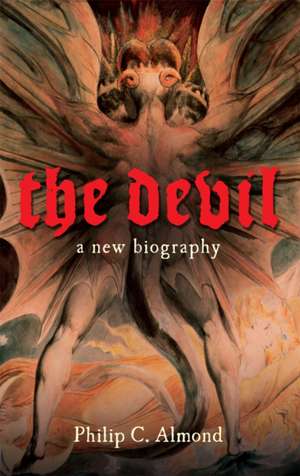
The Devil
Autor Philip C Almonden Limba Engleză Hardback – 11 sep 2014
Observăm în literatura academică recentă o tendință de a trata figurile religioase fie pur teologic, fie strict sociologic, lăsând adesea neexplorată legătura organică dintre mitul cosmic și viața cotidiană a omului pre-modern. The Devil de Philip C Almond vine să completeze tocmai această lacună, reconstruind o lume în care prezența răului personificat nu era o metaforă, ci o realitate constitutivă a istoriei și a psihicului uman. Autorul demonstrează cum, timp de aproape două milenii, narațiunea umană a fost inseparabilă de cea a lui Satan, Beelzebub sau Mephistopheles. Apreciem rigoarea cu care Philip C Almond cartografiază ascensiunea demonologiei ca disciplină intelectuală, de la obsesiile lui Thomas Aquinas până la momentele de ruptură provocate de raționalismul lui Spinoza. Volumul nu se limitează la istoria ideilor, ci face conexiuni directe cu practicile sociale, precum vânătoarea de vrăjitoare, explicând cum declinul credinței în entități corporale a redefinit radical cultura occidentală în timpul Iluminismului. Cititorii familiarizați cu The Prince of Darkness de Jeffrey Burton Russell vor aprecia perspectiva lui Almond, care, deși acoperă un teren istoric similar, pune un accent mai apăsat pe integrarea diavolului în „marea poveste” creștină, subliniind paradoxul demonic: cel al unui adversar care servește, în ultimă instanță, ordinii divine. Această lucrare se înscrie perfect în traiectoria academică a lui Philip C Almond, continuând investigațiile sale asupra marilor arhetipuri și concepte religioase explorate în The Antichrist sau Afterlife. Dacă în lucrările anterioare autorul s-a concentrat pe speranța post-mortem sau pe figura mesianică inversată, aici el oferă o sinteză magistrală despre cum „Prințul Întunericului” a modelat moralitatea și structura socială a Occidentului.
Preț: 200.18 lei
Carte disponibilă
Livrare economică 09-23 noiembrie
Specificații
ISBN-10: 0801453372
Pagini: 304
Dimensiuni: 141 x 221 x 32 mm
Greutate: 0.54 kg
Editura: Cornell University Press
Locul publicării:Ithaca, United States
V-ar putea interesa
-
 The Bayeux TapestryCarola Hicks-19%Preț: 109.71 lei135.81 lei
 -
 Lower than the AngelsDiarmaid MacCullochPreț: 138.24 lei
 -
 -19%Preț: 366.99 lei454.47 lei
 -
 The Devil: A Very Short IntroductionDarren OldridgePreț: 56.15 lei
 -
 God, Freedom, and EvilAlvin PlantingaPreț: 95.58 lei
 -
 The Devil's Own PurgatoryRobert H. GudmestadPreț: 372.73 lei
 -
 The Devil: A New BiographyPhilip C. Almond-14%Preț: 121.26 lei141.55 lei
 -
 Angels: A HistoryPeter StanfordPreț: 93.27 lei
 -
 The Devil''s RedemptionMichael J. Mcclymond-8%Preț: 526.15 lei571.91 lei
 -
 -34%Preț: 542.29 lei816.70 lei
 -
 -25%Preț: 187.87 lei251.24 lei
 -
 God: A New BiographyPhilip C. Almond-14%Preț: 295.67 lei345.47 lei
 -
 The Devil BookAsta Olivia NordenhofPreț: 106.68 lei
 -
 The Devil and His AdvocatesErik Butler-17%Preț: 169.73 lei203.34 lei
 -
 Devils' Gospels, TheChristopher GassonPreț: 75.19 lei
 -
 The Devil''s Best TrickRandall SullivanPreț: 92.66 lei
 -
 The Devil She KnowsAlexandria BellefleurPreț: 79.40 lei
 -
 The Devil is a GentlemanPhil BakerPreț: 154.23 lei
 -
 Araki. Tokyo Lucky HoleNobuyoshi ArakiPreț: 192.34 lei
 -
 -20%Preț: 257.81 lei323.63 lei
De ce să citești această carte
Recomandăm acest volum celor pasionați de istoria religiilor și de evoluția mentalităților europene. Cititorul va obține o înțelegere profundă a modului în care conceptul de rău absolut a fost intelectualizat și transformat de-a lungul secolelor. Este o lectură esențială pentru a înțelege de ce, deși marginalizat de gândirea raționalistă contemporană, diavolul rămâne o prezență carismatică și recurentă în cultura noastră vizuală și literară.
Descriere
Lucifer, Mephistopheles, Beelzebub; Ha-Satan or the Adversary; Iblis or Shaitan: no matter what name he travels under, the Devil has throughout the ages and across civilizations been a compelling and charismatic presence. In Christianity, Judaism, and Islam, the supposed reign of God has long been challenged by the fiery malice of his opponent, as contending forces of good and evil have between them weighed human souls in the balance.
In The Devil, Philip C. Almond explores the figure of evil incarnate from the first centuries of the Christian era. Along the way, he describes the rise of demonology as an intellectual and theological pursuit, the persecution as witches of women believed to consort with the Devil and his minions, and the decline in the belief in Hell and in angels and demons as corporeal beings as a result of the Enlightenment. Almond shows that the Prince of Darkness remains an irresistible subject in history, religion, art, literature, and culture. Almond brilliantly locates the life of the Devil within the broader Christian story of which it is inextricably a part; the demonic paradox of the Devil as both God s enforcer and his enemy is at the heart of Christianity. Woven throughout the account of the Christian history of the Devil is another complex and complicated history: that of the idea of the Devil in Western thought. Sorcery, witchcraft, possession, even melancholy, have all been laid at the Devil s doorstep. Until the Enlightenment enforced a disenchantment with the old archetypes, even rational figures such as Thomas Aquinas were obsessed with the nature of the Devil and the specific characteristics of the orders of demons and angels. It was a significant moment both in the history of demonology and in theology when Benedict de Spinoza (1632 1677) denied the Devil s existence; almost four hundred years later, popular fascination with the idea of the Devil has not yet dimmed."
Recenzii
"Philip C. Almond's new book spans the whole range of time, amounting to two and a half millennia, in which Satan has been a figure in the Western imagination. It is lucid, explaining often quite complex theology in a manner that can be understood by, and makes the material genuinely interesting and exciting to, any readers. This is probably the best scholarly book on the subject currently available to a general audience." Ronald Hutton, University of Bristol"
"This fascinating and tragic account of his influence through history will be a real eye-opener to anyone who supposes that the inconvenience of his not existing would limit the damage the Devil could do. Fundamentally, the Devil owes his powers to the problem of reconciling God's goodness with God s omnipotence. Following with deep learning a trail of confusion, dogmatism, and persecution, Philip C. Almond in his vivid biography convincingly demonstrates that the Devil was, and is, a very bad idea." Jill Paton Walsh, author of Knowledge of Angels"