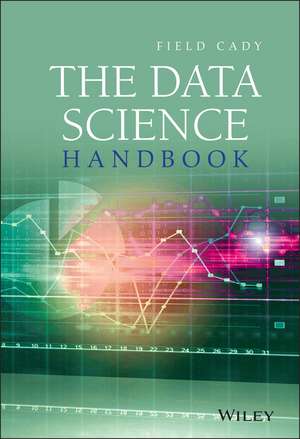
The Data Science Handbook
Autor F Cadyen Limba Engleză Hardback – 13 apr 2017
Adresat în egală măsură dezvoltatorilor software care doresc să stăpânească analiza de date și statisticienilor care au nevoie de competențe solide de programare, The Data Science Handbook funcționează ca un manual tehnic integrat. Remarcăm faptul că autorul, F Cady, valorifică experiența sa de la Google pentru a demitiza conceptul de „unicorn” în data science, oferind o structură care unifică matematica riguroasă cu ingineria software aplicată. Considerăm că punctul forte al acestui volum publicat de Wiley este refuzul de a trata disciplina doar ca pe o aplicare mecanică a unor algoritmi, punând în schimb accent pe gândirea flexibilă și pe înțelegerea conexiunilor dintre seturile de date.
Spre deosebire de alte manuale care se limitează la teorie, acest titlu în format Hardback alocă spații generoase tehnologiilor Big Data și bibliotecilor Python, prezentând cod sursă și studii de caz din industrie. Cititorul care a aplicat ideile din The Data Science Design Manual de Steven S. Skiena va găsi aici elementele care completează viziunea teoretică cu realitățile practice ale fluxului de lucru: de la curățarea datelor și aplicarea algoritmilor de machine learning, până la capitolul crucial despre comunicarea rezultatelor către stakeholderi. Merită menționat că, deși fundamentele matematice sunt prezente, ele sunt explicate intuitiv, prioritizând aplicabilitatea în fața demonstrațiilor abstracte. Structura celor 416 pagini facilitează tranziția de la un nivel intermediar la unul avansat, oferind o perspectivă onestă asupra modului în care un specialist își consumă timpul într-un mediu de producție real.
Preț: 312.58 lei
Preț vechi: 390.72 lei
-20%
Carte disponibilă
Livrare economică 16-30 noiembrie
Specificații
ISBN-10: 1119092949
Pagini: 416
Dimensiuni: 152 x 229 x 26 mm
Greutate: 0.77 kg
Editura: Wiley
Locul publicării:Hoboken, United States
V-ar putea interesa
-
 Foundational Python for Data ScienceKennedy Behrman-20%Preț: 355.84 lei444.81 lei
 -
 Just Enough Data Science and Machine LearningMark LevenePreț: 352.28 lei
 -
 -20%Preț: 76.99 lei96.24 lei
 -
 Practical Computing for BiologistsSteven H. D. Haddock-27%Preț: 797.38 lei1092.30 lei
 -
 Data Science and Big Data AnalyticsEmc Education Services-20%Preț: 405.57 lei506.97 lei
 -
 Data Science Programming All-in-One For DummiesJohn Paul MuellerPreț: 269.20 lei
 -
 R-ticulateMartin Bader-23%Preț: 653.46 lei848.65 lei
 -
 -20%Preț: 192.78 lei240.98 lei
 -
 -9%Preț: 581.31 lei638.79 lei
 -
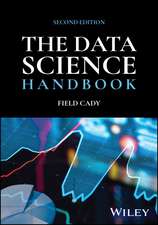 The Data Science HandbookField Cady-19%Preț: 436.65 lei539.08 lei
 -
 Data Science Essentials for DummiesLillian Pierson-20%Preț: 76.56 lei95.69 lei
 -
 The Data Hero PlaybookMalcolm HawkerPreț: 202.67 lei
 -
 Statistical Analysis with Python For DummiesJoseph SchmullerPreț: 197.34 lei
 -
 -15%Preț: 530.61 lei624.25 lei
 -
 Data Science BookcampLeonard Apeltsin-20%Preț: 367.09 lei458.86 lei
 -
 The Well-Grounded Data AnalystDavid AsbothPreț: 349.72 lei
 -
 -37%Preț: 198.14 lei312.88 lei
 -
 Statistics for ScientistsUmberto Michelucci-20%Preț: 279.62 lei349.53 lei
 -
 The Data Science Design ManualSteven S. Skiena-20%Preț: 417.78 lei522.22 lei
 -
 Python Data ScienceChaolemen Borjigin-20%Preț: 545.74 lei682.18 lei
Public țintă
As a resource on data analysis methodology and big data software tools, specifically written for software data science professionals who need to better understand the analytics and mathematics of the discipline as well as researchers who need to learn real–world coding and expand their skill set, i.e. data analysts, statisticians, software developers, software engineers, BI analysts/developer, junior data scientists, managers of data science, and technical executives interested in understanding more of the nuances of the field; as a reference for new graduates seeking entry–level data science positions; as a classroom supplement for advanced undergraduates and entry–level graduate students; and academic and corporate libraries.De ce să citești această carte
Recomandăm această carte profesioniștilor IT și analiștilor BI care vor să treacă dincolo de utilizarea unor tool-uri de tip black-box. Veți câștiga o înțelegere profundă a modului în care limbajul Python și tehnologiile Big Data se îmbină cu statistica clasică pentru a rezolva probleme comerciale. Este un ghid practic, scris de un expert din industrie, esențial pentru oricine vizează o poziție de senioritate în domeniul științei datelor.
Descriere
A comprehensive overview of data science covering the analytics, programming, and business skills necessary to master the discipline Finding a good data scientist has been likened to hunting for a unicorn: the required combination of technical skills is simply very hard to find in one person. In addition, good data science is not just rote application of trainable skill sets; it requires the ability to think flexibly about all these areas and understand the connections between them. This book provides a crash course in data science, combining all the necessary skills into a unified discipline.
Unlike many analytics books, computer science and software engineering are given extensive coverage since they play such a central role in the daily work of a data scientist. The author also describes classic machine learning algorithms, from their mathematical foundations to real-world applications. Visualization tools are reviewed, and their central importance in data science is highlighted.
Classical statistics is addressed to help readers think critically about the interpretation of data and its common pitfalls. The clear communication of technical results, which is perhaps the most undertrained of data science skills, is given its own chapter, and all topics are explained in the context of solving real-world data problems. The book also features: Extensive sample code and tutorials using Python along with its technical libraries Core technologies of Big Data, including their strengths and limitations and how they can be used to solve real-world problems Coverage of the practical realities of the tools, keeping theory to a minimum; however, when theory is presented, it is done in an intuitive way to encourage critical thinking and creativity A wide variety of case studies from industry Practical advice on the realities of being a data scientist today, including the overall workflow, where time is spent, the types of datasets worked on, and the skill sets needed The Data Science Handbook is an ideal resource for data analysis methodology and big data software tools.
The book is appropriate for people who want to practice data science, but lack the required skill sets. This includes software professionals who need to better understand analytics and statisticians who need to understand software. Modern data science is a unified discipline, and it is presented as such.
This book is also an appropriate reference for researchers and entry-level graduate students who need to learn real-world analytics and expand their skill set. FIELD CADY is the data scientist at the Allen Institute for Artificial Intelligence, where he develops tools that use machine learning to mine scientific literature. He has also worked at Google and several Big Data startups.
He has a BS in physics and math from Stanford University, and an MS in computer science from Carnegie Mello