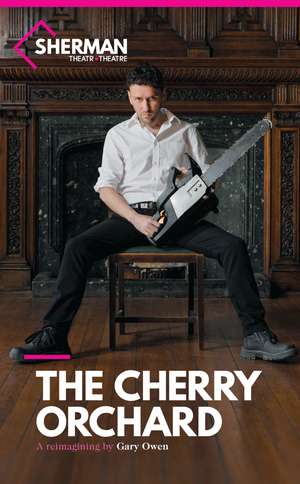
The Cherry Orchard: Oberon Modern Plays
Autor Anton Chekhov Adaptat de Gary Owenen Limba Engleză Paperback – 13 oct 2017
This radical reworking of Chekhov's The Cherry Orchard places the action in early 80s Wales, at the dawn of another revolution - the Thatcher regime.
Bloumfield sits on the sun-kissed south Pembrokeshire coast; a rambling, ramschackle old manor house where Rainey raised her children, surrounded by golden beaches and lush green orchards. But the death of her beloved son and husband sent Rainey fleeing to London, abandoning what remained of her family. Now, with the bank threatening to repossess, Rainey's daughters drag her back to Bloumfield. Rainey will have to face her ghosts - and her furious daughters - or lose everything.
This reworking of Chekhov's play was first performed at the Sherman Theatre, Cardiff.
Din seria Oberon Modern Plays
- 37%
 Preț: 68.52 lei
 - 26%
 Preț: 55.44 lei
 - 21%
 Preț: 145.99 lei
 - 26%
 Preț: 61.88 lei
 - 25%
 Preț: 69.49 lei
 - 26%
 Preț: 57.54 lei
 - 25%
 Preț: 75.68 lei
 - 26%
 Preț: 67.32 lei
 - 26%
 Preț: 67.06 lei
 - 26%
 Preț: 67.45 lei
 - 26%
 Preț: 62.10 lei
 - 25%
 Preț: 68.48 lei
 - 25%
 Preț: 80.64 lei
 -
 Preț: 39.11 lei
 - 14%
 Preț: 64.85 lei
 - 26%
 Preț: 67.32 lei
 - 25%
 Preț: 68.28 lei
 - 25%
 Preț: 68.28 lei
 - 18%
 Preț: 48.63 lei
 - 17%
 Preț: 71.86 lei
 - 24%
 Preț: 71.32 lei
 - 26%
 Preț: 67.88 lei
 - 25%
 Preț: 75.28 lei
 - 25%
 Preț: 68.69 lei
 - 25%
 Preț: 68.69 lei
 - 18%
 Preț: 61.57 lei
 - 23%
 Preț: 87.77 lei
 - 23%
 Preț: 80.73 lei
 - 25%
 Preț: 68.28 lei
 - 25%
 Preț: 65.05 lei
 - 25%
 Preț: 59.74 lei
 - 14%
 Preț: 58.52 lei
 - 43%
 Preț: 47.53 lei
 - 14%
 Preț: 64.00 lei
 - 25%
 Preț: 70.03 lei
 - 26%
 Preț: 67.45 lei
 - 24%
 Preț: 72.17 lei
 - 26%
 Preț: 46.84 lei
 - 25%
 Preț: 68.28 lei
 - 18%
 Preț: 74.77 lei
 - 18%
 Preț: 74.47 lei
 - 25%
 Preț: 68.28 lei
 - 24%
 Preț: 76.55 lei
 - 24%
 Preț: 79.59 lei
 - 26%
 Preț: 67.45 lei
 - 25%
 Preț: 68.32 lei
 - 19%
 Preț: 73.82 lei
 - 25%
 Preț: 70.46 lei
 - 23%
 Preț: 74.35 lei
 - 12%
 Preț: 73.49 lei
Preț: 69.14 lei
Preț vechi: 88.64 lei
-22%
Puncte Express: 104
Carte tipărită la comandă
Livrare economică 04-18 decembrie
Livrare prin curier în România Termenul estimat este afișat lângă disponibilitate.
Transport gratuit de la 400.00 lei Plată online sau ramburs, în funcție de opțiunile comenzii.
Retur gratuit în 14 zile Comandă securizată și suport în română.
Specificații
ISBN-13: 9781786823045
ISBN-10: 1786823047
Pagini: 160
Dimensiuni: 134 x 208 x 12 mm
Greutate: 0.18 kg
Editura: Bloomsbury Publishing
Colecția Oberon Books
Seria Oberon Modern Plays
Locul publicării:London, United Kingdom
ISBN-10: 1786823047
Pagini: 160
Dimensiuni: 134 x 208 x 12 mm
Greutate: 0.18 kg
Editura: Bloomsbury Publishing
Colecția Oberon Books
Seria Oberon Modern Plays
Locul publicării:London, United Kingdom
V-ar putea interesa
-
 Wuthering HeightsEmily BrontëPreț: 28.01 lei
 -
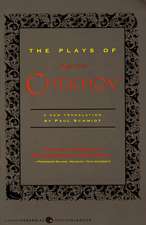 The Plays of Anton ChekhovAnton ChekhovPreț: 108.42 lei
 -
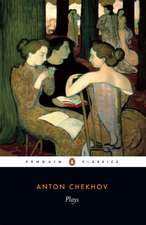 PlaysAnton Chekhov-24%Preț: 60.46 lei79.99 lei
 -
 Death of a SalesmanArthur Miller-28%Preț: 51.08 lei70.66 lei
 -
 Preț: 55.72 lei
 -
 Preț: 176.89 lei
 -
 Preț: 214.17 lei
 -
 Anton Chekhov: Selected StoriesAnton Chekhov-29%Preț: 35.82 lei50.11 lei
 -
 The Singular Life of Albert NobbsSimone Benmussa-13%Preț: 67.92 lei77.86 lei
 -
 Four Plays and Three JokesAnton Chekhov-16%Preț: 97.31 lei115.86 lei
 -
 Crooked DancesMr Robin French-24%Preț: 85.78 lei112.76 lei
 -
 Cash CowOli ForsythPreț: 14.89 lei
 -
 RadioAl Smith-26%Preț: 85.60 lei115.65 lei
 -
 On the Other Hand, We're HappyDaf James-24%Preț: 85.60 lei112.67 lei
 -
 Adapting Chekhov in the 21st Century: Seven Contemporary PlaysFrances Babbage-20%Preț: 189.58 lei237.90 lei
 -
 The Changeling: Revised EditionThomas Middleton-18%Preț: 72.72 lei89.10 lei
 -
 Uncle VanyaAnton Pavlovich ChekhovPreț: 42.62 lei
 -
 The SeagullAnton ChekhovPreț: 28.13 lei
 -
 IvanovAnton ChekhovPreț: 31.07 lei
 -
 Uncle VanyaAnton ChekhovPreț: 31.69 lei
 -
 Three SistersAnton ChekhovPreț: 31.11 lei
 -
 The Three Theban PlaysSophoclesPreț: 45.74 lei
 -
 Chekhov Selected StoriesAnton ChekhovPreț: 56.62 lei
 -
 Women Centre StageSue ParrishPreț: 99.30 lei
 -
 CaterpillarAlison CarrPreț: 72.87 lei
 -
 An Inspector Calls: Annotation-Friendly EditionJ. B. PriestleyPreț: 86.45 lei
 -
 CuttingsOllie George Clarke-11%Preț: 67.49 lei75.99 lei
 -
 Preț: 34.20 lei
 -
 Long Day's Journey into NightEugene O'NeillPreț: 57.13 lei
Recenzii
Now Chekhov's final and finest play, from 1903, is the latest twentieth-century masterpiece to get a good going-over. Actually, make that an excellent going-over . . . It's been pruned, yes, but this grimly witty tragicomedy is unmistakably Chekhov . . . and it teems with life.
Stephens [has] refocussed Chekhov's play into a potent study in feminine - rather than societal - collapse.
Chekhov was superb on the destructive impact of people who take no heed: who turn other people's lives upside down (Uncle Vanya) or blithely ignore warnings (Cherry Orchard). He was superb too on those who can see the dangers, but are powerless to do anything. Little wonder then, that these great plays feel so painfully pertinent now to audiences keenly aware of intractable global problems. Little wonder either that contemporary theatre-makers seek to meet his works in the spirit of innovation.
If Chekhov were planning a revenant visit to see how his work fares in England in the 21 century, this would be an opportune moment to come.
Revivals of classic plays are the lifeblood of theatre. They are the way in which the art form tests the reputation, relevance and validity of the masterpieces of the past.
Stephens [has] refocussed Chekhov's play into a potent study in feminine - rather than societal - collapse.
Chekhov was superb on the destructive impact of people who take no heed: who turn other people's lives upside down (Uncle Vanya) or blithely ignore warnings (Cherry Orchard). He was superb too on those who can see the dangers, but are powerless to do anything. Little wonder then, that these great plays feel so painfully pertinent now to audiences keenly aware of intractable global problems. Little wonder either that contemporary theatre-makers seek to meet his works in the spirit of innovation.
If Chekhov were planning a revenant visit to see how his work fares in England in the 21 century, this would be an opportune moment to come.
Revivals of classic plays are the lifeblood of theatre. They are the way in which the art form tests the reputation, relevance and validity of the masterpieces of the past.
Notă biografică
Anton Chekhov, Russian dramatist and short-story writer, was born in 1860, the son of a grocer and the grandson of a serf. After graduating in medicine from Moscow University in 1884, he began to make his name in the theatre with the one-act comedies The Bear, The Proposal and The Wedding. His earliest full-length plays, Ivanov (1887) and The Wood Demon (1889), were not successful, and The Seagull, produced in 1896, was a failure until a triumphant revival by the Moscow Art Theatre in 1898. This was followed by Uncle Vanya (1899), Three Sisters (1901) and The Cherry Orchard (1904), shortly after the production of which Chekhov died. The first English translations of his plays were performed within five years of his death.