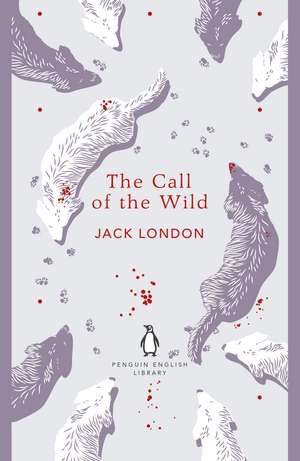
The Call of the Wild: The Penguin English Library
Autor Jack Londonen Limba Engleză Paperback – 7 iun 2018
The biting cold and the aching silence of the far North become an unforgettable backdrop for Jack London's vivid, rousing, superbly realistic wilderness adventure stories featuring the author's unique knowledge of the Yukon and the behavior of humans and animals facing nature at its cruelest.
The Penguin English Library - collectable general readers' editions of the best fiction in English, from the eighteenth century to the end of the Second World War.
Din seria The Penguin English Library
-
 Preț: 45.37 lei
 - 26%
 Preț: 48.46 lei
 - 26%
 Preț: 48.87 lei
 - 27%
 Preț: 46.90 lei
 - 27%
 Preț: 47.19 lei
 - 33%
 Preț: 48.96 lei
 - 28%
 Preț: 45.61 lei
 - 24%
 Preț: 56.53 lei
 - 28%
 Preț: 46.24 lei
 -
 Preț: 71.50 lei
 - 28%
 Preț: 46.16 lei
 - 27%
 Preț: 47.30 lei
 - 24%
 Preț: 50.51 lei
 - 29%
 Preț: 45.23 lei
 - 27%
 Preț: 46.82 lei
 - 22%
 Preț: 64.45 lei
 - 25%
 Preț: 49.62 lei
 - 29%
 Preț: 45.63 lei
 - 31%
 Preț: 50.86 lei
 - 26%
 Preț: 48.13 lei
 - 28%
 Preț: 46.63 lei
 - 19%
 Preț: 68.34 lei
 - 28%
 Preț: 59.35 lei
 - 27%
 Preț: 47.60 lei
 - 24%
 Preț: 51.02 lei
 - 23%
 Preț: 62.08 lei
 - 28%
 Preț: 45.85 lei
 - 18%
 Preț: 52.68 lei
 - 21%
 Preț: 59.80 lei
 - 24%
 Preț: 56.68 lei
 -
 Preț: 63.54 lei
 - 27%
 Preț: 46.80 lei
 - 25%
 Preț: 49.35 lei
 - 27%
 Preț: 47.52 lei
 - 32%
 Preț: 49.28 lei
 - 28%
 Preț: 46.44 lei
 - 33%
 Preț: 48.57 lei
 - 29%
 Preț: 45.23 lei
 - 27%
 Preț: 47.46 lei
 -
 Preț: 64.27 lei
 - 28%
 Preț: 45.79 lei
 - 26%
 Preț: 48.75 lei
 -
 Preț: 57.96 lei
 - 27%
 Preț: 46.96 lei
 - 32%
 Preț: 49.56 lei
 - 29%
 Preț: 45.32 lei
 - 33%
 Preț: 48.23 lei
 - 27%
 Preț: 47.82 lei
 - 26%
 Preț: 48.16 lei
 - 23%
 Preț: 57.13 lei
Preț: 46.07 lei
Preț vechi: 64.06 lei
-28%
Carte disponibilă
Livrare economică 05-11 noiembrie
Livrare express 17-23 octombrie pentru 33.92 lei
Specificații
ISBN-10: 0241341493
Pagini: 147
Dimensiuni: 131 x 198 x 12 mm
Greutate: 0.13 kg
Editura: Penguin Books
Colecția Penguin Classics
Seria The Penguin English Library
Locul publicării:London, United Kingdom
V-ar putea interesa
-
 In Search of Lost Time, Vol 4Marcel Proust-16%Preț: 67.63 lei80.90 lei
 -
 Brave New WorldAldous HuxleyPreț: 58.67 lei
 -
 MythologiesRoland Barthes-38%Preț: 56.84 lei91.89 lei
 -
 Postwar: A History of Europe Since 1945Tony Judt-15%Preț: 107.50 lei127.06 lei
 -
 The Age Of UnreasonCharles B. HandyPreț: 90.63 lei
 -
 The Revenge of GaiaJames Lovelock-21%Preț: 61.73 lei77.71 lei
 -
 HerzogSaul Bellow-25%Preț: 59.98 lei79.75 lei
 -
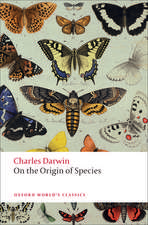 On the Origin of SpeciesCharles Darwin-17%Preț: 55.07 lei66.24 lei
 -
 Exploring the World of Lucid DreamingStephen LabergePreț: 62.17 lei
 -
 Preț: 219.34 lei
 -
 Things Fall ApartChinua AchebePreț: 146.05 lei
 -
 On Becoming a LeaderWarren G. Bennis-15%Preț: 116.71 lei137.17 lei
 -
 The Shock of the NewRobert Hughes-17%Preț: 238.67 lei286.84 lei
 -
 A Brief History of TimeStephen HawkingPreț: 104.98 lei
 -
 The Book of Laughter and ForgettingMilan KunderaPreț: 71.46 lei
 -
 The Charterhouse of ParmaStendhalPreț: 125.11 lei
 -
 Men Without WomenErnest HemingwayPreț: 91.56 lei
 -
 The Story of ArtE. H. Gombrich-18%Preț: 252.81 lei306.49 lei
 -
 Preț: 377.96 lei
 -
 Thus Spake ZarathustraFriedrich Wilhelm NietzschePreț: 332.94 lei
 -
 The Count of Monte CristoAlexandre Dumas-26%Preț: 146.72 lei199.46 lei
 -
 The Portrait Of A LadyHenry James-15%Preț: 95.65 lei112.84 lei
 -
 If On A Winter's Night A TravellerItalo Calvino-18%Preț: 88.53 lei107.71 lei
Notă biografică
Cuprins
References and Abbreviations
Illustrations
Introduction
Jack London: A Brief Chronology
A Note on the Text
The Call of the Wild
Appendix A: The Klondike in Reality and Myth
- From Tappan Adney, The Klondike Stampede (1900)
- From A.C. Harris, Alaska and the Klondike Gold Fields (1897)
- From Charles G.D. Roberts, The Kindred of the Wild:A Book of Animal Life (1902)
- From Charles Darwin, The Variation of Animals and Plants under Domestication (1868)
- From Charles Darwin, The Descent of Man, and Selection in Relation to Sex (1871)
- From Charles Darwin, The Expression of the Emotions in Man and Animals (1872)
- From Edward Jesse, Anecdotes of Dogs (1858)
- From Tappan Adney, The Klondike Stampede (1900)
- From Jack London, “Husky—The Wolf-Dog of the North” (1900)
- From Herbert Spencer, The Principles of Psychology (1855, 1890)
- From Ernst Haeckel, The History of Creation (1868, 1880)
- From Samuel Butler, Life and Habit (1878)
- From Charles Darwin, The Variation of Animals and Plants under Domestication (1868)
- John Myers O’Hara, “Atavism” (1902)
Jack London, “Bâtard” (1902, 1904)
Appendix G: Extracts from London’s Correspondence (1902–1916)
- From Letter to Cloudesley Johns (6 January 1902)
- From Letter to Anna Strunsky (11 February 1902)
- From Letter to George P. Brett (28 April 1902)
- From Letter to George P. Brett (21 November 1902)
- From Letter to Anna Strunsky (20 December 1902)
- From Letter to Anna Strunsky (7 January 1903)
- From Letter to George P. Brett (12 February 1903)
- From Letter to George P. Brett (25 February 1903)
- From Letter to George P. Brett (10 March 1903)
- From Letter to Anna Strunsky (13 March 1903)
- From Letter to George P. Brett (25 March 1903)
- From Letter to George P. Brett (2 April 1903)
- From Letter to George P. Brett (10 April 1903)
- From Letter to George P. Brett (24 July 1903)
- From Letter to George P. Brett (10 August 1903)
- From Letter to George P. Brett (15 August 1903)
- From Letter to Merle Maddern (28 August 1903)
- From Letter to Marshall Bond (17 December 1903)
- From Letter to George P. Brett (5 December 1904)
- From Letter to John M. O’Hara (25 July 1907)
- From Letter to Karl E. Harriman (12 December 1910)
- From Letter to Edgar G. Sisson (30 January 1915)
- From Letter to Frank A. Garbutt (5 February 1915)
- From Letter to H.E. Kelsey (3 April 1915)
- From Letter to Loen Weilskov (16 October 1916)
- From New York Times Saturday Review of Books and Art (25 July 1903)
- From Outlook (25 July 1903)
- From George Hamlin Fitch, San Francisco Chronicle (2 August 1903)
- From Argonaut (3 August 1903)
- From Mary Calkins Brooke, [San Francisco] Bulletin (23 August 1903)
- From Athenaeum (29 August 1903)
- From Comrade (September 1903)
- From Florence Jackson, Overland Monthly (September 1903)
- From J. Stewart Doubleday, Reader (September 1903)
- From Literary Digest (3 October 1903)
- From Nation (8 October 1903)
- From H.W. Boynton, Atlantic Monthly (November 1903)
- From Egerton R.Young, My Dogs in the Northland (1902)
- From Jack London, The Call of the Wild (1903)
- From L.A.M. Bosworth and Jack London, “Is Jack London a Plagiarist?” (14 February 1907)
- From “Against Jack London,” New York Times Saturday Review of Books (23 February 1907)
- From Egerton R.Young, letter in New York Times, Saturday Review of Books (9 March 1907)
- From Jack London, letter to Egerton R.Young (18 March 1907)
- Map 1. To the Northland
- Map 2. The Klondike Trail
- Map 3. Salt Water
Descriere
Buck, a loving and docile St. Bernard mix becomes forcibly changed when he is nabbed from his home in sunny California and sold into service as an Alaskan sled dog.
Forced to endure the harsh climate of the Yukon backcountry, Buck becomes progressively more savage in an effort to stay alive among the other dogs in the pack. Relying on primal instincts, Buck emerges as an intimidating and fearless leader in the wild.
Jack London's most famous tale is a stark reminder of how important it is to trust one's instincts. Though examined through the eyes of a dog, The Call of The Wild is a tale far greater than that of a life lived on four paws. London's intention is clear: When faced with dire and inhumane conditions, there is nothing left to do but revert to a wild state fight to stay alive.
With a new note about the author, and a cleanly typeset manuscript, this edition of London's poignant tale resonates just as profoundly as when it was originally published in 1903. A new film adaptation of this novel starring Harrison Ford and Omar Sy released in 2020.
Recenzii
This Broadview Edition includes a critical introduction that explores London’s life and legacy and the complex scientific and psychological ideas drawn upon by London in writing the story. The appendices include material on the Klondike, Darwin’s writings on dogs, other contemporary writings on instinct and atavism, and maps of the regions in which the story takes place.
“This is the best scholarly edition of The Call of the Wild currently available, with a superb, wide-ranging introduction by Nicholas Ruddick that is a model of judicious lucidity. The edition is also greatly enhanced by a series of fascinating primary documents situating the novella in an array of turn-of-the-twentieth-century cultural contexts, including the Klondike gold rush, Darwin on dogs and men, theories of atavism and instinct, and controversies surrounding charges of plagiarism against Jack London. Highly recommended.” — Jonathan Auerbach, University of Maryland