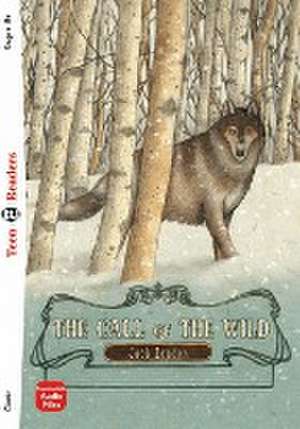
The Call of the Wild: Teen ELI Readers
Autor Jack Londonen Limba Engleză Paperback – iul 2022
London lived for most of a year in the Yukon collecting material for the book. The story was serialized in the Saturday Evening Post in the summer of 1903; a month later it was released in book form. The novel's great popularity and success made a reputation for London. Much of its appeal derives from the simplicity of this tale of survival. As early as 1908 the story was adapted to film and it has since seen several more cinematic adaptations.
Background
By 1897, California native Jack London had traveled around the United States as a hobo, returned to California to finish high school (he dropped out at age 14), and spent a year in college at Berkeley. He then traveled to the Klondike by way of Alaska during the height of the Klondike Gold Rush, later saying of the experience: "It was in the Klondike I found myself." Leaving California in July, he traveled to Dyea, where he went inland. To reach the gold fields, he and his party transported their gear over the Chilkoot Pass, often carrying on their backs loads of up to 100 pounds (45 kg). They staked claims to eight gold mines along the Stewart River.
London stayed in the Klondike for almost a year. He lived for a time in the frontier town of Dawson City, before moving to a nearby winter camp, where he spent the winter reading books he had brought: Charles Darwin's The Origin of the Species; and John Milton's Paradise Lost. In the winter of 1898, Dawson City (today mostly deserted) was a city with about 30,000 miners, a saloon, an opera house, and a street of brothels.
In the spring of 1898, as the annual gold stampeders began to stream into the area, London left. He had contracted scurvy, common in the Arctic winters, where fresh produce was unavailable. When London's gums began to swell he decided to return to California. With his companions, he rafted 2,000 miles (3,200 km) down the Yukon River, through portions of the wildest territory in the region, until they reached St. Michael, where he hired himself out on a boat and returned to San Francisco.
In Alaska, London found material that inspired him to write the novella The Call of the Wild. Dyea Beach was the primary point of arrival for miners at the time London visited, but without a harbor access was treacherous, so Skagway became the new arrival point. From there, to reach the Klondike prospectors had to navigate the White Pass, which became known as "Dead Horse Pass," with horse carcasses littering the route; it was too steep and harsh for them to survive the ascent. Dogs began to replace horses to transport material over the pass, and at this time strong dogs with thick fur were "much desired, scarce and high in price."
London would have seen many dogs, especially prized Husky sled dogs, in Dawson City and in winter camps close to the main sled route. He became friends with Marshall Latham Bond and his brother Louis Whitford Bond, who owned a mixed St. Bernard-Scotch Collie dog; in a letter to his friend London later wrote: "Yes, Buck is based on your dog at Dawson." Beinecke Library at Yale University holds a photograph of Bond's dog, taken during London's stay in the Klondike in 1897. The depiction of the California ranch in the beginning of the story was based on the Bond family ranch.
Din seria Teen ELI Readers
-
 Preț: 89.33 lei
 -
 Preț: 92.49 lei
 -
 Preț: 86.76 lei
 -
 Preț: 75.32 lei
 -
 Preț: 92.77 lei
 -
 Preț: 92.56 lei
 -
 Preț: 92.21 lei
 -
 Preț: 88.43 lei
 -
 Preț: 97.95 lei
 -
 Preț: 89.71 lei
 -
 Preț: 89.93 lei
 -
 Preț: 101.70 lei
 -
 Preț: 87.97 lei
 -
 Preț: 88.82 lei
 -
 Preț: 87.58 lei
 -
 Preț: 91.61 lei
 -
 Preț: 89.40 lei
 -
 Preț: 88.82 lei
 -
 Preț: 87.80 lei
 -
 Preț: 90.56 lei
 -
 Preț: 76.15 lei
 -
 Preț: 78.27 lei
 -
 Preț: 71.33 lei
 -
 Preț: 76.22 lei
 -
 Preț: 80.04 lei
 -
 Preț: 80.04 lei
 -
 Preț: 79.10 lei
 -
 Preț: 76.30 lei
 -
 Preț: 76.22 lei
 -
 Preț: 81.80 lei
 -
 Preț: 76.30 lei
 -
 Preț: 87.63 lei
 -
 Preț: 84.19 lei
 -
 Preț: 85.55 lei
Preț: 92.11 lei
Carte disponibilă
Livrare economică 14-20 mai
Livrare express 01-07 mai pentru 18.55 lei
Specificații
ISBN-10: 312514535X
Pagini: 80
Dimensiuni: 149 x 209 x 6 mm
Greutate: 0.14 kg
Editura: Klett Sprachen GmbH
Seria Teen ELI Readers
V-ar putea interesa
-
 In Search of Lost Time, Vol 4Marcel Proust-18%Preț: 64.38 lei78.06 lei
 -
 Brave New WorldAldous HuxleyPreț: 54.85 lei
 -
 MythologiesRoland Barthes-39%Preț: 53.55 lei87.67 lei
 -
 Postwar: A History of Europe Since 1945Tony Judt-17%Preț: 100.52 lei121.05 lei
 -
 The Revenge of GaiaJames Lovelock-20%Preț: 59.88 lei75.19 lei
 -
 HerzogSaul Bellow-19%Preț: 56.08 lei69.36 lei
 -
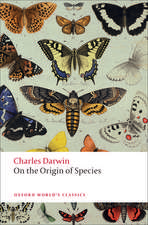 On the Origin of SpeciesCharles Darwin-18%Preț: 51.77 lei63.19 lei
 -
 Preț: 203.96 lei
 -
 Things Fall ApartChinua AchebePreț: 141.44 lei
 -
 On Becoming a LeaderWarren G. Bennis-16%Preț: 111.91 lei133.09 lei
 -
 The Shock of the NewRobert Hughes-18%Preț: 224.84 lei273.91 lei
 -
 A Brief History of TimeStephen HawkingPreț: 114.93 lei
 -
 The Book of Laughter and ForgettingMilan KunderaPreț: 69.08 lei
 -
 The Charterhouse of ParmaStendhalPreț: 127.29 lei
 -
 Men Without WomenErnest HemingwayPreț: 83.63 lei
 -
 The Story of ArtE. H. Gombrich-19%Preț: 236.40 lei292.23 lei
 -
 Preț: 361.06 lei
 -
 Thus Spake ZarathustraFriedrich Wilhelm NietzschePreț: 316.93 lei
 -
 The Count of Monte CristoAlexandre Dumas-27%Preț: 138.23 lei190.30 lei
 -
 The Portrait Of A LadyHenry James-17%Preț: 89.57 lei107.50 lei
 -
 Anna KareninaLeo Tolstoy-20%Preț: 114.97 lei143.55 lei
 -
 If On A Winter's Night A TravellerItalo Calvino-19%Preț: 84.76 lei104.44 lei
Notă biografică
London wurde als uneheliches Kind einer Frau aus gutem Hause und eines unsteten Astrologen und Wanderpredigers geboren, der die Vaterschaft abstritt. Als seine Mutter den Geschäftsmann John London heiratete, nahm dieser ihn als seinen Sohn an.
Da der Stiefvater Invalide wurde, wuchs London in ärmlichen Verhältnissen auf und musste schon in seiner Kindheit Geld verdienen. Mit 14 brach er die Schule ab und lief weg. Er begann ein Leben als Landstreicher, Abenteurer und Matrose. 1895 absolvierte er nachträglich seinen Abschluss auf der High School und besuchte dann die Universität von Berkeley. Sein Studium beendete er nicht.
1897 brach London stattdessen zum großen Goldrausch nach Klondike auf - jedoch erfolglos. Zurück in Kalifornien gelang ihm der Durchbruch als Schriftsteller, und er heiratete seine erste Frau, mit der er zwei Kinder bekam. Schon nach vier Jahren folgte die Scheidung und London brach mit seiner Yacht zu Abenteuerreisen nach Hawaii und Australien auf. 1905 heiratete er erneut und führte bis zu seinem Tod eine glückliche Ehe. 1910 zog das Paar auf eine Ranch, die London als sein eigentliches Lebenswerk betrachtete. Seine letzten Jahre waren allerdings geprägt von Depressionen und Alkoholkonsum.
London verfasste ab 1900 hunderte von Romanen, Kurzgeschichten und Reportagen, die auch Vorlage für zahlreiche Verfilmungen wurden. Darunter die Welterfolge "The Call of the Wild", "The Sea-Wolf" und "White Fang". Sein Hauptthema: die Spannung zwischen Natur und Kultur.
Jack London starb im Alter von 40 Jahren am 22. November 1916 auf seiner Ranch an akutem Nierenversagen, doch auch über Selbstmord wird bis heute spekuliert.
Descriere
Buck, a loving and docile St. Bernard mix becomes forcibly changed when he is nabbed from his home in sunny California and sold into service as an Alaskan sled dog.
Forced to endure the harsh climate of the Yukon backcountry, Buck becomes progressively more savage in an effort to stay alive among the other dogs in the pack. Relying on primal instincts, Buck emerges as an intimidating and fearless leader in the wild.
Jack London's most famous tale is a stark reminder of how important it is to trust one's instincts. Though examined through the eyes of a dog, The Call of The Wild is a tale far greater than that of a life lived on four paws. London's intention is clear: When faced with dire and inhumane conditions, there is nothing left to do but revert to a wild state fight to stay alive.
With a new note about the author, and a cleanly typeset manuscript, this edition of London's poignant tale resonates just as profoundly as when it was originally published in 1903. A new film adaptation of this novel starring Harrison Ford and Omar Sy released in 2020.
Cuprins
References and Abbreviations
Illustrations
Introduction
Jack London: A Brief Chronology
A Note on the Text
The Call of the Wild
Appendix A: The Klondike in Reality and Myth
- From Tappan Adney, The Klondike Stampede (1900)
- From A.C. Harris, Alaska and the Klondike Gold Fields (1897)
- From Charles G.D. Roberts, The Kindred of the Wild:A Book of Animal Life (1902)
- From Charles Darwin, The Variation of Animals and Plants under Domestication (1868)
- From Charles Darwin, The Descent of Man, and Selection in Relation to Sex (1871)
- From Charles Darwin, The Expression of the Emotions in Man and Animals (1872)
- From Edward Jesse, Anecdotes of Dogs (1858)
- From Tappan Adney, The Klondike Stampede (1900)
- From Jack London, “Husky—The Wolf-Dog of the North” (1900)
- From Herbert Spencer, The Principles of Psychology (1855, 1890)
- From Ernst Haeckel, The History of Creation (1868, 1880)
- From Samuel Butler, Life and Habit (1878)
- From Charles Darwin, The Variation of Animals and Plants under Domestication (1868)
- John Myers O’Hara, “Atavism” (1902)
Jack London, “Bâtard” (1902, 1904)
Appendix G: Extracts from London’s Correspondence (1902–1916)
- From Letter to Cloudesley Johns (6 January 1902)
- From Letter to Anna Strunsky (11 February 1902)
- From Letter to George P. Brett (28 April 1902)
- From Letter to George P. Brett (21 November 1902)
- From Letter to Anna Strunsky (20 December 1902)
- From Letter to Anna Strunsky (7 January 1903)
- From Letter to George P. Brett (12 February 1903)
- From Letter to George P. Brett (25 February 1903)
- From Letter to George P. Brett (10 March 1903)
- From Letter to Anna Strunsky (13 March 1903)
- From Letter to George P. Brett (25 March 1903)
- From Letter to George P. Brett (2 April 1903)
- From Letter to George P. Brett (10 April 1903)
- From Letter to George P. Brett (24 July 1903)
- From Letter to George P. Brett (10 August 1903)
- From Letter to George P. Brett (15 August 1903)
- From Letter to Merle Maddern (28 August 1903)
- From Letter to Marshall Bond (17 December 1903)
- From Letter to George P. Brett (5 December 1904)
- From Letter to John M. O’Hara (25 July 1907)
- From Letter to Karl E. Harriman (12 December 1910)
- From Letter to Edgar G. Sisson (30 January 1915)
- From Letter to Frank A. Garbutt (5 February 1915)
- From Letter to H.E. Kelsey (3 April 1915)
- From Letter to Loen Weilskov (16 October 1916)
- From New York Times Saturday Review of Books and Art (25 July 1903)
- From Outlook (25 July 1903)
- From George Hamlin Fitch, San Francisco Chronicle (2 August 1903)
- From Argonaut (3 August 1903)
- From Mary Calkins Brooke, [San Francisco] Bulletin (23 August 1903)
- From Athenaeum (29 August 1903)
- From Comrade (September 1903)
- From Florence Jackson, Overland Monthly (September 1903)
- From J. Stewart Doubleday, Reader (September 1903)
- From Literary Digest (3 October 1903)
- From Nation (8 October 1903)
- From H.W. Boynton, Atlantic Monthly (November 1903)
- From Egerton R.Young, My Dogs in the Northland (1902)
- From Jack London, The Call of the Wild (1903)
- From L.A.M. Bosworth and Jack London, “Is Jack London a Plagiarist?” (14 February 1907)
- From “Against Jack London,” New York Times Saturday Review of Books (23 February 1907)
- From Egerton R.Young, letter in New York Times, Saturday Review of Books (9 March 1907)
- From Jack London, letter to Egerton R.Young (18 March 1907)
- Map 1. To the Northland
- Map 2. The Klondike Trail
- Map 3. Salt Water
Textul de pe ultima copertă
Recenzii
This Broadview Edition includes a critical introduction that explores London’s life and legacy and the complex scientific and psychological ideas drawn upon by London in writing the story. The appendices include material on the Klondike, Darwin’s writings on dogs, other contemporary writings on instinct and atavism, and maps of the regions in which the story takes place.
“This is the best scholarly edition of The Call of the Wild currently available, with a superb, wide-ranging introduction by Nicholas Ruddick that is a model of judicious lucidity. The edition is also greatly enhanced by a series of fascinating primary documents situating the novella in an array of turn-of-the-twentieth-century cultural contexts, including the Klondike gold rush, Darwin on dogs and men, theories of atavism and instinct, and controversies surrounding charges of plagiarism against Jack London. Highly recommended.” — Jonathan Auerbach, University of Maryland