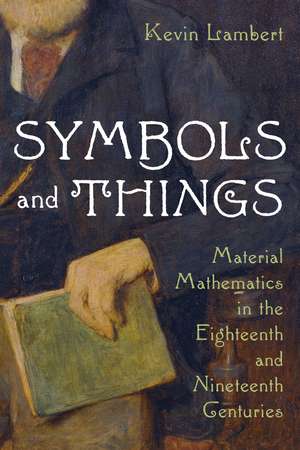
Symbols and Things: Material Mathematics in the Eighteenth and Nineteenth Centuries: Sci & Culture in the Nineteenth Century
Autor Kevin Lamberten Limba Engleză Hardback – 12 oct 2021
Ne-a atras atenția modul în care Symbols and Things redefinește istoria matematicii, mutând accentul de la abstracțiunea pură către suportul material care a făcut posibilă circulația ideilor în secolele XVIII și XIX. Structura volumului este organizată tematic, fiecare capitol fiind dedicat unui obiect sau unui ansamblu de obiecte — de la manuale și jurnale de specialitate, până la scrisori și diagrame — care au constituit mediul de lucru al matematicienilor britanici. Metodologia autorului Kevin Lambert tratează matematica nu ca pe un efort izolat, ci ca pe o activitate profund ancorată în realitățile erei industriale, unde fabricarea instrumentelor de scris și extinderea rețelei feroviare au influențat direct ritmul descoperirilor.
Suntem de părere că această abordare este esențială pentru a înțelege cum figuri precum George Green sau William Rowan Hamilton au reușit să colaboreze și să își propage teoriile. Cartea demonstrează că ecuațiile și tabelele din manuscrise nu erau doar simboluri, ci urme tangibile ale unei rețele sociale și tehnologice vaste. Lucrarea extinde cadrul propus de A Cultural History of Mathematics in the Nineteenth Century de Tom Archibald prin adăugarea unei perspective axate pe cultura materială și pe tehnologiile de comunicare specifice perioadei victoriene. În timp ce alte istorii se concentrează pe evoluția conceptelor, Kevin Lambert investighează „taskscape-ul” britanic, oferind o analiză detaliată a modului în care tipăriturile și sistemul poștal au servit drept infrastructură pentru gândirea abstractă. Cele 30 de ilustrații alb-negru incluse completează argumentația, oferind cititorului o imagine clară a acestui univers matematic industrializat.
Din seria Sci & Culture in the Nineteenth Century
-
 Preț: 450.56 lei
 - 19%
 Preț: 481.10 lei
 - 19%
 Preț: 437.55 lei
 -
 Preț: 399.36 lei
 -
 Preț: 442.76 lei
 -
 Preț: 238.31 lei
 -
 Preț: 467.68 lei
 -
 Preț: 393.63 lei
 -
 Preț: 407.14 lei
 -
 Preț: 426.92 lei
 -
 Preț: 480.65 lei
 -
 Preț: 448.75 lei
 -
 Preț: 430.77 lei
 -
 Preț: 433.33 lei
 - 19%
 Preț: 440.30 lei
 -
 Preț: 503.14 lei
 -
 Preț: 397.08 lei
 -
 Preț: 444.79 lei
 -
 Preț: 443.78 lei
 -
 Preț: 465.03 lei
 -
 Preț: 358.99 lei
 -
 Preț: 393.04 lei
 -
 Preț: 428.47 lei
 -
 Preț: 286.39 lei
 -
 Preț: 390.18 lei
 -
 Preț: 387.66 lei
 -
 Preț: 387.66 lei
 -
 Preț: 299.61 lei
 -
 Preț: 423.22 lei
 -
 Preț: 392.52 lei
 -
 Preț: 422.07 lei
 -
 Preț: 428.47 lei
 -
 Preț: 389.93 lei
 -
 Preț: 388.79 lei
 -
 Preț: 391.54 lei
 -
 Preț: 388.81 lei
 - 19%
 Preț: 448.04 lei
 -
 Preț: 291.24 lei
 -
 Preț: 290.04 lei
 -
 Preț: 387.43 lei
 -
 Preț: 388.81 lei
 -
 Preț: 318.59 lei
 -
 Preț: 388.81 lei
 -
 Preț: 453.34 lei
 -
 Preț: 383.99 lei
 -
 Preț: 389.20 lei
 -
 Preț: 402.34 lei
 -
 Preț: 422.07 lei
 -
 Preț: 386.51 lei
Preț: 432.89 lei
Carte disponibilă
Livrare economică 07-21 noiembrie
Specificații
ISBN-10: 0822946831
Pagini: 330
Ilustrații: 30 b&w illustrations
Dimensiuni: 152 x 229 x 33 mm
Greutate: 0.65 kg
Ediția:1
Editura: University of Pittsburgh Press
Colecția University of Pittsburgh Press
Seria Sci & Culture in the Nineteenth Century
De ce să citești această carte
Recomandăm această carte cercetătorilor și pasionaților de istoria științei care doresc să înțeleagă matematica dincolo de formule. Cititorul va descoperi cum inovațiile tehnologice ale epocii victoriene, de la producția de hârtie la căile ferate, au modelat gândirea matematică modernă. Este o analiză fascinantă despre intersecția dintre obiectele cotidiene și ideile geniale care au definit secolul al XIX-lea.
Despre autor
Kevin Lambert este un cercetător specializat în istoria științei și a culturii materiale, cu un interes deosebit pentru perioada victoriană. Prin studiile sale, Lambert explorează modul în care contextul social și tehnologic influențează producerea cunoașterii științifice. În lucrarea de față, publicată în seria Sci & Culture in the Nineteenth Century, autorul își valorifică expertiza pentru a demonstra că matematica nu este o disciplină ruptă de lume, ci una modelată activ de uneltele și mediul fizic în care este practicată.
Descriere scurtă
Recenzii
—Centaurus
“This is a book about British mathematicians: how they worked and changed their material environment—their taskscape—and how that environment changed them. Mathematicians, like all other people, think through and with their taskscape. It is the mathematician’s task to bring mathematics to ever-greater heights. As a historian, Lambert brings it back to earth in a most fascinating, well documented, and scholarly narrative that involves museums, notebooks, scientific societies, post offices, libraries and a battery of many more elements in society.” —Metascience
“This book should stimulate lively discussions among specialists about the potential new insights and unavoidable limitations of the methodology.” —CHOICE
“Kevin Lambert’s Symbols and Things is a remarkable piece of work that has the promise to significantly expand our understandings of the ways mathematical ideas develop in their historical contexts. Lambert’s focus is on developments in Victorian mathematics and physics, but the implications of his mode of analysis stretch far beyond the constraints of that depiction. His understanding of mathematicians as engaged in ‘mindful work’ allows him to recognize their essential ties to the work of builders, painters, poets, theologians, and natural philosophers. In Lambert’s construction, the textbooks, journals, libraries, museums, diagrams, notebooks, and personal letters in which mathematics was embedded become the tips of icebergs of material, social, and political development. The result is a breathtakingly original study that at once recasts understandings of the nature of mathematics and sheds new light on the Victorian culture in which it developed.”—Joan Richards, Brown University