
Structure and Geometry of Lie Groups: Springer Monographs in Mathematics
Autor Joachim Hilgert, Karl-Hermann Neeben Limba Engleză Paperback – 25 ian 2014
Structura și metodologia volumului Structure and Geometry of Lie Groups reflectă o abordare pedagogică riguroasă, organizată în cinci părți distincte care facilitează tranziția de la conceptele elementare la cercetarea avansată. Găsim în această lucrare o progresie logică ce debutează cu studiul grupurilor matriceale și al exponențialei, trecând prin algebra Lie și varietăți, pentru a culmina cu o analiză detaliată a structurilor globale. Notăm cu interes modul în care Joachim Hilgert și Karl-Hermann Neeb reușesc să echilibreze rigoarea algebrică cu perspectivele geometrice, punând un accent deosebit pe spațiile omogene și structurile geometrice invariante.
Considerăm că acest volum ocupă un loc central în opera autorilor, făcând trecerea de la textele lor cu caracter de orientare generală, precum Mathematical Structures, către o specializare profundă în domeniul simetriei și al structurilor geometrice. În timp ce lucrările lor anterioare ofereau o hartă a disciplinelor matematice, acest tratat de peste 700 de pagini plonjează în mecanismele interne ale grupurilor Lie, explorând teme complexe precum descompunerea rădăcinilor și liniaritatea.
În contextul literaturii de specialitate, Structure and Geometry of Lie Groups completează perspectiva oferită de Matrix Groups de Andrew Baker. Dacă lucrarea lui Baker servește drept introducere pentru studenții din anii terminali ai licenței, focalizându-se pe grupuri compacte, volumul de față extinde semnificativ orizontul teoretic către aspecte globale și reprezentări complexe, fiind o resursă mult mai cuprinzătoare pentru nivelul de doctorat. De asemenea, spre deosebire de abordarea locală istorică menționată în Lie Groups de J. J. Duistermaat, Hilgert și Neeb integrează geometria diferențială modernă ca un instrument indispensabil pentru înțelegerea acțiunilor grupurilor pe varietăți.
Din seria Springer Monographs in Mathematics
- 18%
 Preț: 916.17 lei
 - 20%
 Preț: 644.93 lei
 - 17%
 Preț: 591.81 lei
 - 18%
 Preț: 1008.68 lei
 - 18%
 Preț: 970.93 lei
 - 15%
 Preț: 628.63 lei
 -
 Preț: 407.10 lei
 - 18%
 Preț: 1339.84 lei
 -
 Preț: 381.92 lei
 - 15%
 Preț: 623.05 lei
 -
 Preț: 411.61 lei
 -
 Preț: 394.29 lei
 -
 Preț: 381.34 lei
 - 18%
 Preț: 762.43 lei
 - 18%
 Preț: 1188.09 lei
 - 15%
 Preț: 480.57 lei
 - 18%
 Preț: 765.15 lei
 - 18%
 Preț: 921.38 lei
 - 15%
 Preț: 631.87 lei
 - 15%
 Preț: 465.51 lei
 - 15%
 Preț: 647.51 lei
 - 15%
 Preț: 642.85 lei
 - 18%
 Preț: 803.60 lei
 -
 Preț: 390.55 lei
 - 18%
 Preț: 927.86 lei
 - 15%
 Preț: 651.75 lei
 - 15%
 Preț: 623.69 lei
 - 15%
 Preț: 624.46 lei
 - 15%
 Preț: 584.13 lei
 - 15%
 Preț: 647.51 lei
 - 15%
 Preț: 622.73 lei
 - 18%
 Preț: 867.53 lei
 - 15%
 Preț: 656.41 lei
 - 18%
 Preț: 908.50 lei
 - 18%
 Preț: 910.57 lei
 - 18%
 Preț: 896.86 lei
 - 15%
 Preț: 662.74 lei
 - 18%
 Preț: 771.22 lei
 - 15%
 Preț: 635.80 lei
 - 15%
 Preț: 651.30 lei
 -
 Preț: 390.25 lei
 - 15%
 Preț: 674.00 lei
 - 18%
 Preț: 1252.51 lei
 - 18%
 Preț: 1036.11 lei
 -
 Preț: 408.60 lei
 - 18%
 Preț: 962.53 lei
 - 18%
 Preț: 965.99 lei
 -
 Preț: 374.90 lei
 - 18%
 Preț: 895.41 lei
 - 15%
 Preț: 657.90 lei
Preț: 637.21 lei
Preț vechi: 749.66 lei
-15%
Carte tipărită la comandă
Livrare economică 10-24 noiembrie
Specificații
ISBN-10: 1489990062
Pagini: 756
Ilustrații: X, 746 p.
Dimensiuni: 155 x 235 x 40 mm
Greutate: 1.04 kg
Ediția:2012
Editura: Springer
Colecția Springer
Seria Springer Monographs in Mathematics
Locul publicării:New York, NY, United States
V-ar putea interesa
-
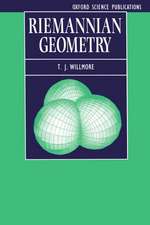 Riemannian GeometryT. J. Willmore-33%Preț: 725.20 lei1077.07 lei
 -
 Algebraic Models in GeometryYves Félix-28%Preț: 522.98 lei727.25 lei
 -
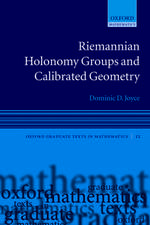 Riemannian Holonomy Groups and Calibrated GeometryDominic D. Joyce-31%Preț: 594.68 lei862.88 lei
 -
 Preț: 320.90 lei
 -
 Geodesic Math and How to Use ItHugh KennerPreț: 273.96 lei
 -
 Lectures on Minimal SurfacesJohannes C. C. NitschePreț: 476.35 lei
 -
 Elementary Differential GeometryChristian Bär-19%Preț: 447.87 lei552.92 lei
 -
 Metric Structures for Riemannian and Non-Riemannian SpacesMikhail Gromov-18%Preț: 800.67 lei976.42 lei
 -
 Geometric Integration TheorySteven G. Krantz-15%Preț: 702.96 lei827.02 lei
 -
 Manifolds, Tensors, and FormsPaul Renteln-11%Preț: 565.90 lei635.84 lei
 -
 Elementary Differential GeometryA. N. PressleyPreț: 270.56 lei
 -
 Analysis and Geometry of Markov Diffusion OperatorsDominique Bakry-18%Preț: 913.64 lei1114.20 lei
 -
 Differential GeometryMarcelo Epstein-18%Preț: 700.73 lei854.56 lei
 -
 Symbol Correspondences for Spin SystemsPedro de M. RiosPreț: 374.20 lei
 -
 Calabi-Yau Manifolds and Related GeometriesMark Gross-15%Preț: 499.82 lei588.02 lei
 -
 A Panoramic View of Riemannian GeometryMarcel Berger-18%Preț: 818.70 lei998.41 lei
Public țintă
ResearchDe ce să citești această carte
Această monografie publicată de Springer este esențială pentru cercetătorii care au nevoie de o referință completă asupra structurii grupurilor Lie. Cititorul beneficiază de o prezentare de sine stătătoare, care include patru apendice tehnice (analiză funcțională, algebră multiliniară) și soluții pentru exerciții. Este alegerea ideală pentru trecerea de la algebra liniară de bază la aplicațiile avansate ale teoriei Lie în geometrie și fizică matematică.
Descriere scurtă
This text is accessible to a broad range of mathematicians and graduate students; it will be useful both as a graduate textbook and as a research reference.
Cuprins
Recenzii
“The monograph under review is an introduction to the structure theory and geometry of Lie groups accessible both to a broad range of mathematicians and to graduate students. … The book consists of twenty one chapters divided into five parts. It starts with an introduction which presents the structure of the book, contains various teaching suggestions and introduces some fundamental notation.” (Volodymyr Mazorchuk, Zentralblatt MATH, Vol. 1229, 2012)
Textul de pe ultima copertă
The work begins with a study of matrix groups, which serve as examples to concretely and directly illustrate the correspondence between groups and their Lie algebras. In the second part of the book, the authors investigate the basic structure and representation theory of finite dimensional Lie algebras, such as the rough structure theory relevant to the theorems of Levi and Malcev, the fine structure of semisimple Lie algebras (root decompositions), and questions related to representation theory. In the third part of the book, the authors turn to global issues, most notably the interplay between differential geometry and Lie theory. Finally, the fourth part of the book deals with the structure theory of Lie groups, including some refined applications of the exponential function, various classes of Lie groups, and structural issues for general Lie groups. To round out the book's content, several appendices appear at the end of this last part.
Containing a wealth of useful information, including new results, Structure and Geometry of Lie Groups provides a unique perspective on the study of Lie groups and is a valuable addition to the literature. Prerequisites are generally kept to a minimum, and various pedagogical features make it an excellent supplemental text for graduate students. However, the work also contains much that will beof interest to more advanced audiences, and can serve as a useful research reference in the field.