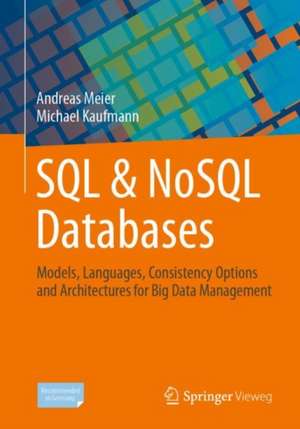
SQL & NoSQL Databases
Autor Andreas Meier, Michael Kaufmannen Limba Engleză Paperback – 16 iul 2019
Suntem de părere că SQL & NoSQL Databases reprezintă o resursă tehnică esențială pentru studenții și profesioniștii din domeniul IT care posedă deja o bază solidă în informatică și doresc să stăpânească arhitecturile moderne de gestionare a datelor. Lucrarea necesită o înțelegere prealabilă a logicii programării și a structurilor de date, fiind concepută ca un ghid de implementare pentru sisteme complexe. Structura volumului este riguros organizată în șapte capitole cheie, pornind de la managementul datelor și modelare, până la arhitecturi de sistem și baze de date NoSQL. Dacă Principles of Database Management de Wilfried Lemahieu v-a oferit cadrul teoretic vast, această carte oferă instrumentele practice și specificațiile tehnice necesare pentru a naviga între sistemele omogene și cele eterogene. Autorii, Andreas Meier și Michael Kaufmann, pun un accent deosebit pe provocările consistenței datelor în sisteme distribuite masiv, oferind o comparație critică între modelele ACID și BASE. În contextul operei autorului, această lucrare consolidează direcția începută în Big Data Analytics, unde au fost introduse conceptele fundamentale de prelucrare a volumelor mari de date. Spre deosebire de abordările pur teoretice din Database Systems de Ramez Elmasri, volumul de față este extrem de aplicat, integrând peste 100 de ilustrații și exemple de Query by Example (QBE) și limbaje de interogare specifice bazelor de date graf sau document-store. Progresia logică a capitolelor permite cititorului să înțeleagă nu doar limitele SQL-ului tradițional, ci și potențialul bazelor de date fuzzy sau al structurilor multidimensionale.
Preț: 321.18 lei
Preț vechi: 401.48 lei
-20%
Carte disponibilă
Livrare economică 31 iulie-14 august
Livrare express 16-22 iulie pentru 31.62 lei
Specificații
ISBN-10: 3658245484
Pagini: 248
Ilustrații: XVI, 229 p. 113 illus., 111 illus. in color.
Dimensiuni: 168 x 240 x 14 mm
Greutate: 0.42 kg
Ediția:1st ed. 2019
Editura: SpringerGabler
Locul publicării:Wiesbaden, Germany
V-ar putea interesa
-
 -39%Preț: 402.67 lei660.61 lei
 -
 Deep LearningIan Goodfellow-20%Preț: 637.10 lei796.37 lei
 -
 Probabilistic Machine LearningKevin P. Murphy-23%Preț: 823.54 lei1063.72 lei
 -
 Image Processing and Acquisition using PythonRavishankar Chityala-18%Preț: 1026.53 lei1251.87 lei
 -
 -20%Preț: 412.85 lei516.06 lei
 -
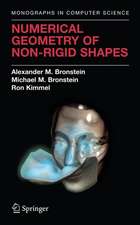 Numerical Geometry of Non-Rigid ShapesAlexander M. Bronstein-20%Preț: 515.64 lei644.54 lei
 -
 Multiple View Geom Comp Vision 2edRichard Hartley-14%Preț: 713.19 lei829.29 lei
 -
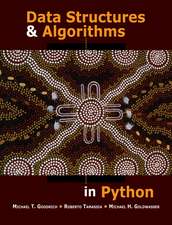 Data Structures and Algorithms in PythonMichael H. Goldwasser-20%Preț: 1224.76 lei1530.96 lei
 -
 The Cyber Risk HandbookDomenic Antonucci-8%Preț: 499.31 lei542.73 lei
 -
 Database SystemsRamez Elmasri-20%Preț: 553.12 lei691.41 lei
 -
 Digital Image Processing, Global EditionRafael Gonzalez-11%Preț: 652.86 lei733.54 lei
 -
 Geometric Methods and ApplicationsJean Gallier-15%Preț: 726.41 lei854.59 lei
 -
 Guide to Computational Geometry ProcessingJ. Andreas Bærentzen-15%Preț: 513.45 lei604.06 lei
 -
 Programming Robots with RosMorgan Quigley-20%Preț: 261.01 lei326.25 lei
 -
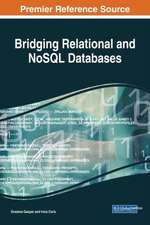 Bridging Relational and NoSQL DatabasesDrazena Gaspar-20%Preț: 1107.37 lei1384.21 lei
 -
 Docker in ActionBret Fisher-20%Preț: 290.23 lei362.79 lei
 -
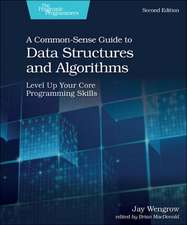 -20%Preț: 280.64 lei350.80 lei
 -
 Robot Operating System CookbookPackt Publishing-20%Preț: 274.91 lei343.64 lei
 -
 Mastering ROS for Robotics Programming - Second EditionLentin Joseph-19%Preț: 477.95 lei590.06 lei
 -
 Hands-On Computer Vision with TensorFlow 2Benjamin Planche-20%Preț: 214.62 lei268.28 lei
 -
 -20%Preț: 297.64 lei372.04 lei
 -
 Python Image Processing CookbookSandipan Dey-20%Preț: 269.83 lei337.28 lei
 -
 Computer Graphics and Geometric ModellingMax K. Agoston-20%Preț: 371.03 lei463.78 lei
 -
 Mathematical Image ProcessingKristian Bredies-15%Preț: 518.08 lei609.51 lei
 -
 Principles of Distributed Database SystemsM. Tamer Özsu-20%Preț: 540.49 lei675.61 lei
 -
 Robot Operating System (ROS)Anis Koubâa-18%Preț: 1080.16 lei1317.27 lei
 -
 Foundations of Computer VisionJames F. Peters-20%Preț: 687.07 lei858.83 lei
 -
 -20%Preț: 228.59 lei285.75 lei
 -
 -15%Preț: 442.35 lei520.41 lei
De ce să citești această carte
Recomandăm această carte inginerilor de date și arhitecților de sistem care au nevoie de o fundamentare tehnică precisă pentru alegerea tehnologiilor de stocare. Veți câștiga o perspectivă clară asupra diferențelor dintre Key-Value, Column-Family și Document Stores, învățând să optimizați consistența și performanța în aplicații de tip Big Data. Este un manual practic care transformă teoria bazelor de date în soluții arhitecturale viabile.
Despre autor
Andreas Meier este profesor emerit de informatică economică la Universitatea din Fribourg, specializat în managementul datelor și sisteme de informații. Michael Kaufmann, de asemenea expert în domeniu, contribuie cu o perspectivă actualizată asupra tehnologiilor emergente. Împreună, aceștia au publicat lucrări fundamentale în domeniul Big Data Analytics și Blockchain, fiind recunoscuți pentru capacitatea de a sintetiza inovațiile academice în ghiduri practice utilizate în universitățile de elită din spațiul DACH (Germania, Austria, Elveția).
Descriere scurtă
The book opens with a broad look at data management, including an overview of information systems and databases, and an explanation of contemporary database types:
- SQL and NoSQL databases, and their respective management systems
- The nature and uses of Big Data
- A high-level view of the organization of data management
A full chapter probes the challenges of Ensuring Data Consistency, covering:
- Multi-User Operation
- Troubleshooting
- Consistency in Massive Distributed Data
- Comparison of the ACID and BASE consistency models, and more
Post-Relational and NoSQL Databases
The chapter on post-relational databases discusses the limits of SQL – and what lies beyond, including Multi-Dimensional Databases, Knowledge Bases and and Fuzzy Databases.
A final chapter covers NoSQL Databases, along with
- Development of Non-Relational Technologies,
- Key-Value, Column-Family and Document Stores
- XML Databases and Graphic Databases, and more
This textbook has been recommended and developed for university courses in Germany, Austria and Switzerland.
Cuprins
Notă biografică
Michael Kaufmann is a Professor of Data Science and Big Data at the School of Information Technology, Lucerne University of Applied Sciences and Arts. He is also the coordinator of the university´s DataIntelligence research team, which develops and studies methods and technologies for intelligent data management. Michael Kaufmann studied computer science, law and psychology at the University of Fribourg. With extra-occupational doctoral studies, he received his Ph.D. in computer science on the topic of inductive fuzzy classification in marketing analytics. He worked at PostFinance as a data warehouse poweruser in corporate development; Later on at Mobiliar Insurance as a data architect in the enterprise architecture unit; and as a business analyst at FIVE Informatik AG, where he initiated and led a research project and started teaching as a part time lecturer at Kalaidos University of Applied Science. Since 2014 he has been working at the Lucerne University of Applied Sciences and Arts in teaching and research as a lecturer for databases, where he founded and successfully funded the research team data intelligence.
Textul de pe ultima copertă
Content
Data Management - Data Modeling - Database Languages - Ensuring Data Consistency - System Architecture - Post-Relational Databases - NoSQL Databases The authors
Andreas Meier is a former member of the Faculty of Economics and Social Science and was a Professor of Information Technology at the University of Fribourg. He specializes in electronic business, electronic government, and information management. He is member of the GI (Gesellschaft für Informatik), IEEE Computer Society, and ACM.
Michael Kaufmann is a Professor of Data Science and Big Data at the School of Information Technology, Lucerne University of Applied Sciences and Arts. He is also the coordinator of the university’s Data Intelligence research team, which develops and studies methods and technologies for intelligent data management.