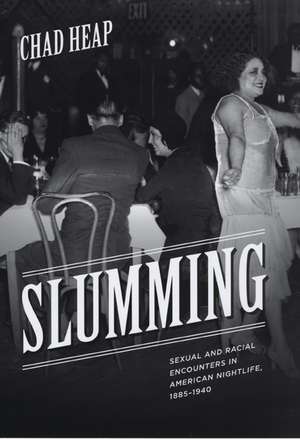
Slumming: Sexual and Racial Encounters in American Nightlife, 1885-1940: Historical Studies of Urban America
Autor Chad Heapen Limba Engleză Hardback – 15 mai 2009
Descoperim în Chad Heap un cercetător meticulos al istoriei urbane, a cărui autoritate este susținută de apartenența acestui volum la prestigioasa serie Historical Studies of Urban America. Slumming nu este doar o cronică a distracțiilor nocturne, ci o investigație academică riguroasă asupra modului în care elitele albe din New York și Chicago au consumat cultura cartierelor marginale, de la zonele de imigranți din anii 1880 până la cluburile de jazz din perioada Prohibiției. Remarcăm o structură binară a lucrării: prima parte se concentrează pe dinamica spațială și organizarea geografiei culturale, în timp ce a doua parte explorează conceptualizarea sexualității și a rasei.
Autorul demonstrează cum curiozitatea pentru „necunoscut” a modelat peisajul social american, oferind detalii despre locații emblematice precum Greenwich Village sau Bronzeville. Prin cele 7 hărți incluse, Chad Heap cartografiază precis evoluția acestui fenomen, de la o formă de „disipare la modă” la o mișcare artistică și socială complexă. Cititorii familiarizați cu Urban Underworlds de Professor Thomas Heise vor aprecia Slumming pentru accentul pus pe interacțiunea directă și pe modul în care amestecul social, deși marcat de voyeurism, a contribuit la redefinirea modernității americane. Spre deosebire de studiile care se limitează la o singură enclavă, Heap conectează experiențele din Harlem cu cele din comunitățile de lesbiene și homosexuali, oferind o perspectivă integrată asupra identităților marginalizate.
Volumul analizează critic tensiunea dintre explorarea eliberatoare și exploatarea comercială, oferind contextul necesar pentru a înțelege cum s-au format barierele și punțile rasiale în metropolele secolului XX. Este o lucrare esențială pentru înțelegerea rădăcinilor culturii urbane contemporane, documentând tranziția de la moralismul victorian la hedonismul Epocii Jazzului.
Din seria Historical Studies of Urban America
-
 Preț: 224.52 lei
 -
 Preț: 148.00 lei
 -
 Preț: 244.98 lei
 -
 Preț: 240.71 lei
 -
 Preț: 201.25 lei
 - 8%
 Preț: 614.77 lei
 -
 Preț: 203.62 lei
 -
 Preț: 259.72 lei
 -
 Preț: 355.60 lei
 - 8%
 Preț: 612.68 lei
 -
 Preț: 350.57 lei
 -
 Preț: 220.59 lei
 -
 Preț: 267.52 lei
 -
 Preț: 208.68 lei
 -
 Preț: 241.04 lei
 -
 Preț: 262.58 lei
 -
 Preț: 242.49 lei
 -
 Preț: 249.45 lei
 -
 Preț: 254.93 lei
 -
 Preț: 210.15 lei
 -
 Preț: 276.02 lei
 -
 Preț: 280.45 lei
 -
 Preț: 244.24 lei
 -
 Preț: 264.40 lei
 -
 Preț: 276.65 lei
 -
 Preț: 224.09 lei
 -
 Preț: 185.67 lei
 -
 Preț: 241.30 lei
 -
 Preț: 287.57 lei
 -
 Preț: 277.59 lei
 -
 Preț: 299.23 lei
 -
 Preț: 252.49 lei
 -
 Preț: 295.95 lei
 -
 Preț: 251.29 lei
 -
 Preț: 312.54 lei
 -
 Preț: 252.45 lei
 -
 Preț: 266.54 lei
 -
 Preț: 329.99 lei
 -
 Preț: 266.60 lei
 -
 Preț: 364.02 lei
 -
 Preț: 338.38 lei
 -
 Preț: 309.41 lei
 -
 Preț: 241.08 lei
Preț: 211.13 lei
Carte disponibilă
Livrare economică 28 octombrie-11 noiembrie
Specificații
ISBN-10: 0226322432
Pagini: 384
Ilustrații: 19 halftones, 7 maps
Dimensiuni: 152 x 229 x 28 mm
Greutate: 0.57 kg
Ediția:New.
Editura: University of Chicago Press
Colecția University of Chicago Press
Seria Historical Studies of Urban America
De ce să citești această carte
Recomandăm această carte cititorilor pasionați de sociologie urbană și istorie culturală. Slumming oferă o perspectivă documentată asupra modului în care viața de noapte a modelat identitățile rasiale și sexuale în SUA. Veți câștiga o înțelegere profundă a modului în care spațiile marginale au devenit centre ale inovației culturale, totul susținut de hărți și ilustrații de arhivă care aduc la viață atmosfera New York-ului și Chicago-ului de altădată.
Despre autor
Chad Heap este un istoric specializat în studiile urbane și istoria sexualității în Statele Unite. Lucrarea sa de referință, Slumming, publicată de University of Chicago Press, reflectă rigoarea cercetării academice desfășurate în cadrul departamentelor de istorie americană. Expertiza sa se concentrează pe intersecția dintre spațiul urban, rasă și gen, Heap fiind recunoscut pentru abilitatea de a sintetiza arhivele polițienești, jurnalele de epocă și geografia culturală într-o narativă istorică coerentă care explică evoluția metropolelor americane în perioada modernă.
Descriere scurtă
Notă biografică
Cuprins
Acknowledgments
Introduction
Part I
The Spatial Dynamics of Slumming and the Emergence of Commercial Leisure
Chapter 1
Into the Slums
The Spatial Organization, Cultural Geography and Regulation of a New Urban Pastime
Chapter 2
Beyond the Slums
Commercial Leisure and the Reorganization and Policing of Urban Space
Part II
The Changing Conceptualization of Sexuality and Race in the Slumming Vogues of Chicago and New York
Chapter 3
Adventures in the Slums and Red-Light Districts
Chapter 4
The Search for Bohemian “Thrillage”
Chapter 5
The Negro Vogue
Excursions into a “Mysterious Dark World”
Chapter 6
The Pansy and Lesbian Craze in White and Black
Epilogue
List of Abbreviations
Notes
Recenzii
"'Slumming' is the concept of people seeing 'how the other half lives.' People went slumming either as an academic pursuit or with prurient interests, or both. Beginning in the 1880s with white males visiting prostitutes or gamblers in the working-class and immigrant neighborhoods in New York's Harlem and Chicago's Bronzeville, slumming extended to middle-class whites visiting these areas, usually in the company of a police officer, as a new form of recreation spurred by curiosity and desire. Heap sees four phases of slumming in this fascinating, readable, but hardly titillating history. The red light phase ran from the 1880s to WW I, which overlapped the bohemian phase during the 1910s and 1920s. The Negro phase, perhaps the best known in popular imagery, ran through the 1920s and 1930s, overlapping and succeeded by the pansy/lesbian phase, which continued through the 1940s. Throughout, Heap highlights his monograph with detailed accounts of black and tan cabarets, tearooms, and rent parties that broadened the perspectives of both visitors and residents. . . . Recommended. All levels/libraries."