
Siddhartha
Autor Hermann Hesseen Limba Engleză Hardback – 15 iul 2010
Preț: 163.19 lei
Puncte Express: 245
Carte tipărită la comandă
Livrare economică 20-25 iulie
Livrare prin curier în România Termenul estimat este afișat lângă disponibilitate.
Transport gratuit de la 400.00 lei Plată online sau ramburs, în funcție de opțiunile comenzii.
Retur gratuit în 14 zile Comandă securizată și suport în română.
Specificații
ISBN-13: 9781613827703
ISBN-10: 1613827709
Pagini: 102
Dimensiuni: 157 x 235 x 10 mm
Greutate: 0.31 kg
Editura: Simon & Brown
ISBN-10: 1613827709
Pagini: 102
Dimensiuni: 157 x 235 x 10 mm
Greutate: 0.31 kg
Editura: Simon & Brown
V-ar putea interesa
-
 Wuthering HeightsEmily BrontePreț: 24.60 lei
 -
 Lady Chatterley's LoverD. H. LawrencePreț: 24.60 lei
 -
 A Game of Thrones. 20th Anniversary Illustrated EditionGeorge R. R. MartinPreț: 314.96 lei
 -
 The Handmaid's TaleMargaret Atwood-20%Preț: 57.29 lei71.34 lei
 -
 -20%Preț: 50.64 lei63.65 lei
 -
 Purple CowSeth Godin-22%Preț: 59.98 lei76.67 lei
 -
 Small GiantsBo Burlingham-21%Preț: 67.01 lei84.58 lei
 -
 Physics of the FutureMichio Kaku-19%Preț: 63.88 lei79.01 lei
 -
 The Veiled WomanAnais Nin-40%Preț: 16.65 lei27.92 lei
 -
 SteppenwolfHermann HessePreț: 68.45 lei
 -
 OutlanderDiana GabaldonPreț: 65.62 lei
 -
 Think and Grow RichNapoleon HillPreț: 52.16 lei
 -
 GodReza Aslan-20%Preț: 62.81 lei78.37 lei
 -
 The Millionaire FastlaneM. J. DemarcoPreț: 128.73 lei
 -
 Harry Potter, The Complete Collection, De LuxeJ. K. Rowling-14%Preț: 963.71 lei1120.60 lei
 -
 -36%Preț: 36.96 lei57.74 lei
 -
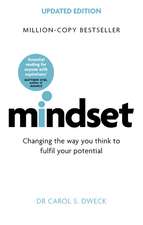 -28%Preț: 66.33 lei91.94 lei
 -
 The Richest Man in BabylonGeorge Samuel ClasonPreț: 81.44 lei
 -
 The Way of the Superior ManDavid DeidaPreț: 105.23 lei
 -
 Tools of TitansTimothy Ferriss-24%Preț: 147.26 lei192.92 lei
 -
 The Anatomy of LonelinessTeal SwanPreț: 92.54 lei
 -
 The Social ContractJean-Jaques RousseauPreț: 42.26 lei
 -
 DemianHermann HessePreț: 57.26 lei
 -
 The PrinceNiccolò MachiavelliPreț: 32.52 lei
Recenzii de la cititorii Books Express
Serju Dumitrescu a dat nota:
Este o carte minunata de care am aflat dintr-o alta carte extraordinara (Tim Ferriss-Instrumentele titanilor). A fost recomandata de 4 titani din cartea lui Tim Ferriss si mi-am propus sa o citesc. Reprezinta drumul pe care il parcurge un om, Siddhartha, spre iluminare. Trece prin mai multe etape de evolutie in calea catre desavarsire: om sarac, om bogat, om sarac, iluminat. Este o carte care "sapa" adanc in constiinta noastra si ne da speranta tuturor, in sensul ca nu conteaza in ce faza de evolutie suntem. Toti putem sa avansam. Spor la citit!
Descriere
Descriere de la o altă ediție sau format:
In the novel, Siddhartha, a young man, leaves his family for a contemplative life, then, restless, discards it for one of the flesh. He conceives a son, but bored and sickened by lust and greed, moves on again. Near dispair, Siddhartha comes to a river where he hears a unique sound. This sound signals the true beginning of life - the beginning of suffering, rejection, peace and, finally, wisdom.
In the novel, Siddhartha, a young man, leaves his family for a contemplative life, then, restless, discards it for one of the flesh. He conceives a son, but bored and sickened by lust and greed, moves on again. Near dispair, Siddhartha comes to a river where he hears a unique sound. This sound signals the true beginning of life - the beginning of suffering, rejection, peace and, finally, wisdom.
Notă biografică
In the 1960s, especially in the United States, the novels of Hermann Hesse were widely embraced by young readers who found in his protagonists a reflection of their own search for meaning in a troubled world. Hesse's rich allusions to world mythologies, especially those of Asia, and his persistent theme of the individual striving for integrity in opposition to received opinions and mass culture appealed to a generation in upheaval and in search of renewed values. Born in southern Germany in 1877, Hesse came from a family of missionaries, scholars, and writers with strong ties to India. This early exposure to the philosophies and religions of Asia--filtered and interpreted by thinkers thoroughly steeped in the intellectual traditions and currents of modern Europe--provided Hesse with some of the most pervasive elements in his short stories and novels, especially Siddhartha (1922) and Journey to the East (1932). Hesse concentrated on writing poetry as a young man, but his first successful book was a novel, Peter Camenzind (1904). The income it brought permitted him to settle with his wife in rural Switzerland and write full-time. By the start of World War I in 1914, Hesse had produced several more novels and had begun to write the considerable number of book reviews and articles that made him a strong influence on the literary culture of his time. During the war, Hesse was actively involved in relief efforts. Depression, criticism for his pacifist views, and a series of personal crises--combined with what he referred to as the "war psychosis" of his times--led Hesse to undergo psychoanalysis with J. B. Lang, a student of Carl Jung. Out of these years came Demian (1919), a novel whose main character is torn between the orderliness of bourgeois existence and the turbulent and enticing world of sensual experience. This dichotomy is prominent in Hesse's subsequent novels, including Siddhartha (1922), Steppenwolf (1927), and Narcissus and Goldmund (1930). Hesse worked on his magnum opus, The Glass Bead Game (1943), for twelve years. This novel was specifically cited when he was awarded the Nobel Prize for Literature in 1946. Hesse died at his home in Switzerland in 1962. Calling his life a series of "crises and new beginnings," Hesse clearly saw his writing as a direct reflection of his personal development and his protagonists as representing stages in his own evolution. In the 1950s, Hesse described the dominant theme of his work: "From Camenzind to Steppenwolf and Josef Knecht [protagonist of The Glass Bead Game], they can all be interpreted as a defense (sometimes also as an SOS) of the personality, of the individual self." Joachim Neugroschel (translator) has won three PEN translation awards and the French-American translation prize. He has also translated Thomas Mann's Death in Venice and Sacher-Masoch's Venus in Furs, both for Penguin Classics. He lives in Brooklyn, New York. Ralph Freedman (introducer), Professor Emeritus of Comparative Literature at Princeton University, is acclaimed for his biographies Hermann Hesse: Pilgrim of Crisis, and Life of a Poet: Rainer Maria Rilke.
Cuprins
Introduction
1. The Brahmin's Son
2. With the Samanas
3. Gotama
4. Awakening
5. Kamala
6. Amongst the People
7. Samsara
8. By the River
9. The Ferryman
10. The Son
11. Om
12. Govinda
1. The Brahmin's Son
2. With the Samanas
3. Gotama
4. Awakening
5. Kamala
6. Amongst the People
7. Samsara
8. By the River
9. The Ferryman
10. The Son
11. Om
12. Govinda
Recenzii
"Filled with timeless truths and told so beautifully with images that burn deep into your being, Hesse's novel speaks powerfully to every generation of spiritual seekers. . . . A fresh translation of Siddhartha that offers greater authenticity than any other translation—while still preserving the unique beauty of the original prose."— Branches of Light