
Scientific Methods of Inquiry for Intelligence Analysis: Security and Professional Intelligence Education Series
Autor Hank Prunckunen Limba Engleză Paperback – 8 sep 2014
Considerăm acest volum un manual fundamental pentru învățământul terțiar, conceput special pentru a pregăti viitorii analiști din cadrul agențiilor guvernamentale și de securitate privată. Subliniem faptul că această a doua ediție a Scientific Methods of Inquiry for Intelligence Analysis nu este doar o simplă actualizare, ci o expansiune necesară a metodologiilor aplicate într-un mediu de securitate tot mai complex post-9/11. Autorul, Hank Prunckun, reușește să integreze rigoarea metodei științifice în activitatea operativă, oferind un cadru structurat pentru procesarea volumului imens de date colectate în misiunile moderne.
Remarcăm o progresie logică a conținutului: primele capitole stabilesc bazele teoretice și structurile organizaționale, urmate de o analiză detaliată a metodelor de colectare, inclusiv a celor clandestine și din surse deschise (OSINT). Lucrarea se distinge prin capitole tehnice specifice, precum analiza rutelor vehiculelor, evaluarea vulnerabilităților și analiza geografică, elemente care lipsesc adesea din tratatele pur teoretice. Comparabil cu An Introduction to Intelligence Research and Analysis de Jerome Clauser în ceea ce privește rigoarea academică, volumul de față este însă actualizat pentru a răspunde nevoilor contemporane de analiză tactică și strategică, oferind un suport decizional mult mai robust.
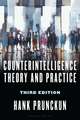
Această lucrare continuă și rafinează temele explorate de Hank Prunckun în Counterintelligence Theory and Practice, mutând accentul de pe operațiunile de contrainformații pe procesul de cercetare și analiză propriu-zis. Structura didactică, susținută de cele 44 de tabele și 57 de casete de text, transformă materia densă într-un instrument de lucru accesibil, esențial pentru formarea unui „intelligence tradecraft” modern și etic.
Din seria Security and Professional Intelligence Education Series
-
 Preț: 275.68 lei
 - 8%
 Preț: 262.15 lei
 - 18%
 Preț: 379.84 lei
 - 17%
 Preț: 386.98 lei
 - 24%
 Preț: 362.23 lei
 - 35%
 Preț: 593.12 lei
 - 23%
 Preț: 260.28 lei
 - 20%
 Preț: 367.53 lei
 - 31%
 Preț: 510.16 lei
 - 23%
 Preț: 365.80 lei
 - 28%
 Preț: 439.36 lei
 - 31%
 Preț: 393.18 lei
 - 24%
 Preț: 225.25 lei
 - 33%
 Preț: 728.81 lei
 - 27%
 Preț: 504.21 lei
 - 18%
 Preț: 259.91 lei
 - 29%
 Preț: 362.40 lei
 - 24%
 Preț: 310.02 lei
 - 28%
 Preț: 365.13 lei
 - 24%
 Preț: 223.34 lei
 - 37%
 Preț: 785.57 lei
 - 18%
 Preț: 226.70 lei
 - 28%
 Preț: 397.65 lei
 - 34%
 Preț: 634.81 lei
 - 27%
 Preț: 228.69 lei
 - 28%
 Preț: 366.40 lei
 - 30%
 Preț: 448.84 lei
 - 28%
 Preț: 397.81 lei
 - 32%
 Preț: 345.17 lei
 - 27%
 Preț: 526.06 lei
 - 24%
 Preț: 255.50 lei
Preț: 402.10 lei
Preț vechi: 554.40 lei
-27%
Carte tipărită la comandă
Livrare economică 03-17 decembrie
Specificații
ISBN-10: 1442224320
Pagini: 369
Ilustrații: 43 b/w illustrations; 44 tables; 57 textboxes
Dimensiuni: 146 x 226 x 24 mm
Greutate: 0.58 kg
Ediția:2 Rev ed.
Editura: Bloomsbury Publishing
Colecția Rowman & Littlefield
Seria Security and Professional Intelligence Education Series
Locul publicării:New York, United States
V-ar putea interesa
-
 -16%Preț: 375.70 lei448.60 lei
 -
 Risk Analysis and the Security SurveyJames F. Broder-8%Preț: 375.76 lei408.44 lei
 -
 -16%Preț: 312.18 lei372.14 lei
 -
 Building an Intelligence-Led Security ProgramAllan Liska-34%Preț: 294.53 lei447.44 lei
 -
 Modern Competitive AnalysisSharon M. Oster-27%Preț: 1303.11 lei1785.08 lei
 -
 -28%Preț: 423.31 lei584.10 lei
 -
 Strategic Intelligence for the 21st Century: The Mosaic MethodAlfred Rolington-14%Preț: 296.74 lei346.45 lei
 -
 Intelligence AnalysisWayne Michael Hall-28%Preț: 389.48 lei539.76 lei
 -
 Proven Strategies in Competitive IntelligenceSociety Of Competitive Intelligence Professionals-8%Preț: 404.89 lei440.10 lei
 -
 Reshaping National Intelligence for an Age of InformationGregory F. TrevertonPreț: 259.88 lei
 -
 -34%Preț: 97.82 lei147.59 lei
 -
 -15%Preț: 505.95 lei595.24 lei
 -
 RiskDan Gardner-36%Preț: 87.27 lei135.48 lei
 -
 Preț: 135.61 lei
 -
 -20%Preț: 939.96 lei1174.95 lei
 -
 Big Data, Big AnalyticsMinelliPreț: 302.08 lei
 -
 -18%Preț: 1308.33 lei1595.54 lei
 -
 IntelligenceAnna T CiancioloPreț: 279.46 lei
 -
 Scripting IntelligenceMark Watson-20%Preț: 228.93 lei286.16 lei
 -
 Open Source Data Warehousing and Business IntelligenceLakshman Bulusu-20%Preț: 1123.60 lei1404.49 lei
 -
 Open Source Intelligence in a Networked WorldDr. Anthony OlcottPreț: 265.68 lei
 -
 -20%Preț: 1185.41 lei1481.77 lei
 -
 -20%Preț: 488.40 lei610.50 lei
De ce să citești această carte
Recomandăm acest manual studenților și profesioniștilor care doresc să treacă de la intuiție la rigoarea științifică în analiza de informații. Cititorul câștigă o înțelegere clară a modului în care se transformă datele brute în informații strategice prin metode validate. Este o resursă indispensabilă deoarece acoperă atât colectarea clandestină, cât și analiza cantitativă modernă, fiind un ghid complet pentru cariere în securitate și intelligence.
Descriere
Since 9/11, the needs of intelligence agencies as well as the missions they conduct have increased in number, size, and complexity. As such, government and private security agencies are recruiting staff to analyze the vast amount of data collected in these missions. This textbook offers a way of gaining the analytic skills essential to undertake intelligence work.
It acquaints students and analysts with how intelligence fits into the larger research framework. It covers not only the essentials of applied research, but also the function, structure, and operational methods specifically involved in intelligence work. It looks at how analysts work with classified information in a security conscious environment as well as obtain data via covert methods.
Students are left with little doubt about what intelligence is and how it is developed using scientific methods of inquiry. This revised edition of the popular text has been expanded and updated significantly.
Cuprins
Editor¿s Foreword Preface 1 Intelligence Theory 2 Intelligence Organizational Structures 3The Intelligence Research Process 4The Scientific Method of Inquiry 5 Intelligence Research Methodologies 6 Idea Generation and Conceptualization 7 Unobtrusive Data Collection 8 Open Sources of Information 9 Clandestine and Covert Sources of Information 10 Content Analysis of Qualitative Data 11 Qualitative Analytics 12 Target Profiles 13 Tactical Assessments 14 Vehicle Route Analysis 15 Geographic Analysis 16 Quantitative Analytics 17 Displaying Information in Figures and Tables 18 Threat, Vulnerability and Risk Assessments 19 Strategic Intelligence Assessments 20 Decision Support Analysis 21 Basics of Defensive Counterintelligence 22 Ethics in Intelligence Research Appendix¿Critical Values of Chi-Square Distribution Index About the Author