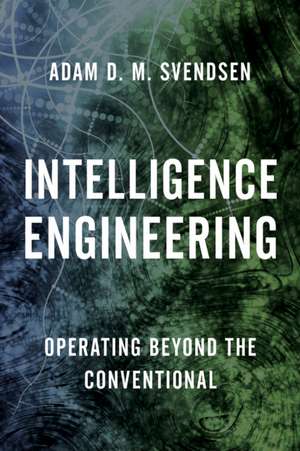
Intelligence Engineering: Operating Beyond the Conventional: Security and Professional Intelligence Education Series
Autor Adam D. M. Svendsenen Limba Engleză Paperback – mar 2017
În literatura academică dedicată serviciilor de informații, se resimte adesea o fragmentare între studiile teoretice despre colectarea datelor și aplicarea tehnică a acestora în medii operaționale complexe. Intelligence Engineering de Adam D. M. Svendsen vine să completeze această lacună, propunând o disciplină hibridă care tratează informațiile nu doar ca un produs de analiză, ci ca un sistem de inginerie ce trebuie proiectat, întreținut și, eventual, demontat. Considerăm că această lucrare reprezintă un salt necesar de la viziunea convențională asupra spionajului către o abordare integrată, adaptată erei Big Data și sistemelor de tip „system-of-systems”.
Autorul poziționează acest volum ca o evoluție firească a cercetărilor sale anterioare; dacă în Navigating Uncertainty Using Foresight Intelligence se concentra pe utilizarea prognozei pentru a gestiona incertitudinea în afaceri, în lucrarea de față extinde metodologia către securitatea națională și relațiile internaționale. Structura cărții reflectă această rigoare, fiind împărțită în trei părți care ghidează cititorul de la stadiul actual al domeniului, prin „nexusul” dintre informații și operațiuni (capitolul 3), până la aplicarea practică a unui cadru de risc bazat pe IE.
Cititorii familiarizați cu Intelligence and Intelligence Analysis de Patrick Walsh vor aprecia modul în care Adam D. M. Svendsen trece dincolo de structurile post-9/11 pentru a explora dimensiunile tehnice și științifice ale informațiilor. Spre deosebire de manualele introductive, acest volum din Security and Professional Intelligence Education Series pune accent pe „arta și știința” creării unor structuri care să suporte sau să perturbe eforturile umane în contexte de securitate. Includerea șabloanelor de cartografiere în anexă subliniază caracterul aplicat al lucrării, transformând-o dintr-un manifest teoretic într-un instrument de lucru pentru strategi.
Din seria Security and Professional Intelligence Education Series
-
 Preț: 275.68 lei
 - 8%
 Preț: 261.98 lei
 - 18%
 Preț: 379.84 lei
 - 17%
 Preț: 386.98 lei
 - 24%
 Preț: 362.23 lei
 - 35%
 Preț: 593.12 lei
 - 23%
 Preț: 260.28 lei
 - 20%
 Preț: 367.53 lei
 - 31%
 Preț: 510.16 lei
 - 23%
 Preț: 365.80 lei
 - 28%
 Preț: 439.36 lei
 - 31%
 Preț: 393.18 lei
 - 33%
 Preț: 711.44 lei
 - 27%
 Preț: 504.21 lei
 - 18%
 Preț: 259.91 lei
 - 27%
 Preț: 402.10 lei
 - 29%
 Preț: 362.40 lei
 - 24%
 Preț: 310.02 lei
 - 28%
 Preț: 365.13 lei
 - 24%
 Preț: 223.34 lei
 - 37%
 Preț: 785.57 lei
 - 18%
 Preț: 226.70 lei
 - 28%
 Preț: 397.65 lei
 - 34%
 Preț: 634.81 lei
 - 27%
 Preț: 228.69 lei
 - 28%
 Preț: 366.40 lei
 - 30%
 Preț: 448.84 lei
 - 28%
 Preț: 397.81 lei
 - 32%
 Preț: 345.17 lei
 - 27%
 Preț: 526.06 lei
 - 24%
 Preț: 255.50 lei
Preț: 225.25 lei
Preț vechi: 297.80 lei
-24%
Carte tipărită la comandă
Livrare economică 27 noiembrie-11 decembrie
Specificații
ISBN-10: 1442276657
Pagini: 130
Dimensiuni: 148 x 226 x 10 mm
Greutate: 0.3 kg
Editura: Bloomsbury Publishing
Colecția Rowman & Littlefield
Seria Security and Professional Intelligence Education Series
Locul publicării:New York, United States
V-ar putea interesa
-
 -18%Preț: 1251.34 lei1526.02 lei
 -
 Diagnosing and Changing Organizational CultureKim S. CameronPreț: 391.37 lei
 -
 KGB Lexicon: The Soviet Intelligence Officers HandbookVasili Mitrokhin-15%Preț: 443.90 lei522.23 lei
 -
 Preț: 152.58 lei
 -
 The Decision to AttackAaron Franklin BrantlyPreț: 432.54 lei
 -
 -11%Preț: 454.72 lei510.92 lei
 -
 -18%Preț: 913.89 lei1114.50 lei
 -
 -18%Preț: 1448.56 lei1766.53 lei
 -
 The Routledge Handbook of European SecuritySven Biscop-15%Preț: 443.54 lei521.81 lei
 -
 Preț: 462.00 lei
 -
 The Interpersonal Communication Book, Global EditionJoseph DevitoPreț: 89.02 lei
 -
 Competition, Cooperation, Research and DevelopmentJoanna A Poyago-Theotoky-15%Preț: 637.14 lei749.57 lei
 -
 Discourse Theory in European PoliticsD. Howarth-15%Preț: 584.23 lei687.32 lei
 -
 The Human SkillsFrank StopaPreț: 143.86 lei
 -
 Preț: 112.69 lei
 -
 Human IntelligenceRobert D. SteelePreț: 142.88 lei
 -
 Preț: 424.11 lei
 -
 Information Sharing in Military OperationsIrina Goldenberg-18%Preț: 760.39 lei927.31 lei
 -
 CooperationR. Tuomela-18%Preț: 1323.15 lei1613.61 lei
De ce să citești această carte
Recomandăm această carte profesioniștilor din serviciile de informații și studenților la relații internaționale care doresc să înțeleagă cum tehnologia și analiza sistemelor redefinesc securitatea modernă. Cititorul câștigă un cadru metodologic nou (IE) pentru gestionarea riscurilor și a fluxurilor masive de date, depășind abordările clasice. Este un ghid esențial pentru cei care operează la intersecția dintre apărare, cibernetică și analiză strategică.
Descriere
Cuprins
PART I: Where We are Today
Preface - Intelligence Persists
Chapter 1 - Introducing Intelligence Engineering (IE)
Chapter 2 - Intelligence as 'Art' and 'Science'
PART II: Improving Intelligence Engineering
Chapter 3 - The Intelligence and Operations Nexus
Chapter 4 - Advancing an IE-based Framework for Risk
PART III: Bringing it All Together
Chapter 5 - Conclusions and Other Cautions
Appendix - IE Mapping Templates
Notes
Select Bibliography
Index
Recenzii
Adam Svendsen provides a new intellectual framework for generating analysis that meets the standard of being comprehensively exhaustive and mutually exclusive. As a practitioner and facilitator of Strategic Foresight Analysis, I believe the various systems of systems approaches described in the book are particularly valuable in helping students be more rigorous in identifying critical forces, factors, and events likely to shape future events.
All security and intelligence scholars will find much to stimulate their thinking in this book. Its depth and scope, variety of intelligence systems explored and the advanced nature of the argument provokes considerable insight into the role of data and information in human systems. As he has done before, Svendsen once again helps us think more sophisticatedly about how modern and emergent intelligence is done. Intelligence Engineering is not only a discussion of how states seek to learn about other states or actors, but is instead a microcosm of the networked systems that we all live in today.