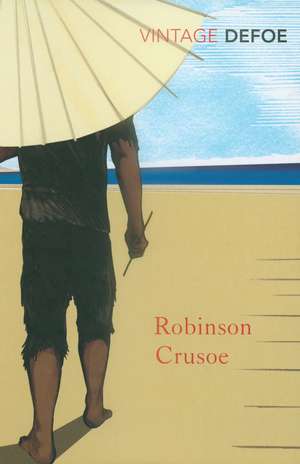
Robinson Crusoe
Autor Daniel Defoeen Limba Engleză Paperback – 6 noi 2008
În această ediție din seria Word Power Readers, notăm cu interes accentul pus pe vocabularul practic legat de supraviețuire, construcție și mediul natural. Elevii vor învăța termeni specifici pentru activități de subzistență, de la cultivarea cerealelor și creșterea animalelor, până la fortificarea unui adăpost, totul într-un context narativ captivant. Textul reia firul epic al clasicului scris de Daniel Defoe, prezentând transformarea unui naufragiat într-un om capabil să își creeze propria realitate dintr-o sălbăticie tropicală.
Apreciem structura metodică a volumului, care nu se rezumă doar la simplificarea textului original. Cititorul beneficiază de un aparat critic adaptat, ce include note despre contextul naval al secolului al XVII-lea și începuturile sclaviei, oferind o perspectivă istorică necesară. Un element distinctiv este prezența CD-ului audio de două ore; ritmul lent și clar al lecturii este ideal pentru exersarea pronunției și a înțelegerii auditive. Stilul jurnalistic, în care Crusoe își consemnează meticulos progresele și trăirile spirituale, facilitează urmărirea firului narativ chiar și pentru cei care nu stăpânesc limba engleză la nivel avansat.
Profesorii care folosesc Oxford Bookworms Library: Level 2:: Robinson Crusoe sau edițiile din Oxford Reading Tree TreeTops Classics vor aprecia în acest volum materialele auxiliare suplimentare. Spre deosebire de alte adaptări, ediția de față de la The Gresham Publishing Co. Ltd pune un accent mai mare pe analiza tematică și pe glosarul detaliat, fiind un instrument de studiu mai robust pentru examenele de tip ESOL. Este o resursă excelentă pentru trecerea de la lectura ghidată la studiul individual al literaturii clasice.
Preț: 40.88 lei
Preț vechi: 64.08 lei
-36%
Carte disponibilă
Livrare economică 30 octombrie-10 noiembrie
Livrare express 13-17 octombrie pentru 42.78 lei
Specificații
ISBN-10: 0099511843
Pagini: 272
Dimensiuni: 132 x 197 x 20 mm
Greutate: 0.21 kg
Editura: Vintage Publishing
V-ar putea interesa
-
 Pride and PrejudiceJane AustenPreț: 28.01 lei
 -
 Wuthering HeightsEmily BrontëPreț: 28.01 lei
 -
 The Adventures of Sherlock HolmesArthur Conan DoylePreț: 28.01 lei
 -
 Great ExpectationsCharles DickensPreț: 28.01 lei
 -
 Tess of the D'UrbervillesThomas HardyPreț: 28.01 lei
 -
 Gulliver's TravelsJonathan SwiftPreț: 28.01 lei
 -
 The Adventures Of Huckleberry FinnMark TwainPreț: 28.01 lei
 -
 The Secret GardenFrances Hodgson BurnettPreț: 28.01 lei
 -
 The Prince and the PauperMark TwainPreț: 28.01 lei
 -
 The Adventures of Tom SawyerMark TwainPreț: 28.01 lei
 -
 HamletCollins GcsePreț: 28.01 lei
 -
 The Adventures of Huckleberry FinnMark Twain-26%Preț: 48.37 lei65.55 lei
 -
 -18%Preț: 77.29 lei94.04 lei
 -
 Classic Starts®: Moby-DickArthur Pober-28%Preț: 40.06 lei55.46 lei
 -
 Born Standing UpSteve MartinPreț: 100.65 lei
 -
 BeowolfAnonymousPreț: 51.89 lei
 -
 -7%Preț: 60.63 lei64.92 lei
 -
 Moby DickHerman MelvillePreț: 39.26 lei
 -
 Sense and SensibilityJane AustenPreț: 25.51 lei
 -
 David CopperfieldCharles DickensPreț: 39.94 lei
 -
 Moll FlandersDaniel DefoePreț: 28.01 lei
 -
 Tristram ShandyLaurence SternePreț: 28.01 lei
De ce să citești această carte
Recomandăm această carte părinților care doresc să introducă tinerii cititori (peste 10 ani) în universul marii literaturi prin intermediul unei aventuri captivante. Cititorul câștigă nu doar o lecție de istorie literară, ci și un model de perseverență și ingeniozitate. Este ocazia perfectă de a descoperi de unde a început totul în literatura de supraviețuire, într-o ediție cu o grafică modernă și materiale auxiliare valoroase.
Despre autor
Daniel De Foe (c.1660–1731) a fost o figură polivalentă a Angliei secolului al XVIII-lea, activând ca negustor, pamfletar politic, spion și jurnalist. Considerat unul dintre părinții romanului modern, el a folosit peste 190 de pseudonime de-a lungul carierei sale prolifice de peste 500 de lucrări. Deși a început să scrie ficțiune la o vârstă înaintată, succesul imediat al lui Robinson Crusoe i-a asigurat un loc permanent în canonul literar. Opera sa este marcată de un realism profund, explorând teme economice și sociale în lucrări precum Moll Flanders sau A Journal of the Plague Year, reflectând experiența sa vastă de observator al societății britanice.
Descriere scurtă
Recenzii
Notă biografică
Descriere
This edition of Robinson Crusoe contains a retold novel, an introduction, notes on the author, notes on the background when the book was written and the book's themes, a glossary, and a free CD (running time 2 hours). The CD is read slowly and clearly to aid comprehension. It is suitable for students, schools, ELT, ESOL. Robinson Crusoe leaves his family for sea adventures but after a shipwreck is stranded on a desert island in the Caribbean for 28 years. Defoe's novel was published in 1719 but was set in the 1680s at the time of naval exploration, and the beginnings of slavery. Crusoe salvages some supplies from the wrecked ship. As the days go by, he builds a fort and a small area for animals. He gathers fruit, grows crops, keeps goats, hunts, and protects his 'castle'. In his diaries he records his progress. He also records how he reads the Bible and becomes religious. After more than 20 years on the island, Crusoe encounters cannibals, which represent the first human contact he's had since being shipwrecked. He finds a footprint, which he runs away from, but then rescues a man he calls Friday from cannibals. Friday becomes his servant. Robinson finally makes an escape when a ship of mutineers arrives on the island. Robinson and his companions help the British captain to take back control of the ship. Robinson arrives home in England to find he is wealthy after an absence of 35 years. The story, told in a journalistic way because of the way he narrates his life and records all the facts, is about how a lonely human can survive alone when hardship comes. It is also a story of how a man can create his own reality out a wilderness on a desert island. Robinson Crusoe is an important figure in literature, and his name is synonymous with a lonely man living alone on a desert island and surviving.
Cuprins
Introduction
Daniel Defoe: A Brief Chronology
A Note on the Text
The Life and Strange Surprizing Adventures of Robinson Crusoe
Appendix A: Daniel Defoe, Preface and Publisher’s Introduction to Serious Reflections During the Life and Surprising Adventures of Robinson Crusoe (1720)
Appendix B: From Charles Gildon, The Life and Strange Surprizing Adventures of Mr. D—— De F—(1719)
Appendix C: Castaway Narratives
- From Ibn Ṭufayl, The Improvement of Human Reason, Exhibited in the Life of Hai Ebn Yokdhan (1708)
- Accounts of Alexander Selkirk
- From Woodes Rogers, A Cruising Voyage round the World (1712)
- Richard Steele, The Englishman, no. 26 (1713)
- From Penelope Aubin, The Strange Adventures of the Count de Vinevil and his Family (1721)
- From Leendert Hasenbosch, An Authentick Relation of the Many Hardships and Sufferings of a Dutch Sailor (1728)
- From Richard Baxter, “Of Conversing with God in Solitude” (1664)
- From Mary, Lady Chudleigh, “Of Solitude” (1710)
- From Anne Kingsmill Finch, Countess of Winchilsea, “The Petition for an Absolute Retreat” (1713)
- From Daniel Defoe, “Of Solitude” (1720)
- Alexander Pope, “Ode on Solitude” (1717)
- From Edmund Burke, “Society and Solitude” (1757)
- From Jean-Jacques Rousseau, Emilius and Sophia (1762)
- William Cowper, “Verses Supposed to be Written by Alexander Selkirk” (1782)
- Charlotte Smith, Sonnet XLIV, “Written in the Church-yard at Middleton in Sussex” (1789)
- From Samuel Taylor Coleridge, “The Rime of the Ancyent Marinere” (1798)
- William Wordsworth, “Nutting” (1800)
- William Cowper, “The Castaway” (1803)
- From John Locke, “Of Property,” Two Treatises on Government (1698)
- From Adam Smith, An Inquiry into the Nature and Causes of the Wealth of Nations (1776)
- From Karl Marx, Capital (1867)
- From Max Weber, The Protestant Ethic and the Spirit of Capitalism (1920–21)
- From Reformation of Manners, A Satyr (1702)
- From An Essay upon the Trade to Africa (1711)
- From A Review of the State of the British Nation (1711, 1712)
- From The History and Remarkable Life of the Truly Honourable Col. Jacque, Commonly call’d Col. Jack (1722)
- From A Plan of the English Commerce (1728)
- From Michel de Montaigne, “Of Cannibals” (tr. 1685–86)
- From Charles de Rochefort, The History of the Caribby-Islands (tr. 1666)
- From William Dampier, “Of the Reports about Cannibals” (1703)
- From Daniel Defoe, Serious Reflections During the Life and Surprising Adventures of Robinson Crusoe (1720)
- Anonymous (1720)
- Anonymous (1722)
- Clément Pierre Marillier (1787)
- Charles Ansell (1790)
- Thomas Stothard (1790)
- George Cruikshank (1831)
- J.J. Grandville (1840)
- Phiz (Hablot Knight Browne) (1846)
- Jules Fesquet (1877)
- Otis Turner (1913)