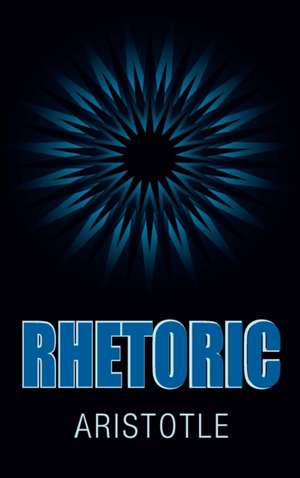
Rhetoric
Autor Aristotleen Limba Engleză Hardback
Descoperim în Rhetoric nu doar un manual de oratorie, ci fundamentul pe care s-a construit întreaga comunicare strategică a Occidentului. Punctul de plecare al acestui tratat este recalibrarea retoricii: Aristotel o extrage din zona criticii morale aspre, unde o plasase Platon în „Gorgias”, și o transformă într-o disciplină de studiu riguroasă, demnă de un filosof. Reținem aici efortul autorului de a sistematiza modul în care ideile pot fi transmise eficient, fără a sacrifica integritatea logică.
Structura lucrării, deși derivată din notițele de curs ale studenților săi din Atena, este surprinzător de coerentă pentru un cititor contemporan interesat de lingvistică și semantică. Subliniem analiza celor trei piloni ai persuasiunii — ethos, pathos și logos — și clasificarea discursurilor în funcție de contextul lor social: deliberativ (politic), judiciar (juridic) și epideictic (ceremonial). Comparabil cu The Art of Rhetoric (Collins Classics) în rigoarea argumentației, acest volum de la Bibliotech Press păstrează esența tratatului original, dar se concentrează pe dimensiunea sa de instrument de lucru pentru studiul limbajului.
În contextul operei sale vaste, Rhetoric ocupă un loc central între Nicomachean Ethics, unde explorează caracterul uman, și Politics, unde analizează viața cetății. Dacă în Poetics (referențiată în How to Tell a Story) Aristotel se ocupă de structura narativă a tragediei, aici el disecă mecanismele psihologice prin care un vorbitor poate influența opinia publică. Este o lectură esențială pentru a înțelege cum limbajul nu doar descrie realitatea, ci o și modelează activ.
Preț: 201.91 lei
Carte tipărită la comandă
Livrare economică 03-10 august
Specificații
ISBN-10: 1613827520
Pagini: 210
Dimensiuni: 152 x 229 x 16 mm
Greutate: 0.48 kg
V-ar putea interesa
-
 StructuresJ. E. GordonPreț: 106.34 lei
 -
 Games People PlayEric Berne-22%Preț: 60.22 lei76.80 lei
 -
 Romeo & JulietWilliam Shakespeare-20%Preț: 20.04 lei24.92 lei
 -
 PoeticsAristotle-21%Preț: 19.37 lei24.52 lei
 -
 The Seducer's DiarySøren KierkegaardPreț: 68.08 lei
 -
 -22%Preț: 71.24 lei90.81 lei
 -
 MythosStephen Fry-19%Preț: 64.77 lei79.54 lei
 -
 The Moon is a Harsh MistressRobert A. Heinlein-27%Preț: 57.98 lei78.91 lei
 -
 A Midsummer Night's Dream William ShakespeareWilliam ShakespearePreț: 93.42 lei
 -
 Preț: 33.76 lei
De ce să citești această carte
Această ediție a Rhetoric este indispensabilă pentru studenții la comunicare, drept sau științe politice. Cititorul câștigă o înțelegere profundă a mecanismelor persuasiunii, învățând să identifice structurile logice și emoționale din spatele oricărui discurs public. Este, în esență, un instrument de alfabetizare critică pentru oricine dorește să navigheze cu discernământ prin mesajele politice și media contemporane.
Despre autor
Aristotle (384–322 î.Hr.) a fost unul dintre cei mai importanți filosofi și polimați ai Greciei Antice, a cărui operă a pus bazele lexiconului intelectual al Occidentului. Elev al lui Platon la Academie și ulterior mentor al lui Alexandru cel Mare, el a fondat Liceul din Atena, unde a predat timp de peste un deceniu. Scrierile sale acoperă un spectru enciclopedic, de la biologie și fizică până la etică, politică și logică. Deși a scris numeroase tratate elegante pentru public, majoritatea lucrărilor care au supraviețuit, inclusiv acest tratat despre retorică, reprezintă note de curs și materiale de studiu intern, păstrând astfel vocea sa autentică de pedagog și cercetător.
Notă biografică
Textul de pe ultima copertă
The ancients regarded rhetoric as the crowning intellectual discipline--the synthesis of logical principles and other knowledge attained from years of schooling. Modern readers will find considerable relevance in Aristotelian rhetoric and its focus on developing persuasive tools of argumentation. Aristotle's examinations of how to compose and interpret speeches offer significant insights into the language and style of contemporary communications, from advertisements to news reports and other media.
Descriere scurtă
- Aristotle, Rhetoric
Aristotle's Rhetoric is an ancient Greek treatise on the art of persuasion, dating from the 4th century BC. The English title varies: typically it is titled Rhetoric, the Art of Rhetoric, or a Treatise on Rhetoric.
Aristotle is generally credited with developing the basics of the system of rhetoric that "thereafter served as its touchstone," influencing the development of rhetorical theory from ancient through modern times. The Rhetoric is regarded by most rhetoricians as "the most important single work on persuasion ever written." Gross & Walzer concur, indicating that, just as Alfred North Whitehead considered all Western philosophy a footnote to Plato, "all subsequent rhetorical theory is but a series of responses to issues raised" by Aristotle's Rhetoric. This is largely a reflection of disciplinary divisions, dating back to Peter Ramus' attacks on Aristotlean rhetoric in the late 16th century and continuing to the present.
Like the other works of Aristotle that have survived from antiquity, the Rhetoric seems not to have been intended for publication, being instead a collection of his students' notes in response to his lectures. The treatise shows the development of Aristotle's thought through two different periods while he was in Athens, and illustrates Aristotle's expansion of the study of rhetoric beyond Plato's early criticism of it in the Gorgias (ca. 386 BC) as immoral, dangerous, and unworthy of serious study. Plato's final dialogue on rhetoric, the Phaedrus (ca.370 BC), offered a more moderate view of rhetoric, acknowledging its value in the hands of a true philosopher (the "midwife of the soul") for "winning the soul through discourse." This dialogue offered Aristotle, first a student and then a teacher at Plato's Academy, a more positive starting point for the development of rhetoric as an art worthy of systematic, scientific study.