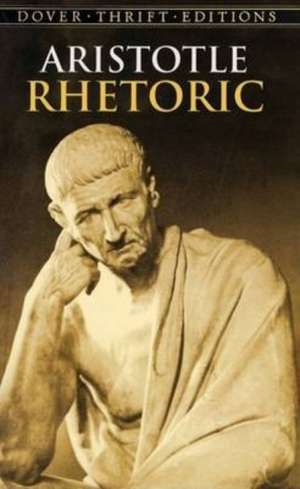
Rhetoric
Autor Aristotle Traducere de W Rhys Robertsen Limba Engleză Paperback – sep 2004 – vârsta de la 14 ani
Descoperim în Rhetoric nu doar un manual de oratorie, ci fundamentul pe care s-a construit întreaga comunicare strategică a Occidentului. Punctul de plecare al acestui tratat este recalibrarea retoricii: Aristotel o extrage din zona criticii morale aspre, unde o plasase Platon în „Gorgias”, și o transformă într-o disciplină de studiu riguroasă, demnă de un filosof. Reținem aici efortul autorului de a sistematiza modul în care ideile pot fi transmise eficient, fără a sacrifica integritatea logică. Structura lucrării, deși derivată din notițele de curs ale studenților săi din Atena, este surprinzător de coerentă pentru un cititor contemporan interesat de lingvistică și semantică. Subliniem analiza celor trei piloni ai persuasiunii — ethos, pathos și logos — și clasificarea discursurilor în funcție de contextul lor social: deliberativ (politic), judiciar (juridic) și epideictic (ceremonial). Comparabil cu The Art of Rhetoric (Collins Classics) în rigoarea argumentației, acest volum de la Bibliotech Press păstrează esența tratatului original, dar se concentrează pe dimensiunea sa de instrument de lucru pentru studiul limbajului. În contextul operei sale vaste, Rhetoric ocupă un loc central între Nicomachean Ethics, unde explorează caracterul uman, și Politics, unde analizează viața cetății. Dacă în Poetics (referențiată în How to Tell a Story) Aristotel se ocupă de structura narativă a tragediei, aici el disecă mecanismele psihologice prin care un vorbitor poate influența opinia publică. Este o lectură esențială pentru a înțelege cum limbajul nu doar descrie realitatea, ci o și modelează activ.
Preț: 56.04 lei
Carte disponibilă
Livrare economică 10-24 noiembrie
Specificații
ISBN-10: 0486437930
Pagini: 171
Dimensiuni: 134 x 213 x 12 mm
Greutate: 0.15 kg
Editura: Dover Publications
V-ar putea interesa
-
 StructuresJ. E. GordonPreț: 108.04 lei
 -
 Games People PlayEric Berne-26%Preț: 62.47 lei84.96 lei
 -
 Romeo & JulietWilliam Shakespeare-19%Preț: 20.29 lei24.96 lei
 -
 PoeticsAristotle-19%Preț: 20.09 lei24.92 lei
 -
 The Seducer's DiarySøren KierkegaardPreț: 73.14 lei
 -
 -20%Preț: 73.96 lei92.24 lei
 -
 MythosStephen Fry-17%Preț: 67.22 lei80.80 lei
 -
 The Moon is a Harsh MistressRobert A. Heinlein-25%Preț: 59.78 lei79.93 lei
 -
 A Midsummer Night's Dream William ShakespeareWilliam ShakespearePreț: 93.42 lei
 -
 Preț: 35.54 lei
De ce să citești această carte
Această ediție a Rhetoric este indispensabilă pentru studenții la comunicare, drept sau științe politice. Cititorul câștigă o înțelegere profundă a mecanismelor persuasiunii, învățând să identifice structurile logice și emoționale din spatele oricărui discurs public. Este, în esență, un instrument de alfabetizare critică pentru oricine dorește să navigheze cu discernământ prin mesajele politice și media contemporane.
Despre autor
Aristotle (384–322 î.Hr.) a fost unul dintre cei mai importanți filosofi și polimați ai Greciei Antice, a cărui operă a pus bazele lexiconului intelectual al Occidentului. Elev al lui Platon la Academie și ulterior mentor al lui Alexandru cel Mare, el a fondat Liceul din Atena, unde a predat timp de peste un deceniu. Scrierile sale acoperă un spectru enciclopedic, de la biologie și fizică până la etică, politică și logică. Deși a scris numeroase tratate elegante pentru public, majoritatea lucrărilor care au supraviețuit, inclusiv acest tratat despre retorică, reprezintă note de curs și materiale de studiu intern, păstrând astfel vocea sa autentică de pedagog și cercetător.
Descriere scurtă
The ancients regarded rhetoric as the crowning intellectual discipline -- the synthesis of logical principles and other knowledge attained from years of schooling. Modern readers will find considerable relevance in Aristotelian rhetoric and its focus on developing persuasive tools of argumentation. Aristotle's examinations of how to compose and interpret speeches offer significant insights into the language and style of contemporary communications, from advertisements to news reports and other media.